


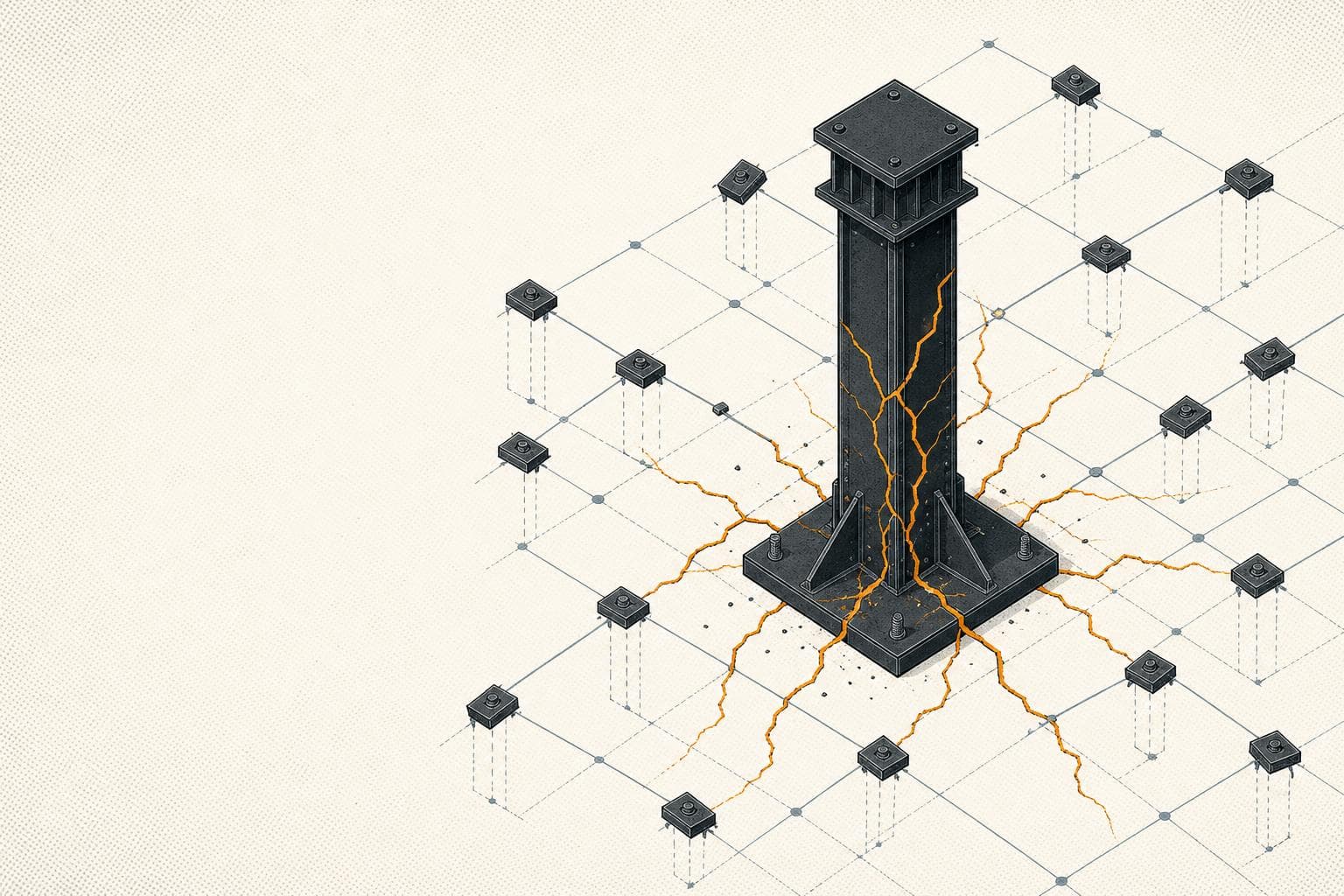

You have an engineer who ships. Consistently. They're the one you call when something's on fire at 2am, and they actually pick up. They've built systems that three other people depend on. They're also the reason two of your best engineers have quietly started looking elsewhere, and why your standups have developed a particular kind of silence — the kind where people have learned not to say anything that might draw fire.
You know what needs to happen. You've known for a while. You haven't done it.
This is the decision that exposes what you actually believe about how teams work.
The Cost You're Not Counting
The reason managers wait — sometimes for months, sometimes for years — is that the math feels obvious: high output minus some friction equals net positive. Jason Lauritsen put it directly: the performance is visible, the damage usually isn't. So leaders convince themselves they can't afford to lose the output, and they leave everything else in the blind spot.
But the damage is running on a different ledger. When someone is dismissive, overly confrontational, or just reliably difficult, the people around them start adjusting. They speak up less. They route around the person. They stop surfacing problems directly. What reads as team dysfunction is often one person making it harder for everyone else to fully participate. Decisions slow down. Information stops flowing cleanly.
And then the good people leave. Not loudly — they just start having more outside conversations, updating their profiles, getting quieter in planning meetings. Galen Emanuele frames it plainly: allowing a consistently disruptive person to stay is itself a decision that shapes culture. The team is watching what you do. They're drawing conclusions about what's actually valued here.
The brilliant jerk's output is real. So is the tax everyone else is paying to work around them.
What You're Actually Optimizing For
Here's the question worth sitting with: are you optimizing for individual output or for team throughput?
These aren't the same thing, and at a certain team size they start to diverge sharply. One person's high output can mask — and actively suppress — the output of four or five others. The engineer who ships fast but leaves wreckage in code reviews, who dominates architecture discussions until people stop proposing alternatives, who makes junior engineers afraid to ask questions — that person's individual velocity number looks great. The team's actual capacity is quietly shrinking.
I'd argue the decision to act isn't really about the individual at all. It's about what kind of operating environment you're building. Teams that produce well over time do it because people communicate honestly, surface problems early, and trust that their contributions won't get dismissed or weaponized. A single person who consistently undermines that trust is costing you more than their output is worth — it just doesn't show up on a sprint board.
The Failure Mode Is Waiting for Certainty
The most common way this goes wrong: the manager keeps hoping the situation will resolve itself. They have a direct conversation. The behavior improves for three weeks. They exhale. Then it slides back. They have another conversation. The cycle repeats. Months pass.
What's actually happening is that the manager has trained the person that the consequences of the behavior are: a conversation, a period of improvement, and then a return to baseline. The message received is that the floor is survivable.
The other failure mode is the performance improvement plan used as a delay tactic rather than a genuine intervention. If you already know the outcome you need, a PIP that runs for 60 days isn't a development tool — it's a way of deferring a decision you've already made. That's not fair to the person, and it's not fair to the team watching it happen.
Compassion and accountability aren't in conflict here. The most respectful thing you can do for someone who isn't working in this environment is to be honest about it and move decisively, rather than managing them in a slow fog of ambiguity.
Three Questions to Ask Yourself
If this person's output disappeared tomorrow, what would actually break — and is that fixable? If the answer is "a lot, and no," you have a dependency problem that exists whether or not you act. Solve the dependency problem separately. Don't let it hold the people decision hostage.
What are your best people doing differently because of this person? Not what they say in one-on-ones — what are they actually doing? Routing around, going quiet, disengaging. That behavior is your real signal.
If you hired this person today, knowing everything you know, would you make the same call? If the answer is no, you already have your answer. The question is just whether you're willing to act on it.