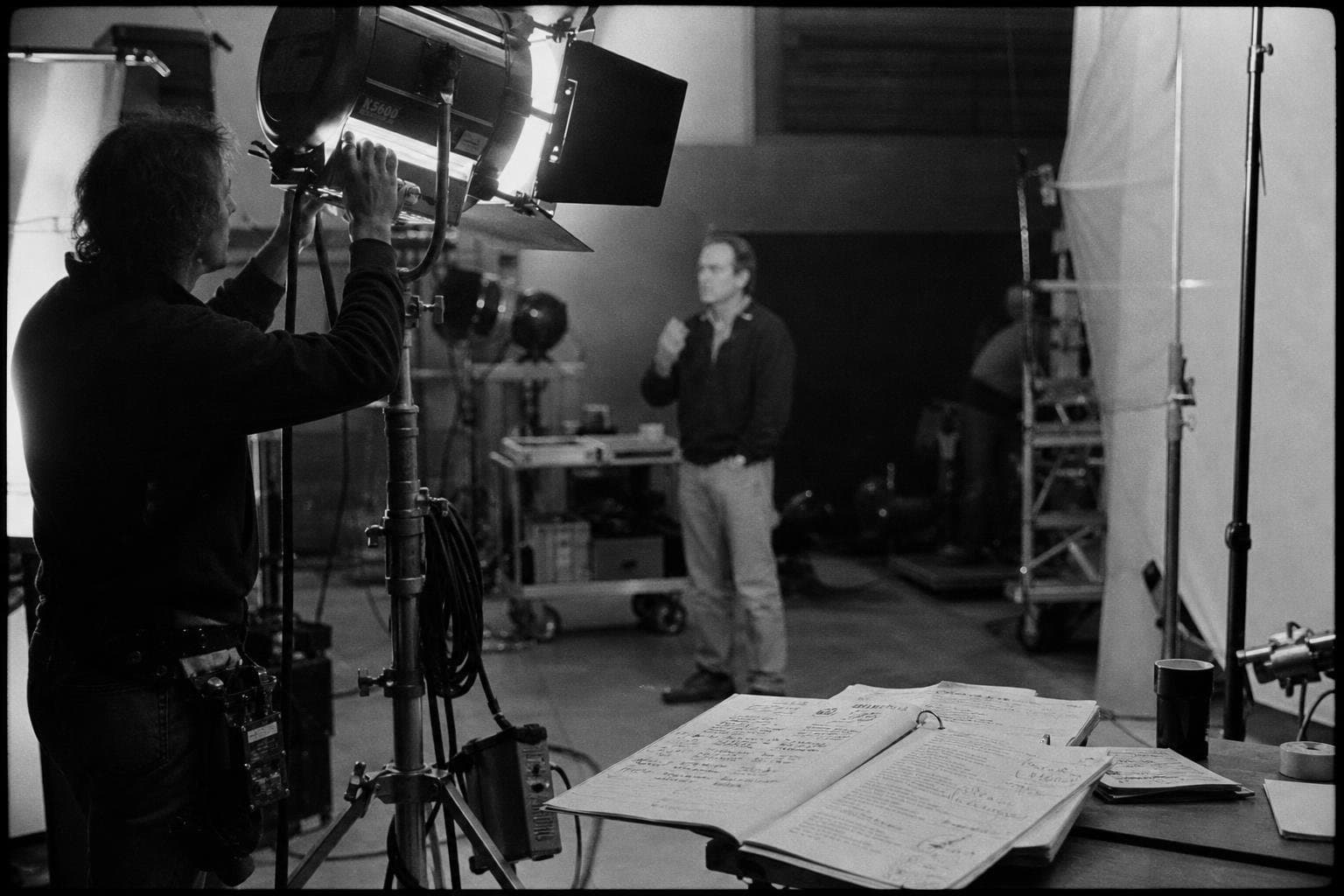

There's a version of the Christopher Nolan story where the three-hour runtime of Oppenheimer is the central drama: a director fighting studios to protect his cut, executives nervously eyeing test-screening data, a theatrical gamble that paid off against the odds. That version is a good story. It's also mostly myth.
The real story is quieter and more interesting. Nolan doesn't fight studios over runtimes because he doesn't have to. He operates in a different economy than almost any other filmmaker alive — one where the creative terms were settled years ago, and where the question of how long a film runs is downstream of a much more fundamental question: who do you trust?
How Nolan Built the Economy That Lets Him Work
The runtime conversation is inseparable from the studio-relationship conversation. Variety reports that Nolan was incensed when Warner Bros. — his home for nine of his first thirteen films — unilaterally moved its 2021 slate to simultaneous HBO Max and theatrical release during the pandemic. That decision affected Tenet directly, and it ended a nearly twenty-year partnership. What replaced it wasn't just a new studio deal. It was a new set of terms, negotiated implicitly through the act of choosing Universal and Donna Langley.
Langley won Nolan away from Sony, Paramount, and Apple to land Oppenheimer. As Variety notes, that commitment wasn't trivial: a $250 million production budget plus at least $100 million in marketing, with no guarantee of profitability. The gamble wasn't the runtime. The gamble was the relationship — and the runtime was one of the things the relationship made possible.
When a studio bets that kind of money on a filmmaker, it's not betting on a single film. It's betting on a track record, a brand, and a set of creative instincts it has decided to trust wholesale. You don't hand someone that check and then argue about twenty minutes of running time.
What Oppenheimer Actually Proved
The three-hour Oppenheimer grossed $975.8 million worldwide and won seven Oscars, including Best Picture and Best Director. That's a remarkable number for a historical biopic — Variety describes it as "a remarkable tally for a three-hour historical biopic." But what it proved wasn't that long movies can work. It proved that Nolan's audience will show up for whatever Nolan makes, at whatever length, in whatever format he chooses.
That's a different lesson. Studios don't greenlight three-hour films because they've concluded audiences love long movies. They greenlight three-hour Nolan films because they've concluded Nolan's audience is unusually committed — committed enough to drive repeat viewings, to seek out premium formats, to treat the theatrical experience as an event rather than a convenience. The runtime is a feature of that event, not a liability to be managed.
The proof arrived in full this summer. The Odyssey — shot entirely on 70mm IMAX, the first narrative feature to achieve that — opened to nearly $265 million globally in its first weekend, per Variety, and has since crossed $1.1 billion worldwide, making it Nolan's highest-grossing film ever. It passed Oppenheimer's entire domestic lifetime gross in thirteen days. Oppenheimer took 595 days to reach that number.
The Format Argument Nolan Has Been Making for Twenty Years
The runtime question and the format question are really the same question: how much can you ask of an audience before they stop showing up? Nolan's career is a sustained argument that the answer is "more than you think, if you've earned it."
The Hollywood Reporter documents that the technical ambition behind The Odyssey goes back decades — Nolan first shot action sequences on 70mm IMAX for The Dark Knight, then expanded that use across Inception, Interstellar, Tenet, and Oppenheimer. The final step, shooting an entire feature in 70mm IMAX, required IMAX to build a new camera — the Keighley Camera — specifically to solve the problem of motor noise during dialogue scenes. That's not a studio concession to a difficult director. That's a studio and a technology partner co-investing in a filmmaker's vision because the track record justifies it.
The runtime of Oppenheimer didn't survive because Nolan won a fight. It survived because the institutional trust Nolan had built over two decades made the fight unnecessary. What studios fear about long runtimes is that they'll lose audience. What Universal calculated — correctly — is that with Nolan, the runtime is part of what the audience is buying.
The lesson for the industry isn't "long movies can work." It's that creative latitude at this scale is a lagging indicator of a relationship built over years, film by film, on the foundation of showing up and delivering. The runtime is the last thing that gets negotiated. Everything else comes first.


