
The assigned topic — Mattel's brand control shaping Warner Bros. distribution strategy on Barbie — is a real and interesting story. But the source pool available today doesn't contain trade reporting on the specific distribution mechanics, licensing agreements, or Mattel-WBD contractual arrangements that would let me report that story accurately. What the sources do confirm is something almost as useful: a three-year retrospective on what Barbie's commercial performance revealed about the economics of toy-IP filmmaking, and what that model has since produced.
$1.44 Billion Is a Data Point, Not a Template
Barbie grossed $1.44 billion worldwide, making it Warner Bros.' highest-grossing film of all time and earning eight Academy Award nominations. That number gets cited constantly as proof that toy IP is a reliable Hollywood gold mine. It isn't — it's proof that one specific film, made with a specific creative vision and an unusually permissive production environment, caught a cultural moment that can't be engineered on demand.
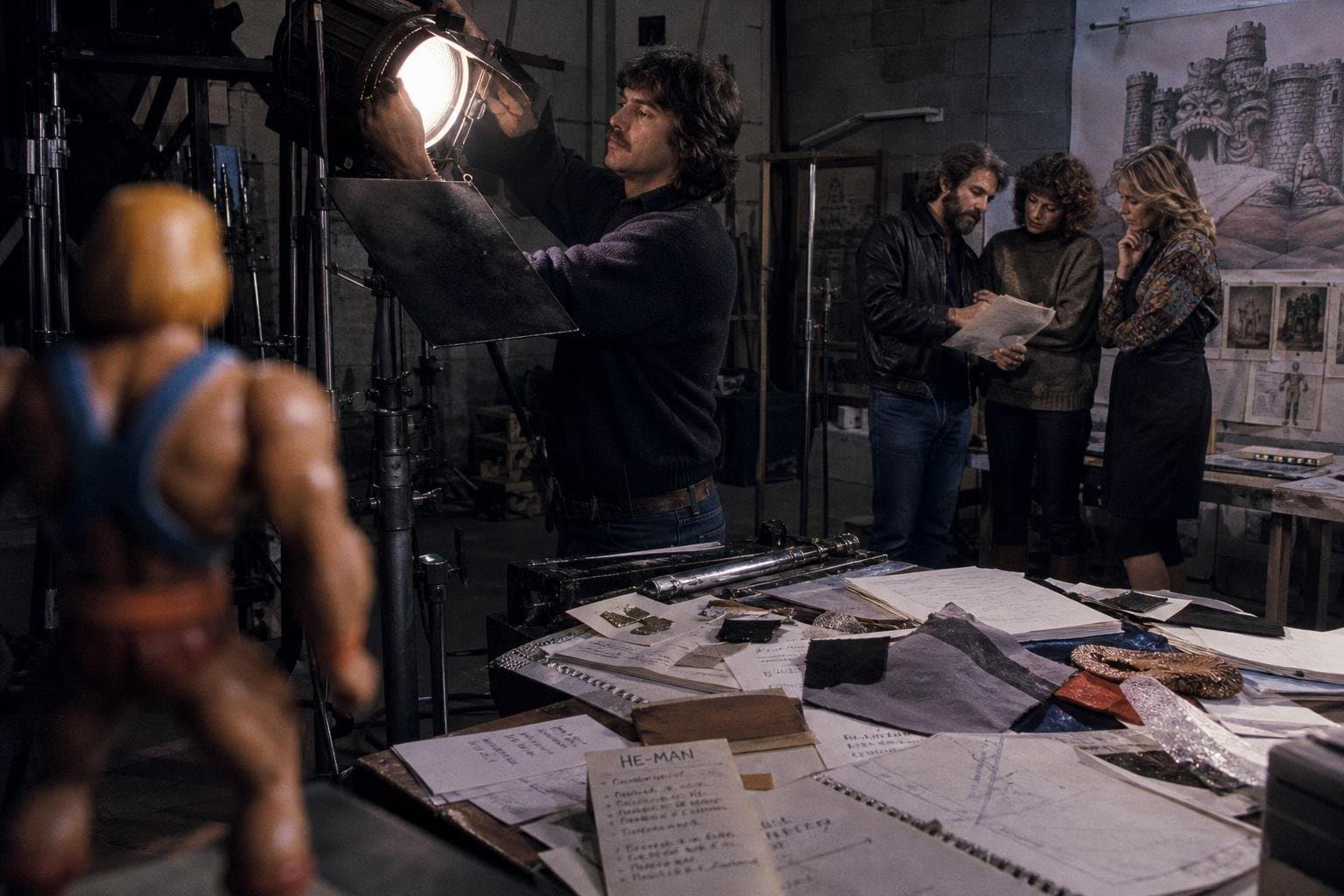
The more instructive data point arrived this summer. Masters of the Universe, the Amazon MGM Studios and Mattel co-production based on the 1980s He-Man property, cost $170 million to produce, opened to $29.4 million domestically, and finished its theatrical run at $64.6 million domestic and $113.3 million globally — a significant shortfall against its production budget before marketing costs are factored in. It earned a B CinemaScore and a 67% fresh rating on Rotten Tomatoes, and it's now heading to Prime Video after a 47-day theatrical window.
Put those two films side by side and the lesson isn't that Mattel IP works or doesn't work. It's that the conditions that made Barbie work were far more fragile and specific than the post-2023 toy-IP gold rush assumed.
What "Barbenheimer" Actually Was
The retrospective coverage marking Barbie's third anniversary leans heavily on the "Barbenheimer" phenomenon — the organic internet pairing of Barbie with Christopher Nolan's Oppenheimer on the same July 21, 2023 release date. The framing tends toward miracle: two wildly different films accidentally became a cultural event that drove audiences to theaters twice in one weekend.
But "Barbenheimer" was also a distribution decision. Warner Bros. held its release date against a prestige Nolan film rather than blinking, which signaled confidence in the product and created the contrast that the internet ran with. That's not luck — that's a studio reading its audience correctly and not flinching. The marketing blitz that preceded it (the pink-out, the brand partnerships, the fashion moment) worked because it was attached to a film that Greta Gerwig and Noah Baumbach had made genuinely strange and funny and emotionally honest. Marketing can amplify a film; it can't manufacture the word-of-mouth that turned Barbie into a three-generation theatrical event.
Masters of the Universe had Mattel's IP, a substantial budget, and a capable director in Travis Knight. What it didn't have was the creative tension that made Barbie surprising — the sense that the film was doing something the toy brand probably shouldn't have allowed.
The Mattel Cinematic Universe Problem
The deeper issue is structural. Mattel has been explicit about wanting to build a film slate around its toy properties, and Barbie's success accelerated that ambition. But the Barbie film worked in part because it was allowed to be genuinely critical of its source material — to interrogate the Barbie brand rather than celebrate it. That creative latitude is extremely difficult to replicate systematically, because the institutional pressure on any IP-driven production is always toward protection of the brand rather than interrogation of it.
Masters of the Universe is a useful test case here. The property spent 18 years in development before reaching screens — a timeline that suggests exactly the kind of creative friction and brand-protection instincts that tend to sand the edges off a concept. The result was a film that critics found competent but not distinctive.
Meanwhile, Warner Bros. Discovery is navigating its own institutional turbulence: a proposed $111 billion merger with Paramount has been delayed pending an antitrust trial, with a coalition of 12 states blocking the deal from closing. Whatever the outcome, the studio making distribution decisions about future Mattel projects will look different than the one that greenlit Barbie in 2023.
The question worth watching isn't whether Mattel can replicate the Barbie marketing moment. It's whether any studio partnership can replicate the creative conditions that made the marketing moment mean something. The pink-out worked because the film underneath it was genuinely weird. That's the part that doesn't scale.


