
Brady Corbet has a theory about melodrama that most studios would find inconvenient. Compress one into two hours, he argues, and the experience becomes implausible — not just shorter, but broken. "Time is a crucial ingredient," he told Sleek magazine. "These are melodramas, and if you compress them into two hours to satisfy a studio, the experience becomes implausible."
That's not a director defending his ego. It's a structural claim — and the evidence for it is already in theaters.
Runtime as Architecture, Not Indulgence
The Brutalist ran 3 hours and 35 minutes, including intermission, from a 165-page script. The length wasn't a byproduct of ambition running unchecked; it was the load-bearing wall. The film's argument — about immigrant identity, creative compromise, and the slow erosion of a man across decades — only lands if you feel those decades. Trim it to 110 minutes and you don't have a leaner version of the same film. You have a different film, with a different emotional logic, making a different (and weaker) case.
Corbet understands this distinction better than most working directors. When he spoke at Dublin's Storyhouse screenwriting festival, he framed his shooting conditions in terms that reveal how tightly he thinks about the relationship between page count and screen time: Vox Lux was 22 days, The Childhood of a Leader was 24, The Brutalist was 33 days for 165 pages. Every film has been a race against the clock. The runtime isn't the product of leisurely excess — it's the output of a writer-director who knows exactly what each page costs and chooses to spend it anyway.
The Next Film Doubles Down
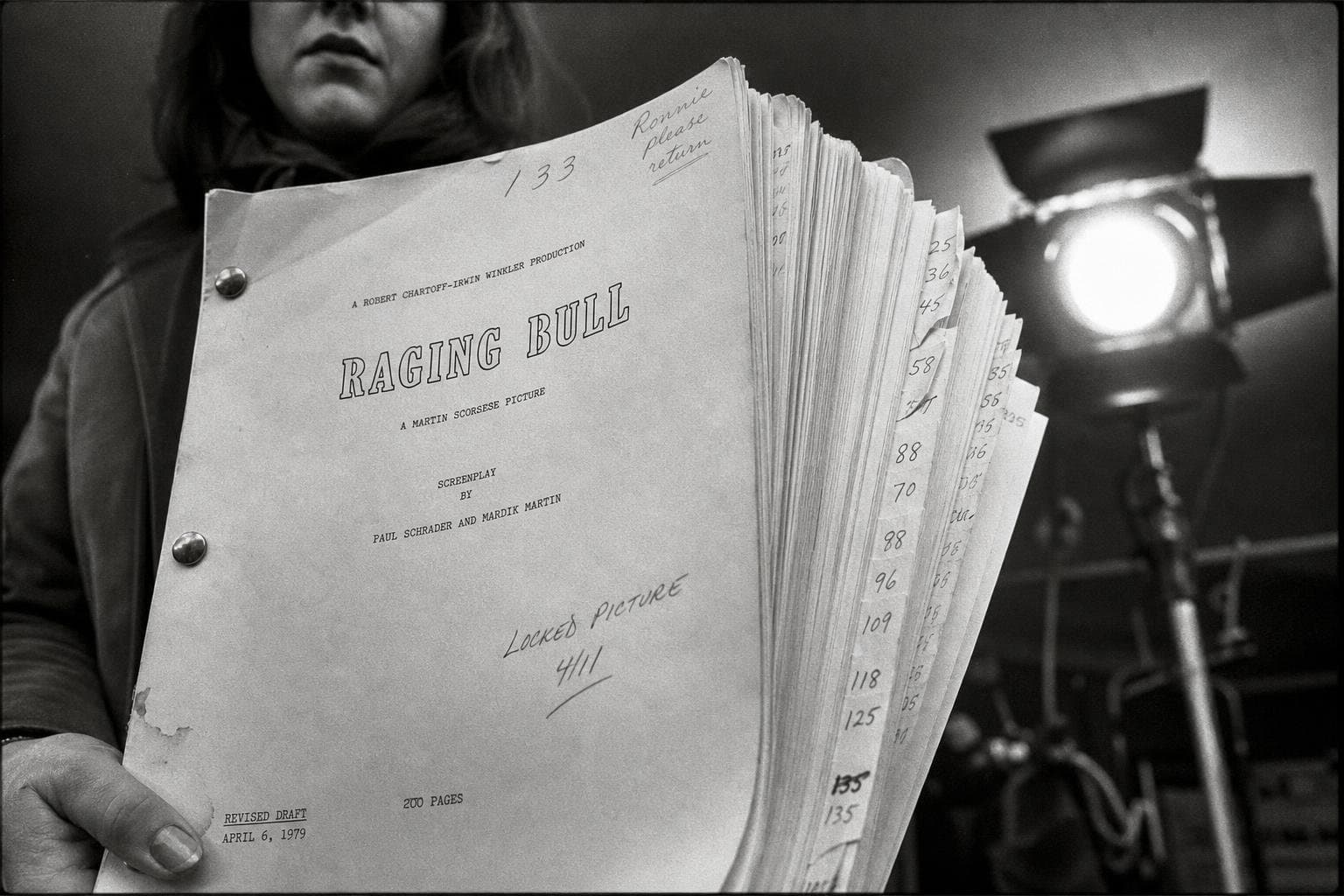
His upcoming project makes The Brutalist look like a warm-up. The script runs 200 pages, and Corbet has described the shoot as "basically two, 25-day shoots for 100 pages." He's already signaled the film will be roughly four hours long, per a correction published by World of Reel citing a New York Times interview with Kyle Buchanan. The subject matter — American mysticism, the history of the occult, a story that spans from the 19th century into the present day while remaining predominantly focused on the 1970s — is the kind of material that genuinely requires room to breathe.
Variety confirmed that Cate Blanchett and Selena Gomez are set to star alongside Michael Fassbender. That's a cast assembled for a serious swing, not a prestige placeholder. And the format choice is equally deliberate: the film is being shot on rare eight-perf 65mm cameras, the same large-format commitment Corbet brought to The Brutalist (which used VistaVision). He's not scaling back after his Oscar success — he's scaling up.
What the Industry Actually Learned
The more interesting question isn't whether Corbet can get away with a four-hour runtime. He clearly can, at this point. The question is what The Brutalist's success revealed about the economics of long-form prestige cinema.
The answer, increasingly, is that the right runtime for the right film is a selling point rather than a liability. The Brutalist producer Jiarui Guo has since launched Incandescent Productions and partnered with the Perfect producers to create an indie film fund targeting projects at $2–25M budgets — explicitly backing "strong directorial vision" and "disciplined budgets." That's a direct line from The Brutalist's model to a new financing infrastructure. The film didn't just win awards; it demonstrated that a 215-minute art film with an intermission could generate enough cultural momentum to spin off a production ecosystem.
Corbet himself has been candid about what he sees as a broader failure of nerve in contemporary filmmaking. At Storyhouse, he said filmmakers are becoming "less and less dangerous" in the current marketplace, and pointed to The English Patient — a three-hour film that was also a genuine popular hit — as evidence that audiences haven't always needed to be protected from ambition.
He's not wrong about the history. And his next film will be another test of whether that history still applies — shot on 65mm, running four hours, starring one of the most decorated actors alive, and apparently involving the occult history of America across 150 years of story time. The 200-page script isn't a warning sign. For Corbet, it's the blueprint.
Watch for whether the film secures a distributor willing to commit to the full runtime before production wraps — that negotiation, more than any creative decision, will reveal how much the industry actually absorbed from The Brutalist's example.


