



There's a scene early in The Power of the Dog where Benedict Cumberbatch's Phil Burbank watches his new sister-in-law struggle to carry a tray of drinks across a crowded dining room. He doesn't help. He doesn't mock her, exactly. He just watches, with the patient attention of someone who knows exactly how this ends — because he's the reason it ends that way. It's one of the most quietly devastating displays of masculine cruelty in recent cinema, and it works precisely because Campion refuses to explain it.
That refusal is the whole film.
The Western Was Always a Myth — Campion Knew It
Jane Campion's 2021 film, based on Thomas Savage's 1967 novel, is set in 1925 Montana. But it's not really about 1925. It's about the story American culture tells itself through the Western genre — the lone, hard, emotionally sealed man as the apex of virtue — and what that story costs everyone inside it, including the man telling it.
Sam Elliott understood this, even if his reaction was the opposite of what Campion intended. His now-infamous takedown of the film on Marc Maron's podcast — calling it a "piece of s***" and questioning what a New Zealand woman could know about the American West — became its own cultural artifact. Elliott, who has built a career embodying the stoic Western archetype, experienced The Power of the Dog as an attack. He wasn't wrong. It is one. The film systematically dismantles the mythology that made his career possible, and he felt it.
That reaction is almost too perfect. A man who has spent decades performing a version of masculinity that the film identifies as a performance — reacting with fury to being seen through. Phil Burbank would have done the same thing.
What 2021 Made Possible
The film earned 12 Academy Award nominations and won Campion the Best Director Oscar, making her a two-time Academy Award winner alongside her earlier win for The Piano. But the awards matter less than the timing.
The Power of the Dog arrived at a specific cultural moment: four years into a sustained public reckoning with how power and masculinity intersect, and one year into a pandemic that had stripped away most of the social performances men use to avoid examining themselves. The film's thesis — that the most dangerous version of masculinity is the one that has fully internalized its own performance — landed differently in 2021 than it would have in, say, 2005.
I'd argue the film couldn't have been received the way it was at any earlier point. Not because the ideas are new (Savage wrote the novel in 1967), but because the cultural vocabulary had finally caught up. The term "toxic masculinity" itself only entered mainstream discourse around 2015, and by 2021 it had become both ubiquitous and contested — which meant audiences arrived at The Power of the Dog already primed to read Phil Burbank as a case study, not just a villain.
Campion's Direction as Argument
What separates Campion's film from a thesis project is that she never lets Phil become a symbol. The craft decisions keep him human and therefore more indicting.
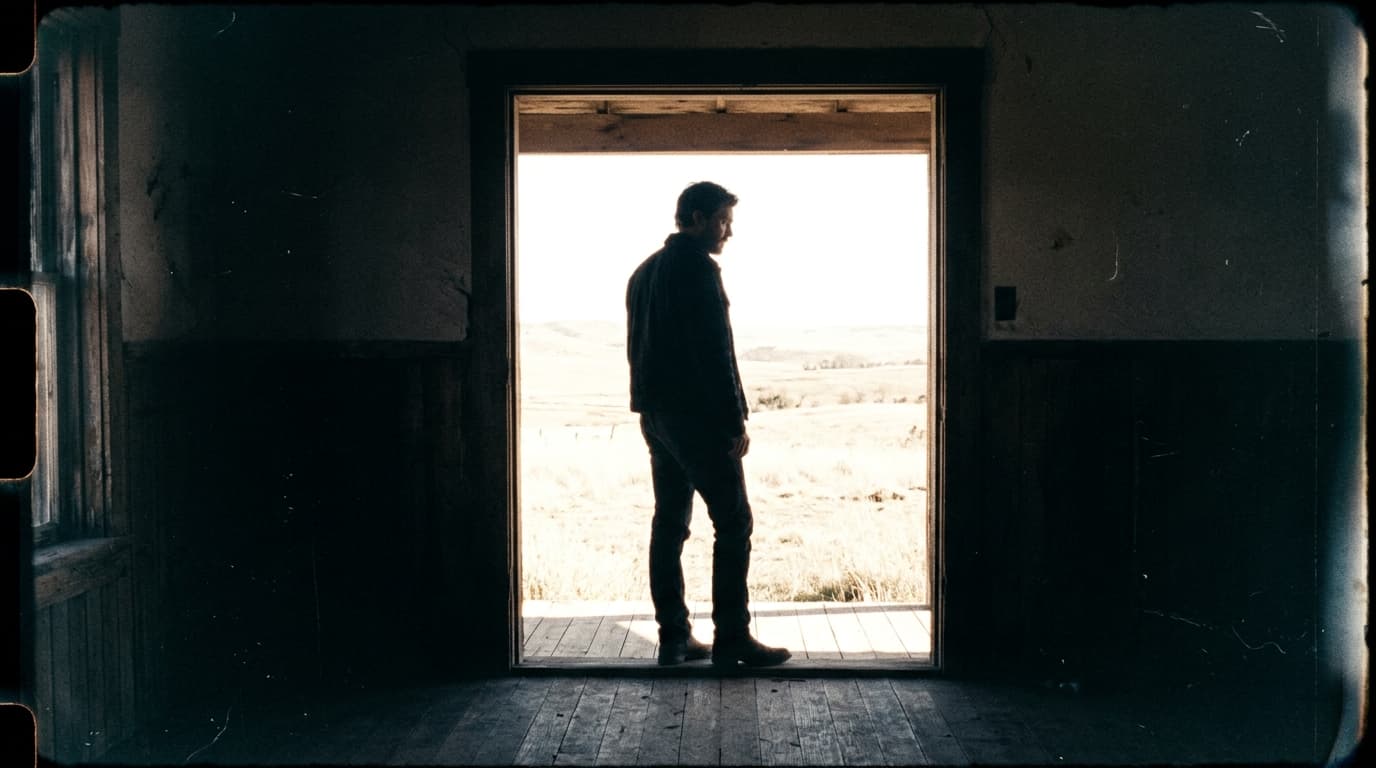
The visual approach — interior darkness against blazing exterior light, a technique one early reviewer connected to John Ford and The Searchers — places Phil perpetually at the threshold. He belongs to the myth of the open range but lives inside a house, performing roughness for an audience of ranch hands. Campion's camera catches him in the gap between the performance and the person, and that gap is where the film lives.
The score (by Jonny Greenwood, who also scored Dune) works similarly: discordant, unresolved, refusing the emotional release that Western music traditionally provides. You never get the swell that tells you how to feel. Campion withholds that comfort deliberately, because comfort is what the myth of masculinity offers — and she's not selling it.
The result is a film that uses the Western's own grammar against it. The wide shots, the physical labor, the codes of silence — all the signifiers of masculine virtue — are present, but they're evidence rather than celebration.
Phil Burbank is a man who built a prison out of an identity and then forgot it was a prison. Campion's direction makes you watch him live in it for two hours without ever letting you look away — or feel superior. That's the harder achievement, and the one that makes the film worth returning to now that the awards cycle has faded. The question it leaves isn't about Phil. It's about what we were applauding all those years when we thought we were watching heroes.