



There's a moment in Dune: Part Two where the music stops being a score and becomes something harder to name. Deep brass, processed sand sounds, and Loire Cotler's voice layered into something that doesn't feel composed so much as excavated — like it was always buried in the planet and Zimmer just found it.
That's the philosophy in one moment. And it's worth understanding how deliberately it was constructed.
The Visual World Comes First
Zimmer's approach to Dune starts somewhere most composers wouldn't: he looks at the cinematography. According to The Conversation, he uses the film's visual world — costume palette, the way the cinematographer frames a shot — to inform his instrument choices before writing a single note. The score doesn't illustrate the images; it grows from the same root system.
That's a meaningful distinction. Most blockbuster scoring works in the opposite direction: picture is locked, composer scores to it, music underlines what's already there. Zimmer's method for Dune treats sound as a co-equal design element, not a finishing layer.
The result is a score that describes Arrakis rather than commenting on it. Deep drums and percussion carry the militaristic weight of the Harkonnen storyline. Ominous synthesizers range from warm to "uncomfortable screeching metallic tonalities," as The Conversation puts it. The line between score and sound design blurs until you can't locate it.
Instruments That Shouldn't Exist Together
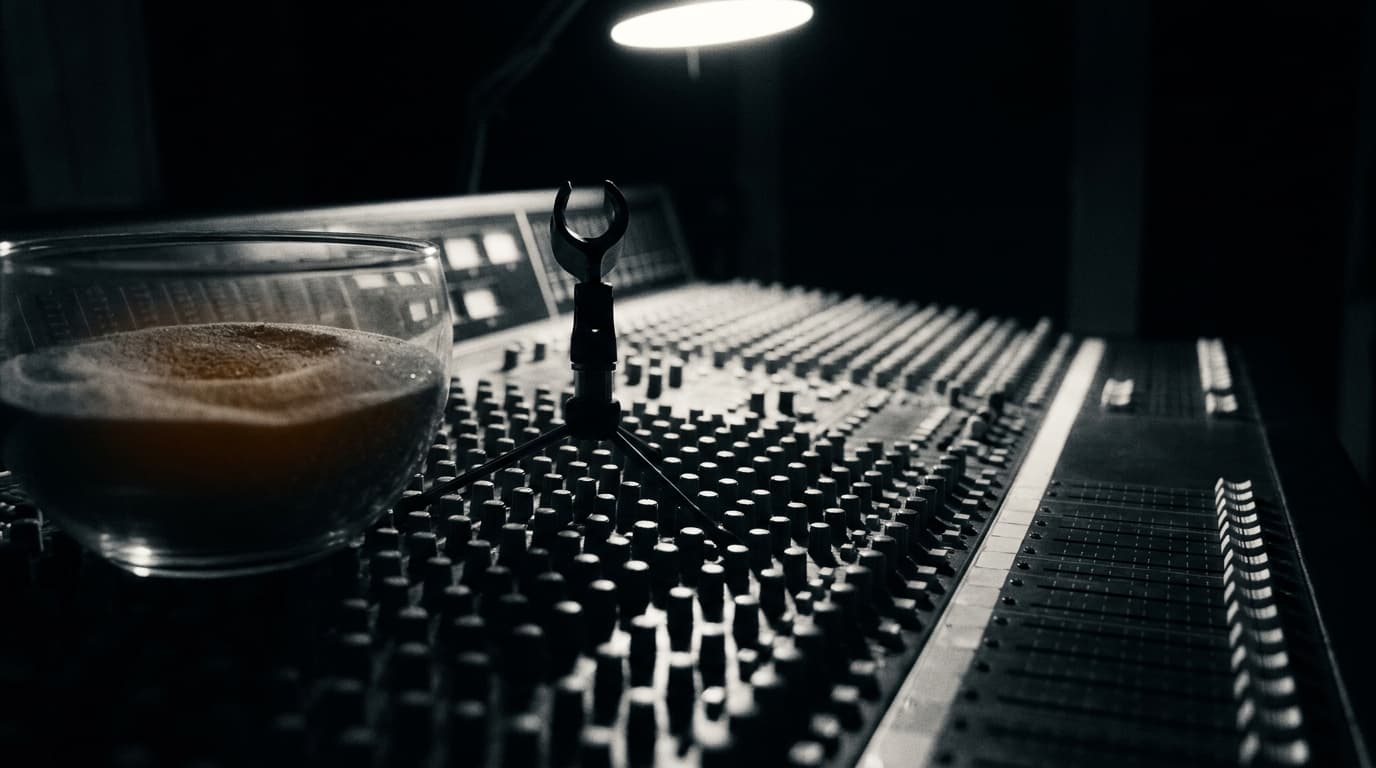
The specific instrument choices are where the philosophy gets tactile. Zimmer uses audio editing tools to fragment, granulate, stretch, and reverse sounds — metallic scrapes, sand falling into a metal bowl — until they become something new. Then he places those processed sounds alongside bagpipes, synthesizers, and solo voice.
Bagpipes in a sci-fi epic sounds like a gimmick. In practice, it works because Zimmer isn't reaching for "exotic" — he's reaching for ancient. The Fremen are a people shaped by thousands of years of desert survival; their music should feel like it predates the empire that's trying to consume them. Bagpipes, processed beyond easy recognition, carry that weight without announcing themselves.
3DVF notes that Zimmer's career-long calling card is contrast: analog warmth against digital grit. Dune is the fullest expression of that instinct. The organic and the industrial sit in the same cue, neither resolving into the other.
What Part Two Expanded
Part Two didn't abandon what worked in the first film — it built outward from it. Paul's melody, the Kwisatz Haderach theme, the House Atreides motif all return, but they're now operating inside a denser, more hostile sonic environment. The track Eclipse layers those familiar elements under ominous deep brass and unnerving vocals to produce something that feels like corruption — the same notes, but wrong now, which is exactly what's happening to Paul.
That's motif-as-narrative, and it's the most sophisticated thing Zimmer does across both films. The music doesn't tell you Paul is changing; it demonstrates the change by making familiar sounds feel threatening.
I'd argue this is where the Dune scores separate themselves from Zimmer's other recent work. The Inception braaam was a technical innovation that became a meme. The Interstellar organs were emotionally overwhelming but essentially illustrative. The Dune scores are doing something more structural — using recurring sonic material the way Herbert uses recurring language in the novels, as a system that accumulates meaning across time.
The Larger Pattern
It's worth placing this alongside what other composers are doing with sci-fi sound right now. Daniel Pemberton's score for Project Hail Mary — built around cristal baschet recordings, woodblocks, children's choir, and physical percussion — pursues a similar instinct: make the music feel like an extension of human presence rather than a comment on it. Both composers are working against the idea that sci-fi sound should feel technological. The interesting choice, apparently, is to make it feel bodily.
With Dune: Part Three already in development and a teaser featuring Fremen chant already circulating, the question isn't whether Zimmer returns — it's whether the final installment pushes the sonic system further or resolves it. The motifs that have been accumulating across two films will need somewhere to land. Watch for whether the score for Part Three treats those themes as triumphant or tragic. Given what happens to Paul Atreides, the answer probably isn't what audiences expect.