


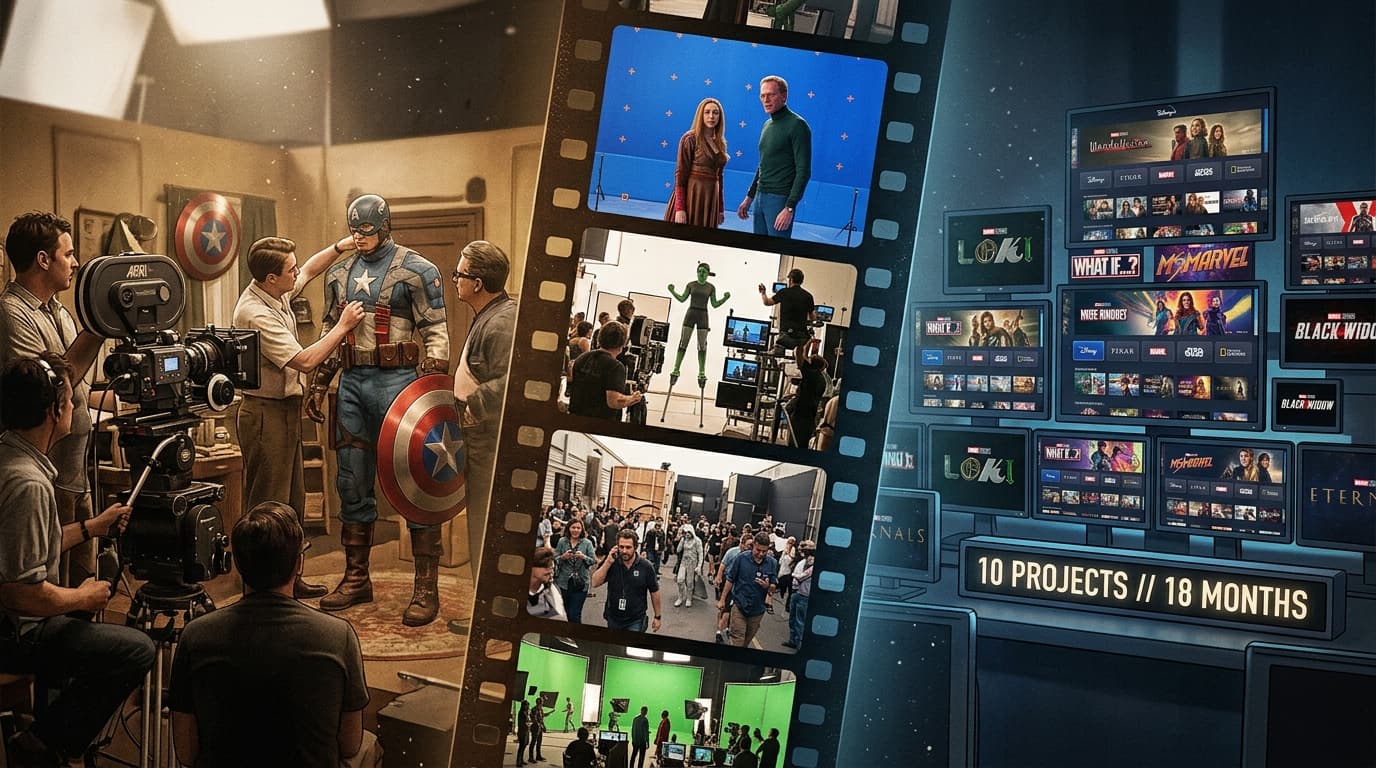

Phase 4 was a volume bet that didn't pay off the way Disney expected. Between 2021 and 2022, Marvel released six Disney+ series and four theatrical films — a pace that would have been unthinkable in the Infinity Saga years. The logic was sound on paper: more content meant more reasons to subscribe, and more subscribers justified the streaming pivot. The execution revealed the limits of that math.
The problem wasn't quality alone. It was that flooding the release calendar compressed the cultural oxygen each project needed to breathe. When WandaVision landed in January 2021, it felt like an event. By the time She-Hulk arrived eighteen months later, the cadence had trained audiences to treat Marvel shows as background content rather than must-watch television. The franchise's scarcity value — the thing that made Endgame a genuine cultural moment — had been quietly spent.
The Costs Caught Up With the Strategy
High-budget Disney+ productions compounded the problem. Marvel's streaming shows were expensive to make by television standards, with budgets that reflected cinematic production values, raising sustainability concerns as mixed audience response made the ROI harder to justify. Disney was spending like the shows were theatrical tentpoles while the audience was treating them like television filler.
Bob Iger made the diagnosis explicit. In February 2023, Disney's CEO said the company was re-evaluating its content volume as a cost-cutting measure — and Kevin Feige acknowledged that Marvel would space out releases more deliberately going forward. That's a notable admission from a studio that had spent a decade arguing that interconnected content was an unqualified competitive advantage.
Phase 5 Recalibrated the Model
The structural response was visible in how Marvel approached its next phase. Rather than continuing the limited event series format that defined Phase 4, Marvel Studios shifted toward multi-season series — a meaningful change in how the franchise thinks about television. Event series are expensive one-shots; multi-season shows build audience habits and amortize production costs over time. It's a more sustainable television business, even if it requires more patience.
The theatrical side recalibrated too. Fewer films per year, with more weight placed on each one to carry the broader ecosystem. Disney's flywheel model has always positioned film as its engine — the thing that drives theme park attendance, merchandise, and subscriber acquisition. When the films lose cultural urgency, the whole machine slows down.
What the Doomsday Bet Reveals
The real test of whether the recalibration worked arrives in 2026. Avengers: Doomsday is being positioned as the franchise's urgency reset — the moment Marvel tries to recapture the gravitational pull it had before Phase 4 diluted it. Avengers: Secret Wars follows in December 2027, closing out the entire Multiverse Saga that Phases 4 through 6 have been building toward.
That two-film structure is itself a strategic signal. Disney is betting that scarcity — two massive events spaced a year apart, rather than a constant drip of content — can rebuild the appointment-viewing culture that made the Infinity Saga work. The economics of Phase 4 taught them that volume without urgency is just overhead.
Whether audiences respond is a genuine open question. But the strategic logic is cleaner than it was in 2021, and that alone represents a meaningful correction.