


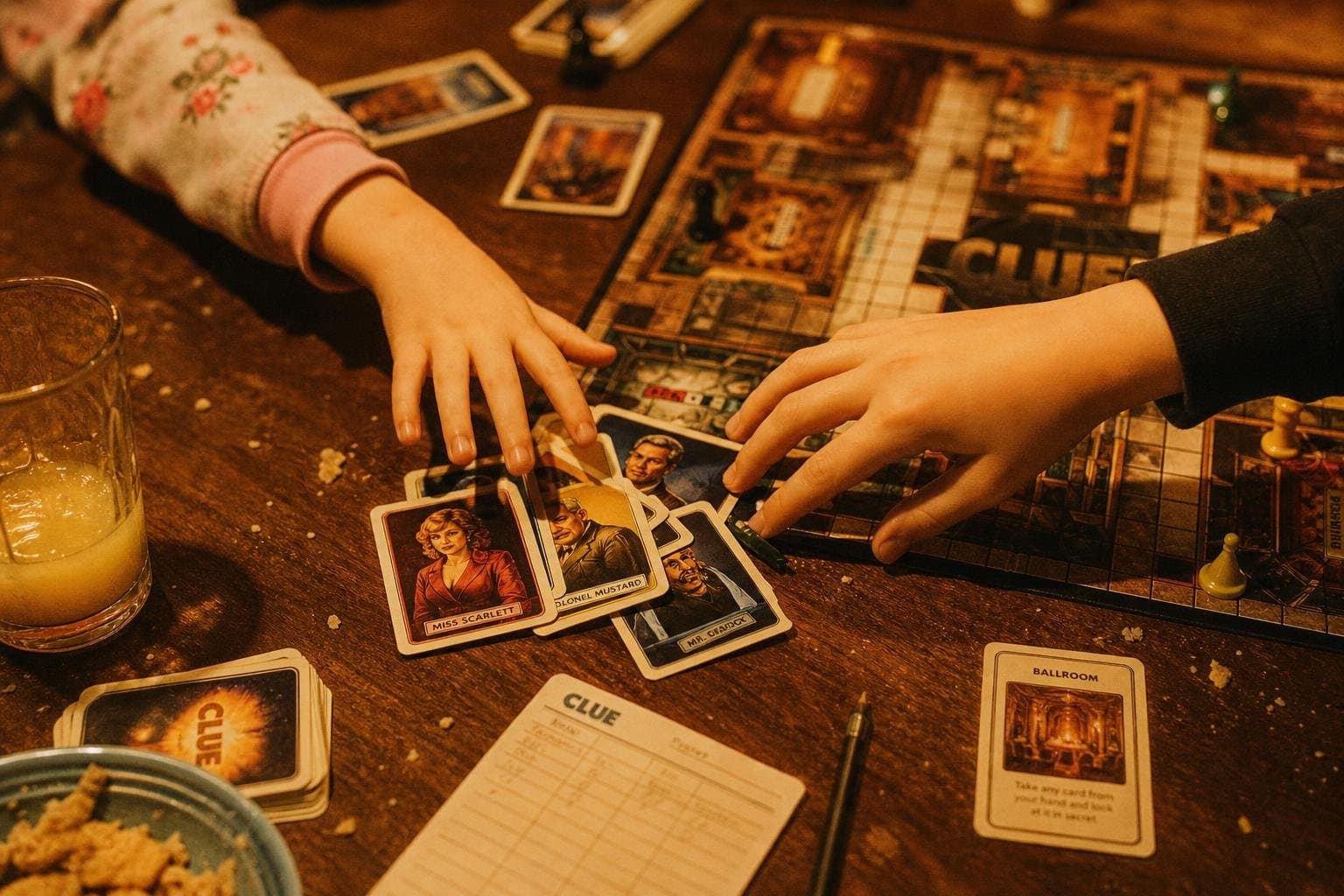

You know the look. The twelve-year-old who's been playing for four minutes and has already figured out the optimal strategy, now staring at the ceiling while their younger sibling counts spaces on the board for the third time. Or the reverse: the six-year-old who's been asked to "just wait a second" so many times they've wandered off to find the dog.
The age-gap problem is the hardest problem in family gaming. Not the competitive kid, not the kid who cries when they lose, not even the kid who flips the board — those are manageable. The gap between a six-year-old and a twelve-year-old is a genuine design challenge, because those two kids are not playing the same game even when they're sitting at the same table.
Here's what actually works, and why.
The Gap Is Bigger Than It Looks
Six and twelve sounds like a six-year difference. In practice, it's the distance between a kid who's still learning to read fluently and a kid who can hold multiple strategic variables in their head simultaneously. A game that's genuinely engaging for the twelve-year-old will almost certainly leave the six-year-old behind. A game calibrated for the six-year-old will bore the twelve-year-old within ten minutes.
Eventful Eve's honest breakdown of what actually makes family games work puts it plainly: "A game marketed as 'ages 8+' might genuinely require reading fluency and strategic thinking, which means a just-turned-eight-year-old might be frustrated." That's the 8+ category. The six-year-old is two years younger than that floor.
The same source makes a point that's easy to underestimate: games with hidden information hold attention better across age gaps because "you never know exactly what is coming next." That's the mechanic that does the most work when you're trying to keep a twelve-year-old engaged while a six-year-old catches up.
What the Six-Year-Old Actually Needs
The six-year-old needs a game where their turn is genuinely meaningful — not just "move your piece and wait" — and where the gap between their decision-making and an older player's doesn't produce wildly different outcomes. Luck has to be a real factor, not a consolation prize.
New York Magazine's Strategist highlights Outfoxed as a standout here. A parent quoted in the piece says it has "more replay value than I have ever experienced in a child's board game" — his then-five-and-a-half-year-old requested it nearly every day for months. The whodunit structure (eliminate suspects, find the guilty fox) gives younger players a real investigative role. Crucially, it's cooperative, which changes the whole dynamic: the twelve-year-old's strategic edge becomes an asset to the team rather than a weapon against a younger sibling.
That's the cooperative game insight I wrote about back in April — the structure works best when nobody's in charge of being right. With a six-year-old at the table, that matters even more. Cooperative play lets the older kid contribute more sophisticated thinking without it feeling like domination.
What the Twelve-Year-Old Actually Needs
The twelve-year-old needs to feel like their choices matter. They've outgrown the phase where spinning a wheel and moving a piece is inherently exciting. They want interaction — blocking, responding, reading other players.
Eventful Eve identifies this directly: "Interaction beats parallel play. Games where players mostly do their own thing in separate tracks are fine, but the most replayed games in our house are the ones where you are actively competing with, responding to, or blocking other players." That's the twelve-year-old's requirement in a sentence.
The trick is finding games where that interaction doesn't require reading fluency or complex rule mastery from the younger player. Hidden-information card games — where the six-year-old's hand is genuinely unknown to the twelve-year-old — create real tension without requiring the younger player to execute sophisticated strategy. The twelve-year-old has to actually pay attention. That's engagement.
The Practical Test
Teach Beside Me's roundup offers a useful frame for game night logistics: "Pick the right game for the time and mood. Short attention span? Go for something quick." For a six-and-twelve combination on a weeknight, that's almost always the right call. A 90-minute game is a commitment that requires sustained focus from the younger player — and that's a lot to ask before homework is done and dinner is still digesting.
The games that survive this age gap tend to share a few traits: turns are short enough that nobody waits too long, luck is real enough that the younger player can win, and the hidden-information or cooperative structure gives the older player something to actually think about. That's a narrow target. But it exists.
The six-year-old and the twelve-year-old can play the same game. You just have to pick the one that was actually designed for both of them — not the one that was designed for the average of them.