



My family does not like party games. I know this because we have played Charades exactly once, and it ended with my seven-year-old in tears because nobody could guess "swimming" and my husband doing increasingly unhinged arm motions while the rest of us stared in polite confusion. Pictionary went similarly. Someone drew a horse that looked like a table. We never spoke of it again.
Here's the thing: the problem usually isn't the family. It's the format.
What Makes Classic Party Games Fail at Home
Charades and Pictionary have a structural issue that nobody talks about: they put one person on the spot, alone, in front of everyone, with a time limit. For adults who are comfortable being ridiculous, that's fine. For a nine-year-old who just had a long day at school, it's a nightmare. The performance pressure is real, and it lands hardest on exactly the kids who most need low-stakes fun.
The other problem is the skill gap. Mommy Poppins notes that the best mixed-age games are the ones that "bridge skill gaps and get everyone participating" — and classic party games often do the opposite. A twelve-year-old's vocabulary advantage over a six-year-old isn't fun for either of them.
The Format Shift That Changes Everything
The games that actually work for party-game-averse families share one trait: they distribute the pressure. Nobody is standing alone in front of the group. Everyone is doing something simultaneously, or the "performance" is so brief and low-stakes that it doesn't register as a performance at all.
A recent roundup from cgmedicalcouncil.in makes a useful observation about this: drawing and guessing games work well for mixed ages specifically because they offer "high laughter, low rule complexity." The laughter matters. When everyone is laughing at the same absurd thing — not at one person's failure — the dynamic shifts completely.
A few formats worth trying if your family has bounced off the classics:
Simultaneous guessing games. Games where everyone writes or draws at the same time, then reveals together, remove the spotlight problem entirely. Nobody is performing; everyone is just... participating. The reveal becomes the fun part, not the execution.
Team-based formats. Mommy Poppins specifically recommends "team-based play where everyone can contribute" for mixed-age groups — and this is the right instinct for party games too. When a younger kid is on a team with an older sibling, the pressure diffuses. They're not failing alone; they're playing together.
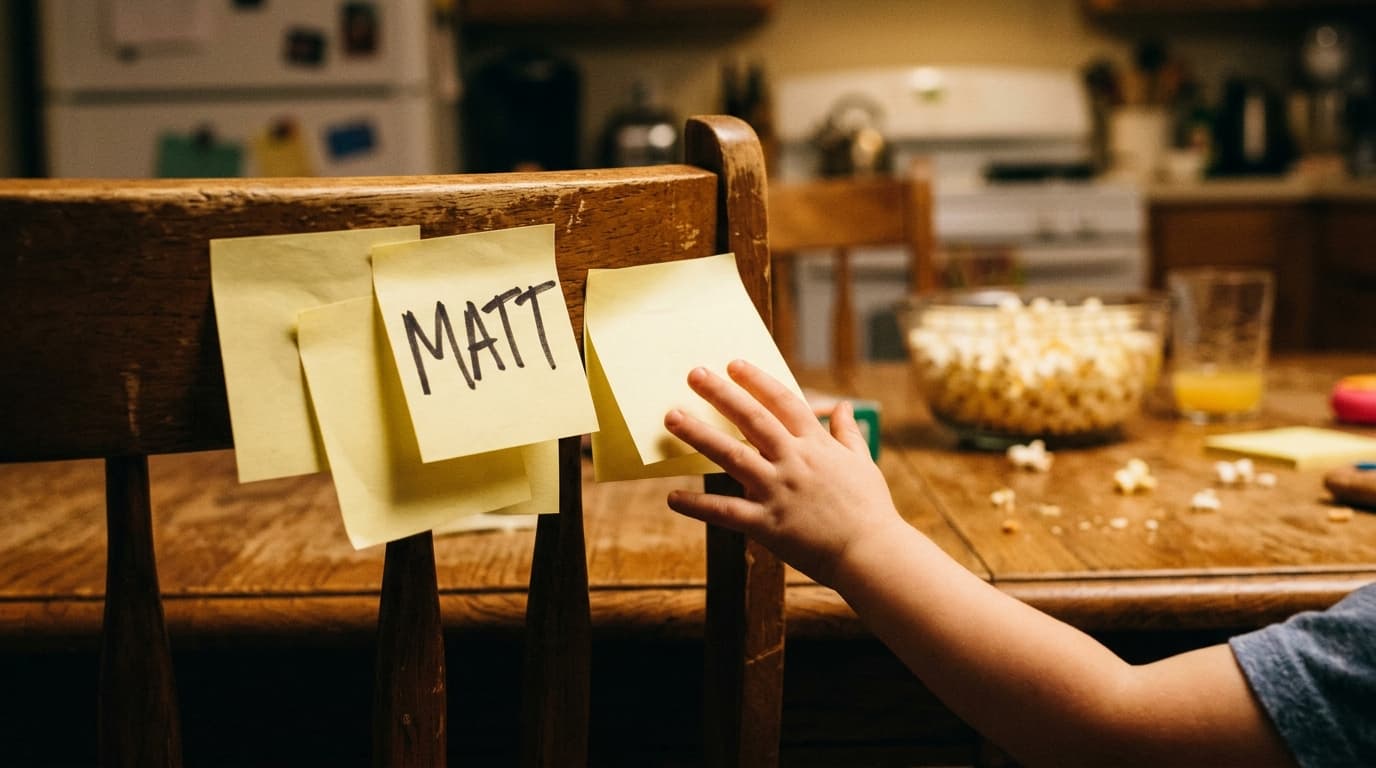
The "Who Am I?" style. Society19's roundup describes a post-it note version where everyone secretly writes a name, sticks it on the person to their right, and that person asks yes/no questions to figure out who they are. The questions are the game — not a performance, just a conversation. Kids who hate being put on the spot often love this format because the interaction is one-on-one and the pace is theirs to control.
The Rotation Trick
One underrated move: stop treating "party game night" as a single format. The cgmedicalcouncil.in piece suggests rotating formats week to week — board games one night, drawing games another, card games another — and I'd extend that logic to party games specifically. The families who hate party games often hate one kind of party game. They've just never been offered the alternatives.
The Sticker Stalker game from Society19's list is a good example of this: the entire point is to secretly stick stickers on family members without them noticing. It sounds ridiculous. It is ridiculous. But it requires zero performance, zero vocabulary, and works across a genuinely wide age range. My analysis: games that feel more like pranks than games tend to sidestep the "I don't want to play" resistance entirely.
What to Try This Weekend
If your family has written off party games, I'd argue the genre hasn't failed you — the specific formats have. Start with something simultaneous or team-based. Keep turns short. Pick something where the failure state is funny rather than embarrassing.
The goal isn't to find the perfect party game. It's to find the one that makes your particular group of tired, competitive, easily-frustrated humans actually want to play again next week. That game exists. It probably just doesn't involve acting out "swimming" in front of everyone.