


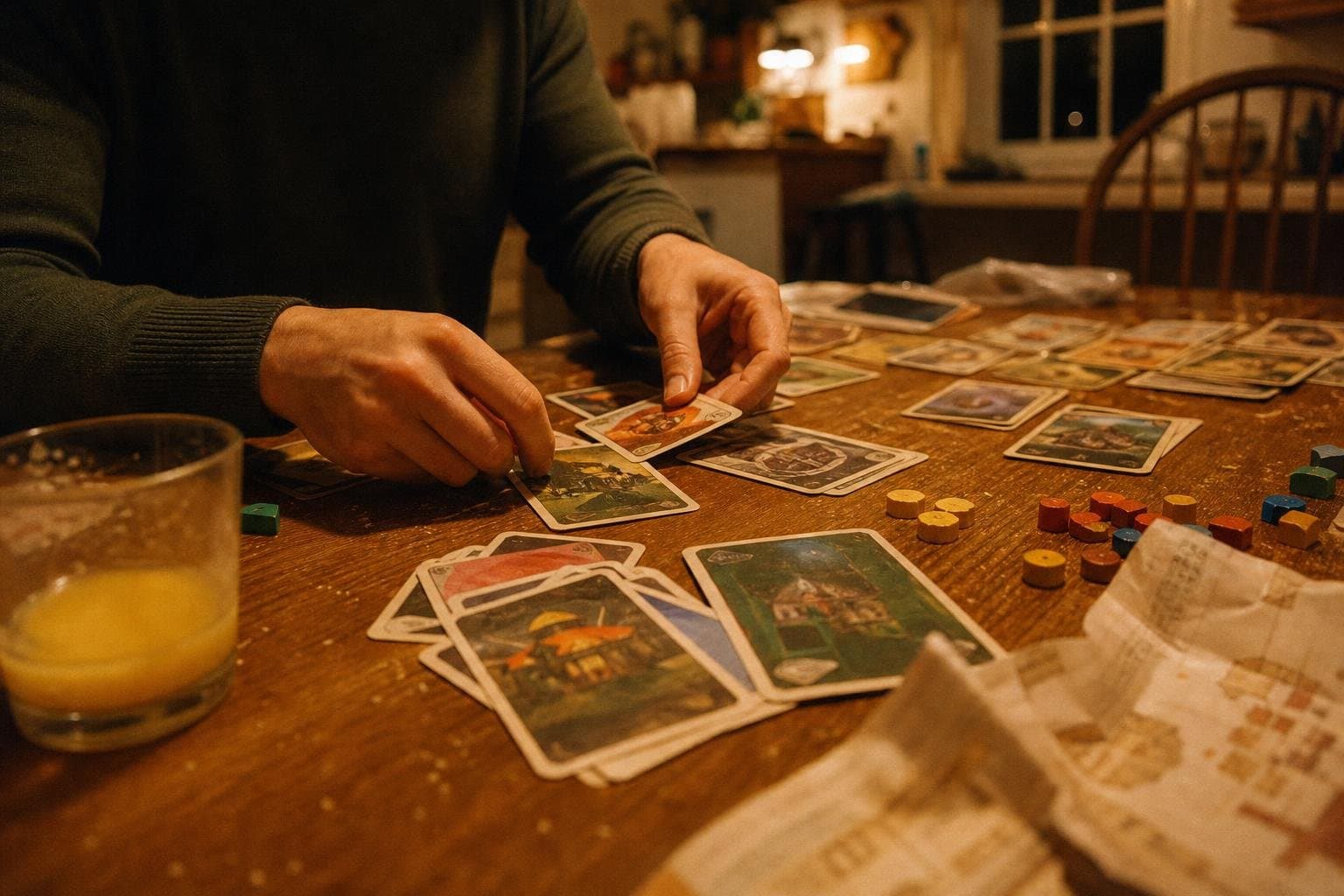

There's a specific kind of defeat that happens around 7:45 on a Tuesday night. You've finally convinced everyone to put down their devices. You've cleared the table. You've opened the box — and then spent the next twelve minutes sorting cards, punching tokens, reading aloud from a rulebook, and watching your kids' eyes glaze over before a single piece has moved.
The game hasn't even started, and you've already lost them.
Setup time is the most underrated variable in family gaming. Not complexity, not player count, not even age range — setup. Because setup happens before the fun, when attention is at its most fragile and the couch is still right there. The question worth asking isn't just "how long does this game take?" but "how long does this game take to start?"
Box Times Are a Fantasy
Here's the thing about that "30 minutes" printed on the side of the box: it describes the game under favorable conditions. As boardgames.news lays out in their real-table-time guide, published play times typically cover only the central play experience — not setup, not teaching rules, not the inevitable "wait, what happens when..." interruptions. For family titles, they suggest adding a realistic buffer of 10 to 20 minutes on top of whatever the box claims.
That buffer is where weeknight games go to die.
The practical implication: a game that claims 20 minutes but requires 15 minutes of setup is actually a 35-minute commitment before anyone's had any fun. A game that claims 45 minutes but sets up in 90 seconds is a completely different animal. When I wrote about setup-time expectations back in May, the argument was that our frustration is often misplaced — we blame the game when we should be blaming our planning. That's still true. But it's also worth being honest about which games are actually worth the prep.
Games That Pay Off the Investment
The games that survive weeknight reality tend to share one trait: the setup time is front-loaded and invisible to the kids. You do it while they're finishing dinner. The box opens, the pieces go out, and by the time everyone sits down, you're playing. That's the ideal.
Mumsnet's roundup of family board games, tested by actual families rather than professional critics, highlights games like Dobble and Ticket to Ride as standouts — and the gap between those two is instructive. Dobble sets up in under two minutes: shuffle, deal, go. Ticket to Ride requires laying out a board, distributing cards, sorting routes, and explaining a scoring system that takes most new players two rounds to actually internalize. Both are good games. But Dobble is a Tuesday game. Ticket to Ride is a Saturday game, and pretending otherwise is how you end up with a half-finished board and a nine-year-old who's "bored."
The WIRED family gaming picks point toward Pandemic as a cooperative game completable within an hour — and cooperative games have a structural advantage here that's easy to miss. When kids are setting up alongside you, they're already engaged. Sorting disease cubes by color isn't just prep; it's the start of the game experience. Compare that to games where setup is purely administrative — one adult reading instructions while everyone else waits — and you can feel the difference in the room.
The 10-Minute Setup Threshold
My rough working rule: if setup takes longer than 10 minutes with kids present, the game needs to deliver something exceptional to justify it. Not just "fun" — exceptional. Because you've already spent social capital getting everyone to the table, and every minute of setup is a withdrawal from that account.
Games that clear this bar tend to have one of three things going for them: setup that kids can participate in meaningfully, a payoff so reliably good that everyone remembers it and comes back willingly, or a setup so simple it barely registers. Quickboardgamesforfamilies.com's roundup of fast family games makes a useful point about games like Happy Salmon — you can literally set up while standing in the kitchen, and the game is loud and physical enough that kids are already laughing before the first card is played. That's not a coincidence. That's design.
The harder question is what to do with the games you love that don't meet the threshold. My answer has evolved: those games get scheduled, not spontaneous. They go on the weekend list, not the Tuesday list. Treating them as events rather than options removes the resentment — you're not failing to play Pandemic on a Wednesday, you're saving it for Saturday when it deserves the time it needs.
The games worth the 10-minute prep exist. They're just not the ones that claim they're worth it. They're the ones your kids ask for again the following week, setup and all.