


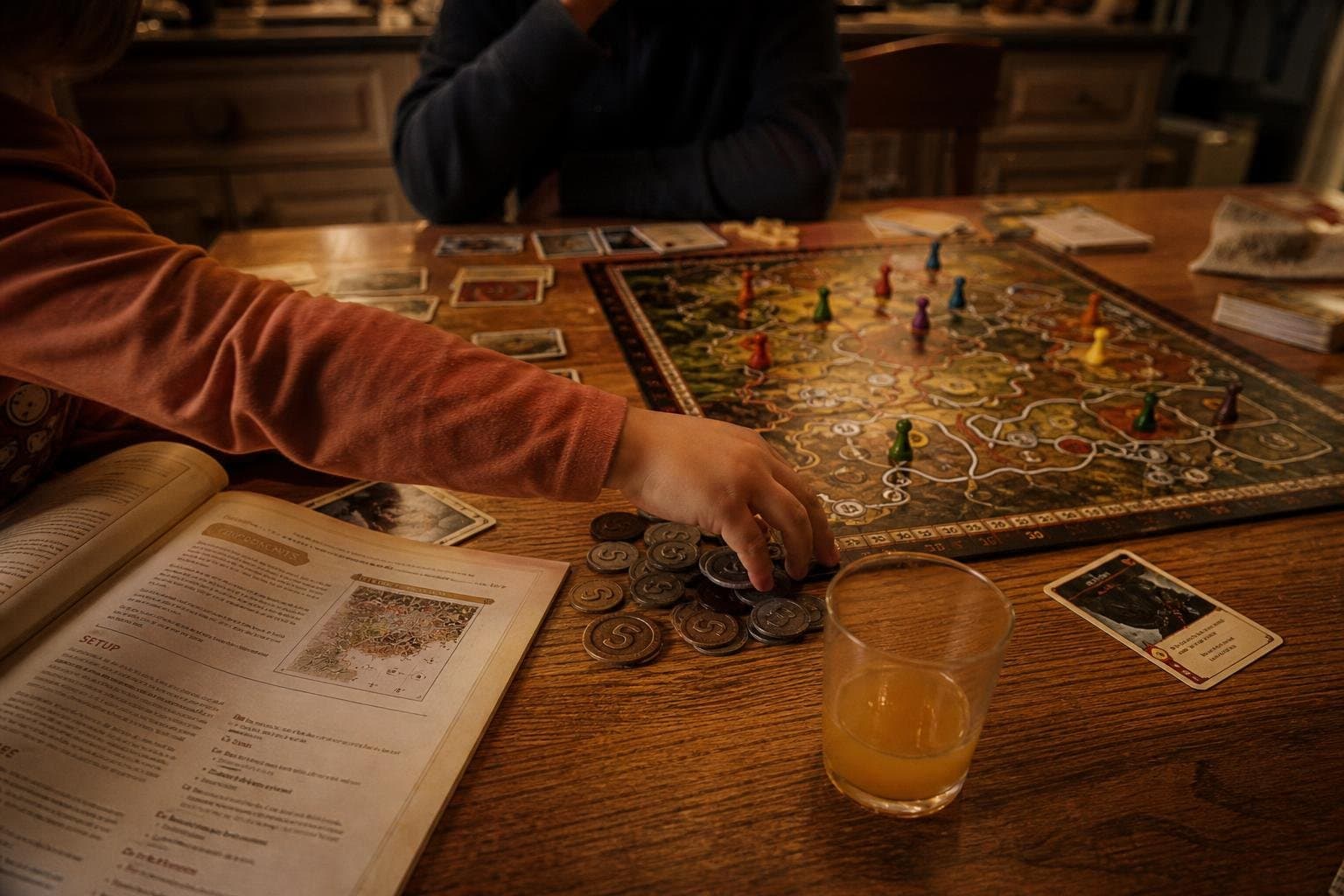

My eight-year-old has a tell. About twenty minutes into any game that isn't going her way, she starts rearranging the pieces. Not cheating, exactly — just... reorganizing. The cards get straightened. The tokens get sorted by color. She's still at the table, technically, but she's checked out. And once she checks out, the whole game starts to wobble.
Every parent knows this moment. Someone declares they don't want to play anymore, and suddenly you're not managing a board game — you're managing a small crisis with cardboard involved. The question worth asking before you buy any game isn't "will my kids love this?" It's "what happens when one of them stops loving it mid-round?"
The answer is built into the design. And once you start looking for it, you can't stop seeing it.
Short Games Don't Give Quitting a Foothold
The most reliable defense against the mid-round mutiny is a game that ends before anyone has time to build up enough frustration to quit. Wired's family game guide makes this point practically: one of their top tips is setting a hard time limit before play starts, specifically to prevent the moodiness that sets in during marathon sessions. That's good advice, but the better version is buying games where the clock is already built in.
A fifteen-minute game doesn't give resentment time to compound. If you're losing badly, you can see the end from where you're sitting. That changes everything about how kids tolerate being behind. The Austin Gallery's tested picks flag this directly — games that "play in an evening" and "teach in five minutes" aren't just convenient, they're structurally resistant to the quit moment because the finish line is always visible.
This is why quick card games punch above their weight on weeknights. Not because they're simpler, but because the emotional math is different. Forty-five minutes of losing feels like punishment. Ten minutes of losing feels like a round you can shake off and try again.
Cooperative Games Redirect the Frustration — Sometimes
Cooperative games should theoretically solve the quit problem entirely. If nobody's losing to another player, nobody has a reason to storm off, right? I've written about this before — the cooperative game problem is real, and it's not about the game, it's about who ends up running it. When one player (often the oldest, often a parent) starts making decisions for everyone, the other players aren't really playing anymore. They've already quit — they're just still sitting there.
The cooperative games that survive the mid-round moment are the ones that force genuine participation from every player. HABA's age-by-age guide points toward this when it emphasizes matching game complexity to the actual ages at the table — a cooperative game where the six-year-old has a real role to play is a different animal than one where the six-year-old is just watching the ten-year-old make all the calls. When kids feel like they matter to the outcome, they stay invested. When they feel decorative, they start reorganizing the pieces.
The Design Feature Nobody Talks About: Graceful Exits
Here's the thing most game reviews skip entirely: some games are built to absorb a player dropping out, and some completely collapse when someone leaves mid-round.
Games with simultaneous turns or minimal player interdependence handle dropouts better. If your turn doesn't depend on what the person before you did, a missing player creates a gap, not a catastrophe. Games built around tight turn order — where each player's move sets up the next — fall apart when someone leaves, because suddenly there's a hole in the chain and everyone else has to figure out what to do with it.
Plugged In's family game breakdown highlights dexterity games like Men at Work as an example of a format where each turn is largely self-contained — you stack your pieces, you either succeed or you don't, and the game moves on. That structural independence means a tired or frustrated player can step back without derailing everyone else. The game doesn't need them to function.
This is worth thinking about at the point of purchase, not after you've already opened the box. Ask: if one player stops participating, does the game still work? If the answer is no, you need to be confident everyone will stay engaged for the full runtime. That's a high bar on a Tuesday night.
What to Actually Look For
The games that survive the "I don't want to play anymore" moment share a few traits: they're short enough that the end is always in sight, they give every player something real to do on their turn, and they don't structurally depend on full participation to function. None of that shows up on the box. It shows up twenty minutes in, when someone starts rearranging the tokens.
The best test isn't whether your kids love a game when they're winning. It's whether they'll still be at the table when they're not.