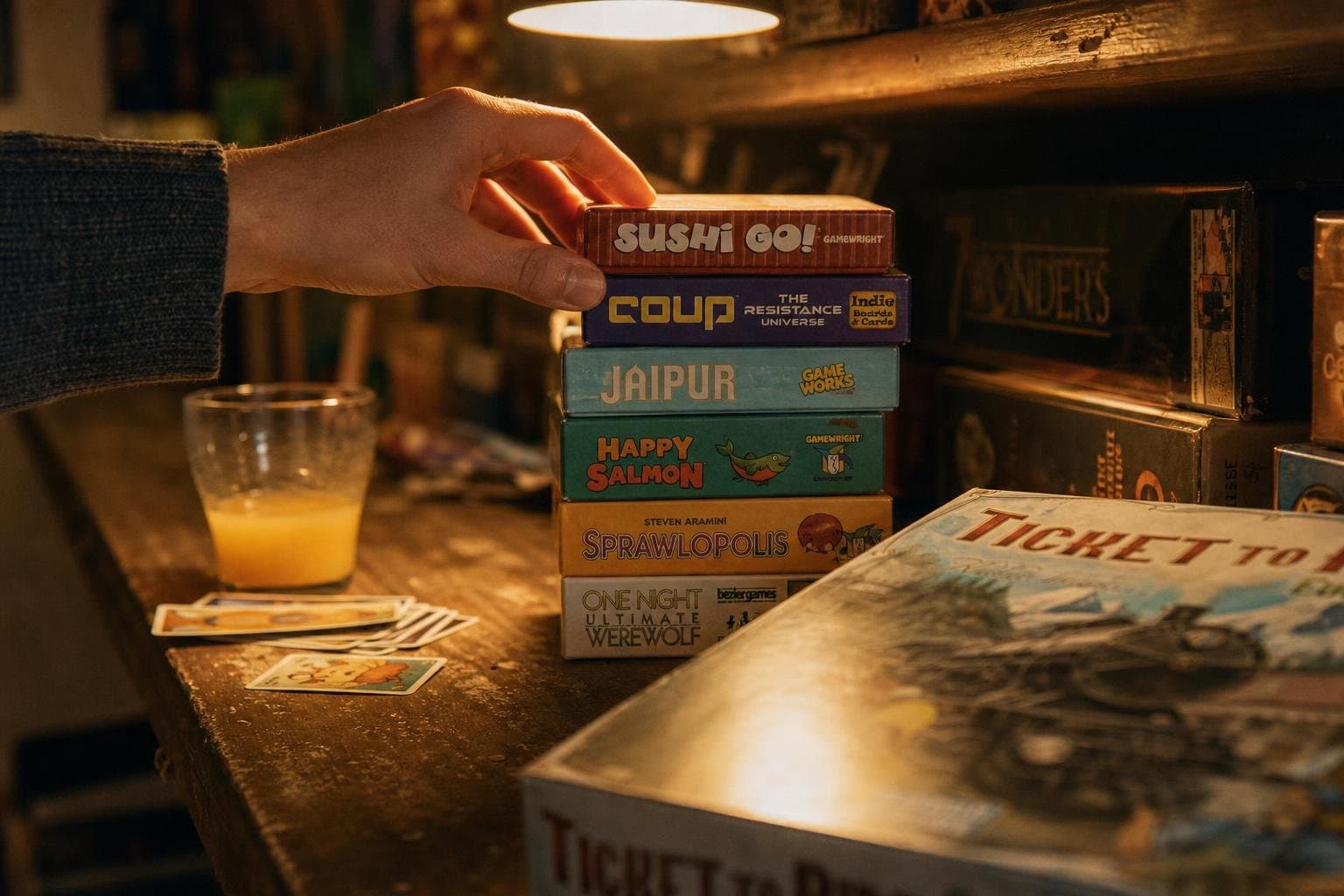

Every parent has stood in the board game aisle holding two boxes: one slick and $40, one plain and $15, wondering if the cheap one is secretly just cardboard and false hope. I've been burned by both directions — a $45 box that collected dust after one play, and a $9 card game that's been requested every single week since July. Price and staying power don't correlate the way the shelf tags want you to believe, and the roundups chasing "best of 2026" lists tend to prove it by accident — GamesRadar+ and Wargamer both spend most of their ink on pricier strategy boxes, while the actual budget winners get a line or two at the bottom.
The Cheap Stuff That Actually Earns Its Keep
The clearest budget winner in recent roundups is Dobble, a fast-paced spot-it card game that Mumsnet's testers list at a discounted price well under £15 — the kind of tier that, converted loosely, lands in the same territory most American parents mean when they say "under $20." I'm not going to pretend I have a confirmed US price for it, because I don't, but the shape of the game is the point: a deck of cards, zero setup, and a mechanic a six-year-old can beat a twelve-year-old at on pure reflexes. That last part matters more than the price tag. A game that lets the youngest kid genuinely win isn't a consolation prize — it's the design doing its job.
The same roundup lists My First Snakes & Ladders at a similarly low price point, and P for Pizza just above it. Both are useful data points, but they're also a reminder that "cheap" and "family game" aren't the same claim. My First Snakes & Ladders is built for preschoolers specifically — it's not going to hold a ten-year-old's attention for more than one humoring round, and it shouldn't have to. Budget shopping only pays off if you're honest about who's actually sitting at the table.
Simplicity Is the Budget Tier's Actual Superpower
What the cheap games tend to share isn't thinness — it's a mechanic you can explain in one sentence. Snake Oil, covered as a category winner for big mixed-age groups, works because the whole game is "combine two word cards into a fake product and pitch it," and that pitch takes thirty seconds. It scales from three players to ten without needing more rules, just more chairs. That's a budget-tier trait worth hunting for specifically: a game whose rulebook is short because the idea is simple, not because the content is thin. Carcassonne gets flagged in the same source as teachable in five minutes flat — draw a tile, place it, maybe drop a meeple, done. None of these need a rules explainer sheet taped to the box lid.
Compare that to the higher-shelf stuff the enthusiast sites love. Wargamer's 2026 picks lean toward cooperative trick-taking epics and vineyard-management expansions — genuinely interesting games, but nobody's pitching you a five-minute teach on those. Even the licensed cooperative boxes chasing family attention, like the Disney-themed dungeon crawler reviewed by Gaming Trend, ask for six rounds of planned-out actions and battle dice math before anyone gets to the fun part — a fundamentally different kind of investment than a $15 card game. Nobody's wrong for wanting that depth, but if your weeknight budget is both dollars and minutes, the games that win on price tend to also win on setup speed, and that's not a coincidence. A designer who can't afford to pad the rulebook with filler mechanics usually ends up making something leaner and more portable, which happens to be exactly what a tired Tuesday needs.
What to Actually Check Before You Buy
Price alone tells you nothing about whether a game survives contact with your actual kids. Before you add something to cart because it's cheap, ask the same three questions you'd ask about a $50 box: does it scale to your real player count, does the youngest player have a genuine path to winning, and can you teach it without a rulebook sitting open on the table. Dobble and Snake Oil pass all three. A toddler-targeted snakes-and-ladders variant only passes if your crowd actually skews that young, and a six-round cooperative battle against shadow monsters only passes if your family has forty-five uninterrupted minutes, which on a school night is its own kind of fantasy.
The budget shelf isn't a lesser version of the hobby — it's where some of the fastest, most forgiving designs live, precisely because they can't rely on components to carry a weak idea. Next time you're choosing between the glossy box and the plain one, check which game actually explains itself in one sentence. That's usually the one still getting requested in October.


