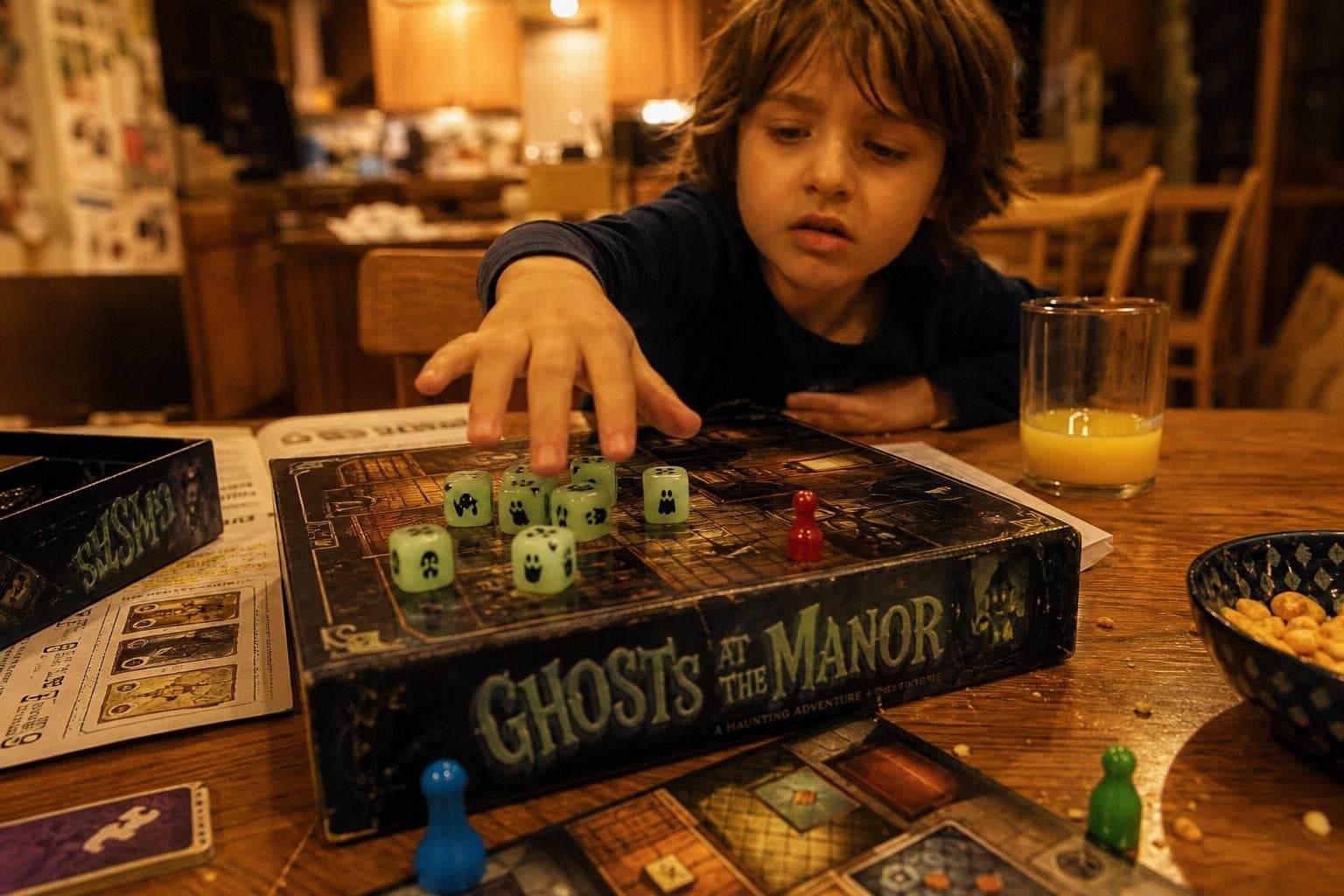

Every October my shelf fills with games I'd never pull out in March, and every October at least one of them gets abandoned mid-play because the theme that sounded fun on the box turned out to be a lot once the lights were low and the six-year-old was holding the dice. Halloween board games live or die on a question most "best of" lists skip entirely: is this actually spooky-fun, or is it just spooky?
The Cooperative Pick That Earns Its Reputation
Mists Over Carcassonne gets singled out by one family game blogger as a genuine favorite for the season — a cooperative twist on Carcassonne where the family works together placing tiles, clearing ghosts, and containing haunts rather than competing against each other. That cooperative structure matters more than the Halloween skin, and it tracks with what a separate roundup of tested family games flags as the draw of cooperative titles generally: everyone at the table working toward one outcome instead of splitting into winners and losers partway through dinner cleanup, as Blue Dragon Board Games notes in its category breakdown of family-game types. A tile-laying game mixed-age families already understand, with a seasonal reason to bring it back out once a year, beats something built from scratch around a theme.
The same Halloween roundup points to Ghost Fightin' Treasure Hunters as another cooperative option — simple dice-driven mechanics, colorful miniatures, and a new "1 vs All" mode that apparently keeps adults engaged even though the base game skews young. That combination — low complexity floor, a harder mode for when the teenager wants a real challenge — is exactly the shape mixed-age Halloween games need and exactly the shape most seasonal releases don't bother with.
The Horrified series gets the same treatment: a cooperative format where the family battles classic monsters together, with each entry (American Monsters, Greek Monsters, World of Monsters) functioning as a standalone game built around a different monster roster. If you already own one Horrified title, that's useful information — it tells you the investment isn't locked into a single theme, and you can pick the monster set that matches what your kids are into without learning a new system.
Not Every "Thematic" Game Is Built for the Table You Actually Have
Here's where I get pickier than the roundups. Don't Go in There sounds like a great fit on paper — a set collection game where the box itself becomes a dice tower for glow-in-the-dark ghost dice, which is a genuinely clever physical gimmick kids will fight over. But the review flags that some of the cards may be too intense for easily-scared kids, which is the kind of warning that gets buried under "fun for the whole family" marketing copy everywhere else. For a lower-stakes alternative, Scholastic's list of simple Halloween party activities is a good reminder that not every spooky-season gathering needs a box game at all — a donut-on-a-string eating contest has zero risk of nightmares.
Meanwhile, the hobby side of the Halloween shelf has gotten genuinely heavier this year. Horror on the Orient Express: The Board Game, a new Call of Cthulhu-based cooperative release listed on BoardGameGeek, carries a complexity rating pushing 3.9 out of 5 and is built for one to three players best. That's not a knock on the game — it looks genuinely interesting for Cthulhu mythos fans — but it's a reminder that "Halloween-themed" spans an enormous range, from a glow-in-the-dark dice tower your eight-year-old can run to a text-heavy investigation game that's really built for adult tabletop groups. Don't let the pumpkin on the box fool you into thinking every spooky release is weeknight-with-kids material.
Spooktacular, a 2026 release from Level 99 Games, sits closer to the family-friendly end — a 1-to-5 player game where everyone plays a movie monster with distinct, simply-explained abilities, reviewed as teaching itself within a couple of pages of rules. The reviewer notes it's become a weekly staple with their regular group, which is a better signal than any marketing line: a game people keep choosing to bring back isn't coasting on theme alone.
What Actually Travels Past Halloween
The honest test for any seasonal game is whether it survives being put away in November. One family-event guide makes a related point about Halloween gatherings generally — the best ones give everyone a real role in the room, not just the kids racing around while the adults watch from the couch. That's as true for a board game as it is for a living-room activity night, and it's the same reason Ghost Fightin' Treasure Hunters earns its spot: the review notes it's good enough to want to play year-round, not just during the two weeks you pull out the orange-and-black decorations. That's the bar. A Halloween game that only works because of candy corn and a dimmed lamp isn't earning shelf space; one that happens to wear a costume well is.
If you're deciding what to add this year, skip anything advertised purely on atmosphere and look for the cooperative structure underneath — shared goals, scalable difficulty, and rules light enough that a tired six-year-old can still meaningfully contribute. The theme should be the bonus, not the whole pitch. Come November, you'll find out fast which games earned their place and which ones are headed straight back into the closet until next October.


