


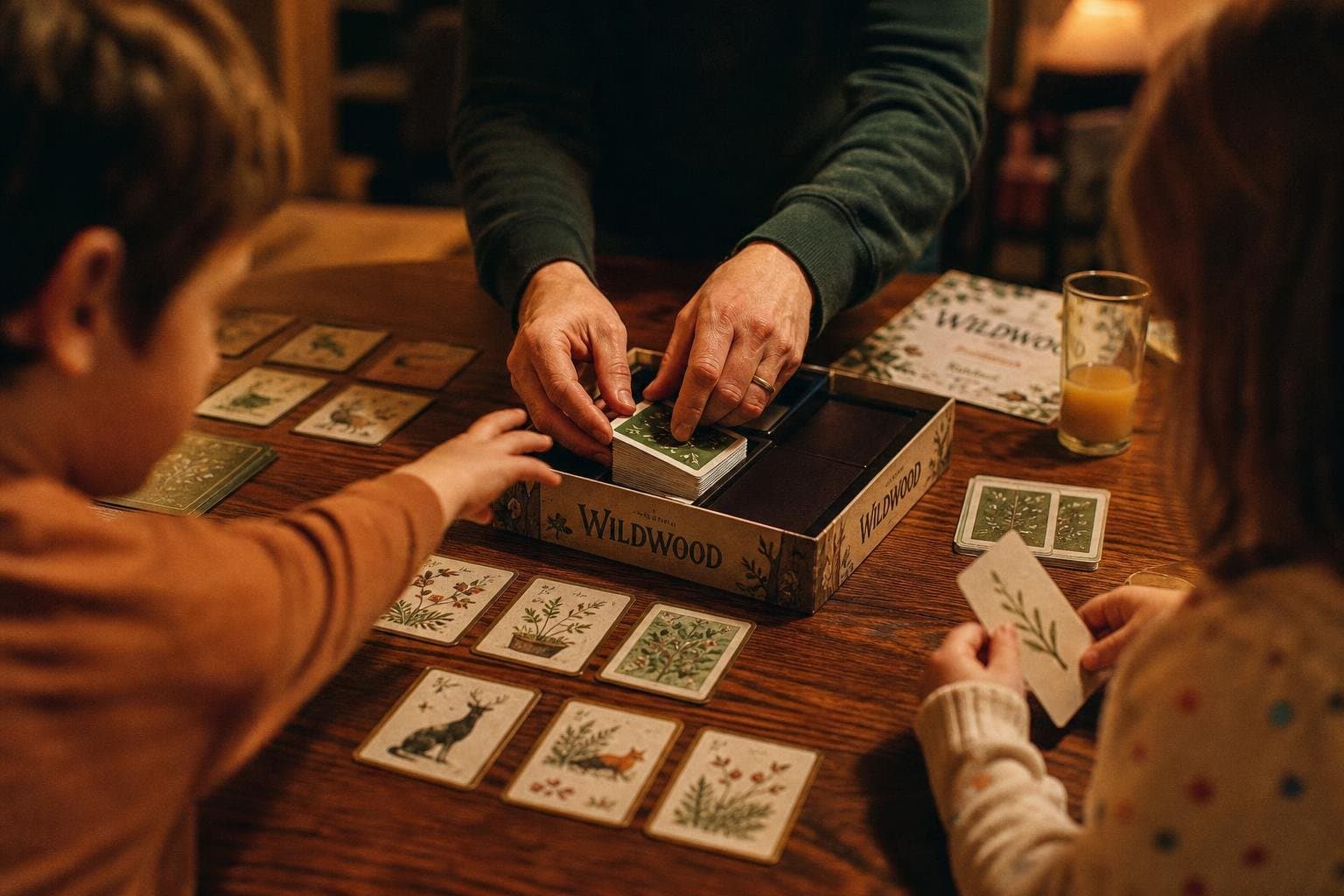

Here's the thing about setup time: five minutes feels completely different depending on what's waiting on the other side.
Five minutes before a game that runs 45 minutes of genuine engagement? That's nothing. Five minutes before a game that loses a seven-year-old in round two and drags for another 30? That's five minutes you'll regret, plus the 30 minutes after it.
I've written before about what makes setup time worth it and why your expectations around the 15-minute setup are the real problem. But those posts were about the longer end of the prep spectrum — the games that ask a lot before the first card is drawn. This week I want to flip it: what does a genuinely fast setup actually buy you, and which games are honest about the trade?
Because "five-minute setup" is a promise. And promises get broken.
The Setup-to-Payoff Ratio Is the Only Number That Matters
The board game world has gotten pretty good at producing games that are quick to learn. Ticket to Ride teaches in five minutes and plays in under an hour — that's a ratio that works. The setup is proportional to what you get. You're not sorting 200 tokens before a 20-minute game.
The failure mode I see constantly is games where the box promises "30 minutes!" but the setup alone eats 10 of those, and then the game itself runs long because nobody accounted for a nine-year-old who needs three re-explanations of the rules. The advertised playtime assumes everyone already knows how to play. It never does.
UpGami's guide to tabletop gaming on a tight schedule makes a point worth stealing: the trick isn't finding games with short playtimes, it's finding games designed to be quick — where the brevity is baked into the structure, not just claimed on the box. Love Letter, for instance, is genuinely 15 minutes because it has almost no setup. Star Realms is under 20 minutes because the deck is the setup. The prep and the play are integrated, not stacked.
That's the design principle worth looking for: games where setup and play feel like one continuous motion, not two separate tasks.
What Five Minutes Actually Looks Like With Kids in the Room
Let me be specific about what "five-minute setup" means in practice, because it's not the same as five minutes alone at the table.
Five minutes with a six-year-old in the room is closer to eight. Someone will knock over the card pile. Someone will ask if they can be the blue piece before you've explained what the pieces do. Someone will need a snack, urgently, right now, before the game starts.
Games that survive this reality have a few things in common. The components are simple enough that setup can happen with the kids rather than before them — they can help sort, deal, or place without derailing the process. Sneaky Snacky Squirrel, recommended for ages 3 and up, plays in 10-15 minutes and has a setup so simple that a preschooler can participate in it. That's not a coincidence. The designers understood that the game starts the moment the box opens.
Compare that to a game where you're sorting cards into five separate decks, arranging a board, distributing starting resources, and explaining three different phases before anyone takes a turn. The kids have already mentally left. You're playing alone.
The Games That Actually Clear the Bar
Based on what parents actually report playing again — not what critics recommend in theory — a few patterns emerge.
Games with a single central mechanism tend to set up fastest because there's less to prepare. Dobble (called Spot It in the US) is essentially a shuffled deck of cards. Setup is dealing. The game is immediate. Exploding Kittens requires slightly more prep — you're building a custom deck — but the process is fast enough that kids can watch and understand what's being assembled, which doubles as a rules explanation.
Party-adjacent games often have the best setup-to-payoff ratios for mixed ages. So Clover! teaches in a couple of minutes, plays in 30, and the setup is handing everyone a card and a pen. That's it. The game is the conversation, not the components.
The honest version of "five-minute setup" is a game where you can get from box-open to first turn in the time it takes to pour drinks. If you're still sorting when the drinks are gone, the setup wasn't five minutes.
The question to ask before any purchase: what does this game look like at minute three of setup, when one kid is bored and one is "helping"? If the answer is chaos, the box's time estimate is lying to you. If the answer is that the kid helping is basically already playing — that's a game worth buying.