
The Claim: Coffee Is a Cardiovascular Risk
For decades, the received wisdom was clear: coffee raises your blood pressure, strains your heart, and should be rationed like a guilty pleasure. Cardiologists told middle-aged patients to cut back. The World Health Organization kept coffee on its "possibly carcinogenic" list for 25 years. Vox reported that a generation ago, coffee was something you were supposed to quit — like cigarettes or a second martini.
That framing has largely collapsed under the weight of accumulated evidence. But the replacement narrative — "coffee is actually good for you!" — has its own problems. The truth is more interesting and more conditional than either version.
The Appeal: Why the Fear Persisted (and Why the Reversal Feels Too Good)
The original concern wasn't irrational. Caffeine does acutely raise blood pressure and heart rate. Early observational studies found associations between coffee consumption and cardiac events. And there's a reasonable intuition that a stimulant consumed in large quantities probably isn't neutral.
The fear persisted partly because it fit a broader cultural template: pleasurable things are suspect, and discipline is health. Coffee anxiety was never purely about the data — it was also about the idea that if something feels good in the morning, you should probably be worried about it.
The reversal carries its own motivated reasoning. The "coffee is a superfood" narrative is catnip for wellness media and, not coincidentally, for a $245 billion global industry. Harvard Health notes that when early studies implicating coffee in conditions like pancreatic cancer were rigorously analyzed, they fell far short of establishing modest coffee consumption as a meaningful health risk — but the pattern of "fishing expedition" study design that generated those scares is worth keeping in mind when evaluating the positive claims too.
The Evidence: Mostly Reassuring, With One Genuinely Interesting Wrinkle
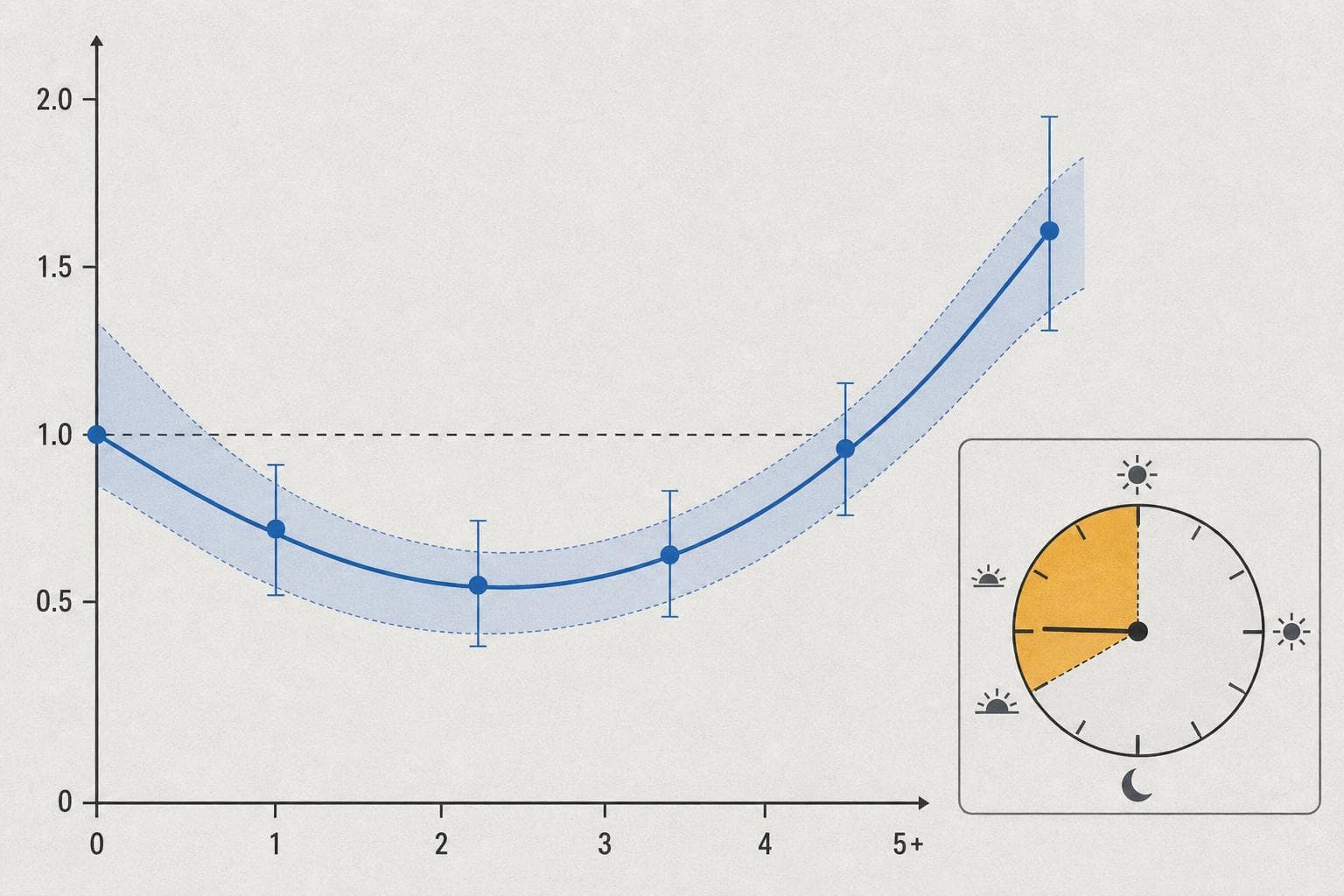
The large-scale epidemiological picture has shifted substantially toward reassurance. A study of 468,629 UK Biobank participants with no pre-existing heart disease found that drinking 0.5 to 3 cups per day was independently associated with lower risks of stroke, cardiovascular death, and all-cause mortality over a median follow-up of 11 years — after adjusting for age, smoking, physical activity, blood pressure, and a range of other confounders. High intake (more than 3 cups daily) wasn't associated with adverse outcomes either. That's a large sample with a long follow-up, which matters.
On the specific question of atrial fibrillation — long a concern for coffee drinkers — a trial summarized in JAMA examined patients with persistent AF after electrical cardioversion and found that continuing caffeinated coffee intake challenged the long-held assumption that caffeine triggers arrhythmia. The summary available is limited, but the direction of evidence has moved away from the old prohibition.
There's also a newer finding worth taking seriously. An analysis published in the European Heart Journal and covered by Harvard Health looked at nearly 41,000 adults and found that morning-only coffee drinkers were 31% less likely to die of cardiovascular disease and 16% less likely to die of any cause compared to non-drinkers — but all-day coffee drinkers showed no difference in death risk compared to non-drinkers. The researchers speculate that afternoon and evening coffee may disrupt circadian rhythms or sleep architecture in ways that offset cardiovascular benefits.
This is observational data, and the authors are appropriately cautious: morning-only drinkers may differ from all-day drinkers in ways the study couldn't fully capture. But it's a more specific and actionable finding than the usual "coffee is fine" headline.
One more variable that's gotten recent attention: what's in your cup. A large prospective cohort study found that unsweetened coffee was associated with lower cardiovascular disease risk, while sweetened coffee was not. Which is either a finding about coffee's bioactive compounds interacting with sugar metabolism, or a proxy for the broader dietary patterns of people who drink their coffee black — probably some of both.
What to Actually Take From This
The cardiovascular case against moderate coffee consumption in healthy adults has largely dissolved. The evidence now points toward a modest protective association, not a risk — though "association" is doing real work in that sentence, and no one has run the randomized controlled trial that would settle causation.
The more interesting question isn't whether to drink coffee but how: unsweetened, and probably concentrated in the morning. Neither of those conclusions is certain enough to reorganize your life around, but they're grounded in better data than the old "cut it out entirely" advice ever was.
If your doctor told you to quit coffee a decade ago based on cardiovascular concerns, it's worth revisiting that conversation. The evidence has moved.


