



The Claim
Somewhere between the third cold-press ad and the wellness influencer's "reset protocol," a belief took hold: that modern life fills your body with toxins, and that a structured cleanse — juice, herbal, activated charcoal, take your pick — flushes them out. The detox diet industry is built on this premise. The products vary; the core story doesn't.
The Appeal
The idea is psychologically elegant. It maps onto something real — the feeling of sluggishness after a period of poor eating, drinking, or stress — and offers a ritual solution. Cleanses give that feeling a name ("toxins") and a cure ("purge"). There's also the appeal of a clean slate: the detox as moral reset, not just physiological one. That's a powerful combination, and no amount of skepticism fully dissolves it.
The Evidence
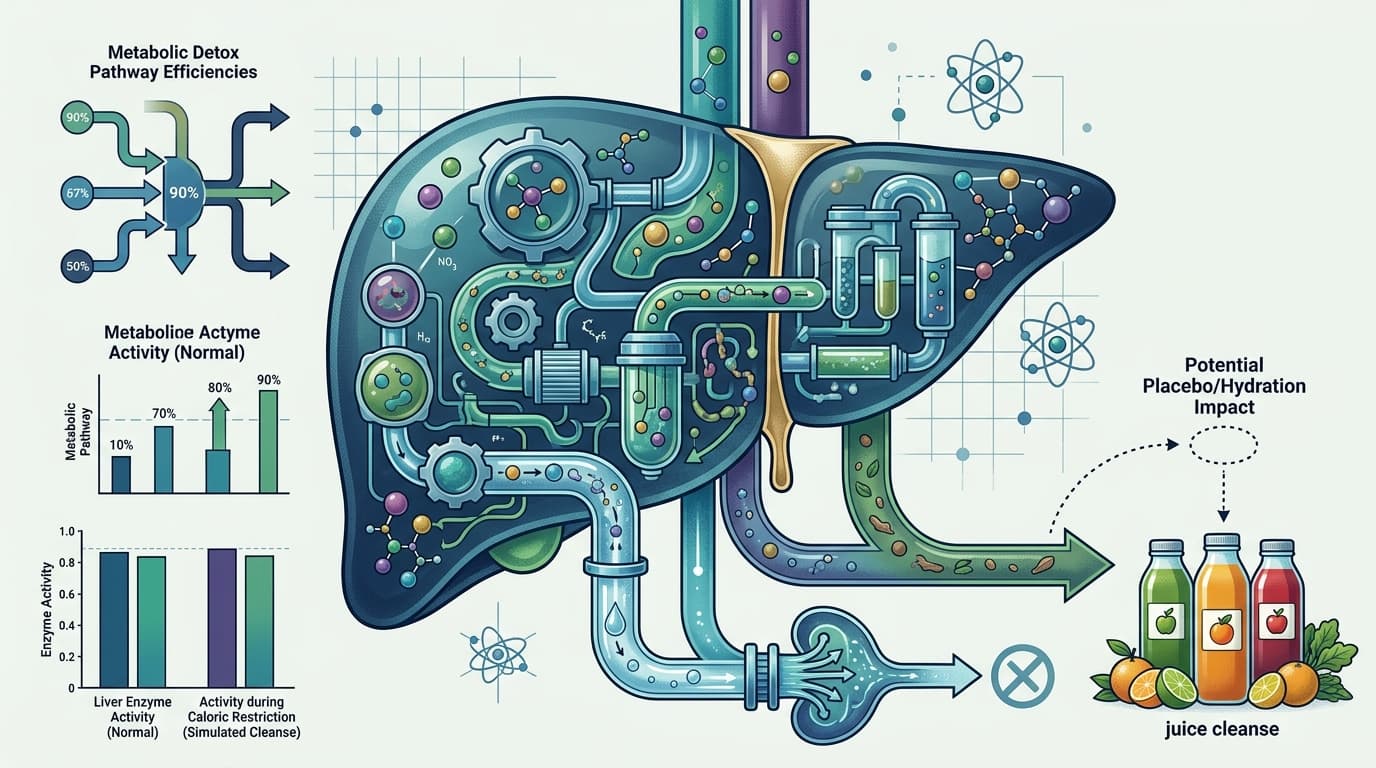
Here's the problem: the body already runs a continuous, sophisticated detoxification operation, and it doesn't pause for your juice cleanse.
The liver filters blood, chemically transforms harmful compounds into water-soluble forms, and routes them for excretion. The kidneys handle the actual elimination. The lymphatic system, lungs, and skin contribute. This isn't a passive process — it's metabolically active, enzyme-driven, and constantly running. It doesn't need a three-day reset any more than your heart needs a "cardio cleanse."
When researchers have looked at commercial detox products, the pattern is consistent: the word "toxin" is almost never defined, and the products are almost never tested against a specific measurable outcome. I'd argue this vagueness is the tell. If a product can't name the toxin it's removing or show a before-and-after measurement of that compound in blood or urine, it's not making a scientific claim — it's making a feeling-based one.
The genuine exceptions involve actual toxins with actual treatments: heavy metal poisoning treated with chelation therapy, alcohol metabolism supported by medical detox, specific drug overdoses managed with activated charcoal in clinical settings. These are medical interventions for documented toxic loads, administered under supervision. They share almost nothing with a $14 bottle of "detoxifying" green juice except the vocabulary.
What detox diets sometimes do produce: short-term caloric restriction, reduced alcohol and processed food intake, increased hydration. Those things can make people feel better. But the mechanism isn't toxin removal — it's just eating less junk for a few days. The cleanse gets credit for the break.
What's Actually Worth Taking Away
Your liver and kidneys are doing their jobs. The best evidence-supported ways to help them: don't overload them chronically with alcohol, maintain a reasonable weight, stay hydrated, and don't take supplements you don't need (several popular "detox" herbs are, with some irony, hepatotoxic at high doses).
If a cleanse makes you feel better, the honest explanation is probably the dietary change, not the detoxification. That's worth knowing — because it means you can get the same benefit without the mythology, and without paying a premium for it.