
A quick note before we start: this topic overlaps with my June 3rd issue on vitamin D and bone health. That post focused on fractures and skeletal outcomes. This one takes a different angle — the respiratory infection claim, which has its own evidence trail and its own complications.
The pitch is intuitive enough to feel almost self-evident: vitamin D receptors show up throughout the immune system, deficiency weakens immune function, therefore supplementing deficient people should reduce their risk of respiratory infections. Logical chain, plausible mechanism, easy to sell. The supplement industry has been selling it for years.
The actual evidence is messier.
The Mechanism Is Real. The Clinical Payoff Is Conditional.
Start with what's genuinely established. The NIH's Office of Dietary Supplements confirms that vitamin D is among the nutrients where clinical deficiency demonstrably weakens immunity and increases susceptibility to infections. Vitamin D receptors are present in lymphocytes and other immune cells — the biology connecting deficiency to impaired immune response is not speculative. The NIH's vitamin D fact sheet similarly notes that vitamin D is produced endogenously through sun exposure and that many people — particularly those with limited sun exposure, darker skin, or older age — fall into inadequacy ranges.
So far, so good. Deficiency matters. The immune system needs vitamin D to function properly. This much is solid.
The harder question is whether supplementing deficient people actually translates into fewer respiratory infections in clinical trials. And here the picture gets complicated in a specific, instructive way.
The Martineau Meta-Analysis: What It Actually Found
The most-cited evidence for vitamin D's protective effect on respiratory infections comes from a 2017 individual participant data meta-analysis by Martineau and colleagues — referenced in the BMJ's vitamin D literature and cited in NIH's own immune function fact sheet. The finding that got amplified in health media: vitamin D supplementation reduced the risk of acute respiratory tract infections.
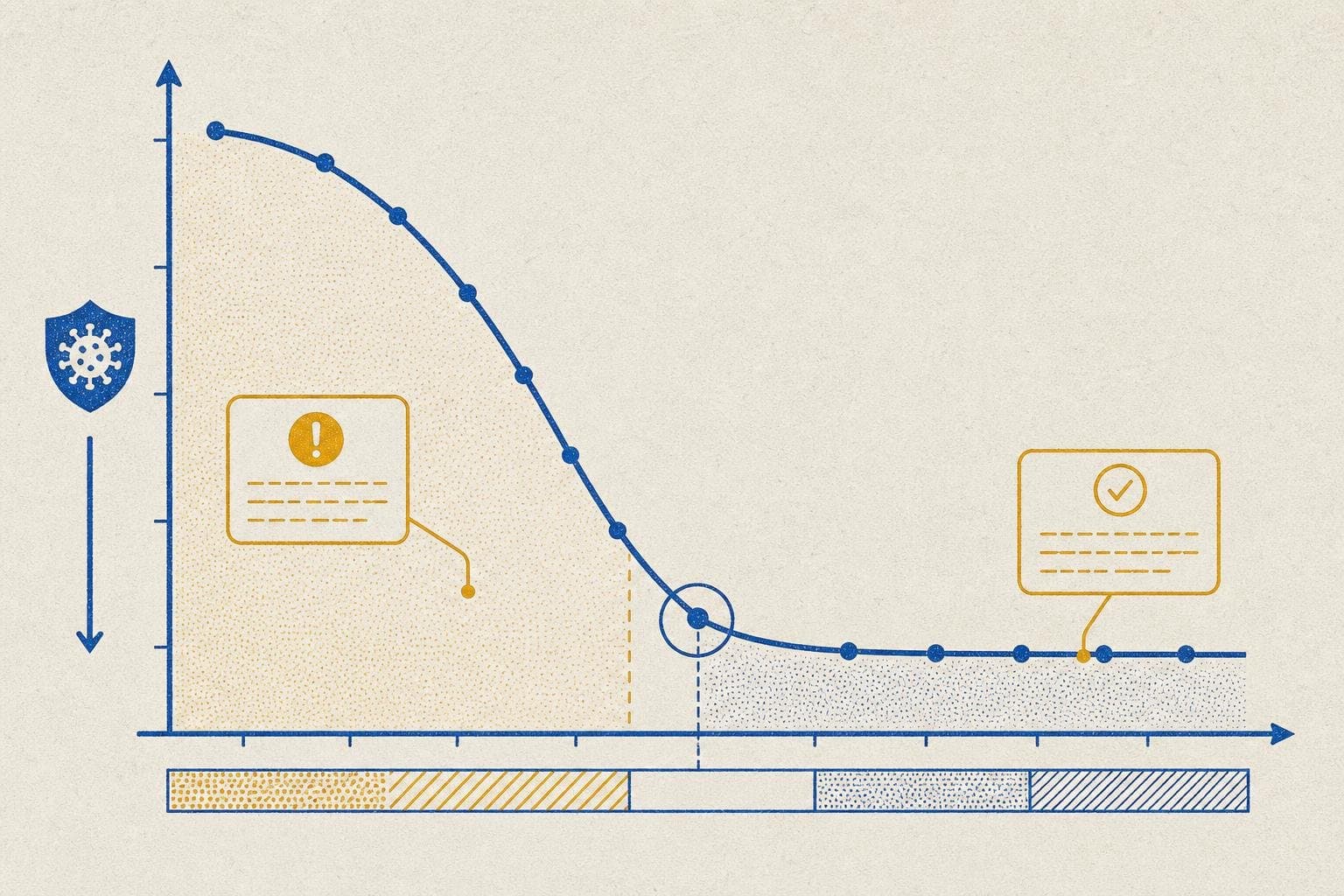
What got less attention was the subgroup structure of that finding. The protective effect was substantially stronger — and more statistically robust — in participants who were severely deficient at baseline. In people with adequate or near-adequate vitamin D levels, the effect was much smaller and less consistent. The meta-analysis also found that daily or weekly dosing outperformed large bolus doses, which is a detail that matters for how supplementation is actually practiced.
This is a pattern worth sitting with. The evidence doesn't say "vitamin D supplements prevent respiratory infections." It says something more conditional: supplementation may reduce infection risk in people who are genuinely deficient, and the effect appears to diminish as baseline status improves. That's a meaningfully different claim.
The Population Question Nobody Asks at the Pharmacy
Here's where the gap between evidence and practice gets widest. Most people buying vitamin D supplements in winter aren't severely deficient — they're mildly insufficient, or they're supplementing prophylactically without knowing their levels at all. The subgroup where the evidence is strongest (severe deficiency) is also the subgroup least likely to be self-diagnosing and self-treating at a pharmacy counter.
The NIH immune function fact sheet is careful to note that while adequate intake of vitamin D is important for immune function, the evidence for supplementation beyond correcting deficiency is considerably weaker. Consuming enough is necessary; consuming extra doesn't appear to confer proportional benefit.
This is the same structural problem I wrote about with bone health in June: vitamin D research keeps producing results that are compelling in deficient populations and underwhelming in replete ones, but the supplement market treats those findings as universal.
What the Evidence Actually Supports
The honest summary: if you are severely vitamin D deficient — confirmed by a blood test, not a hunch — there's reasonable evidence that correcting that deficiency may reduce your respiratory infection risk. The mechanism is plausible, the meta-analytic signal exists, and the downside risk of correcting genuine deficiency is low.
If you're not deficient, or don't know your levels, the evidence for supplementation as a respiratory infection shield is thin. Large bolus doses appear less effective than consistent daily supplementation even within the deficient population. And no trial has convincingly shown that pushing levels above sufficiency provides additional protection.
The practical implication isn't "don't take vitamin D." It's "know why you're taking it." If you're in a high-risk group for deficiency — limited sun exposure, older, darker skin, housebound — getting your levels checked and correcting genuine deficiency is evidence-supported. Taking it because you heard it prevents colds is a different proposition, and the evidence doesn't back that version of the story.
The supplement industry has a strong financial interest in collapsing that distinction. The research, read carefully, keeps drawing it back.


