
Back in May, I wrote about how probiotics probably work — just not for you, specifically. The core argument was that strain specificity and individual microbiome variation make blanket probiotic claims almost meaningless. What's changed since then is that we now have better data on a question the earlier piece sidestepped: do probiotics produce real clinical benefits beyond placebo, particularly in the populations most likely to need them?
The short answer, from a systematic review and meta-analysis published in Frontiers in Nutrition in August 2026, is: possibly, but the evidence isn't strong enough to say so confidently. That's not a non-answer — it's actually a meaningful update on where the science stands.
The New Meta-Analysis Says "Maybe" — and That Matters
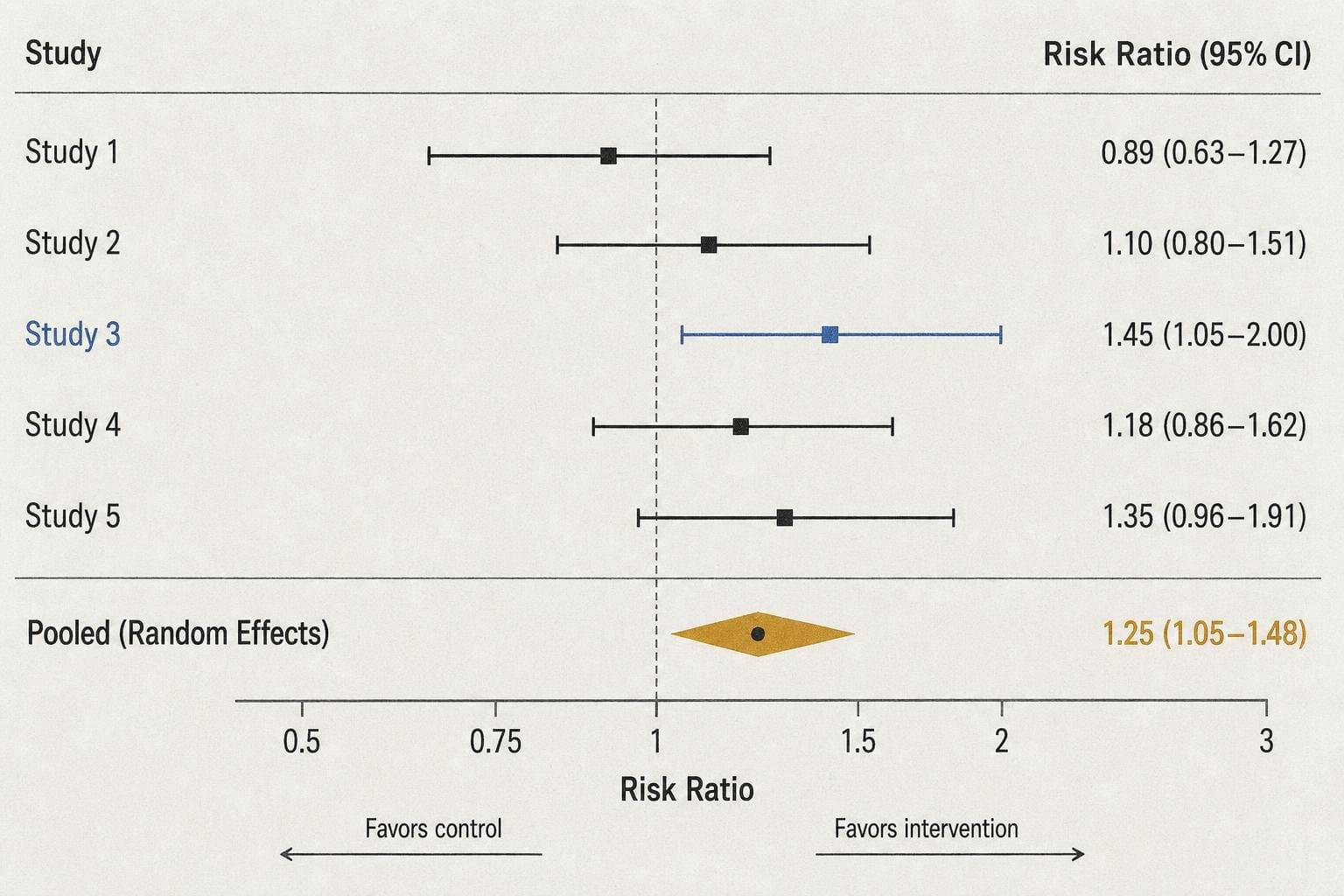
The Warsaw University of Life Sciences review examined randomized and controlled studies of probiotic supplementation lasting at least 12 weeks in at-risk populations: the elderly, immunocompromised patients, and people with gastrointestinal conditions. Five studies met the inclusion criteria, covering 920 participants total.
The pooled result showed a trend toward clinical improvement — a risk ratio of 1.25 — but it did not reach conventional statistical significance (p = 0.059, 95% CI: 0.99–1.56). Heterogeneity across studies was low, which is actually a good sign methodologically, but the authors were direct: the evidence does not permit conclusions about long-term safety, adverse-event reporting was inconsistent across studies, and rare or strain-specific harms could not be assessed.
The authors also flagged something worth sitting with: the rapid commercialization of probiotic products has significantly outpaced the development of rigorous regulatory frameworks and the accumulation of long-term safety evidence. That's a polite way of saying the industry got very far ahead of the science.
So: five studies, 920 people, a trend that almost reached significance, and a call for larger trials. This is not the foundation on which a $60 billion global market should rest.
Where the Evidence Is Actually Strongest
The clearest signal in the probiotic literature right now isn't gut health in healthy adults — it's a very specific pediatric application. A study published in JAMA Network Open examined routine probiotic supplementation in neonatal intensive care units to prevent necrotizing enterocolitis (NEC), a devastating intestinal condition affecting premature infants with mortality rates ranging from 15% to 30%.
The multicenter retrospective cohort study — covering 1,413 preterm infants across two Dutch NICUs — found approximately a 50% reduction in NEC among infants born before 30 weeks' gestation following implementation of routine probiotic supplementation. No reduction in all-cause mortality was detected, and the retrospective design limits causal conclusions. But the signal is striking enough that the editorial commentary called it "an important contribution to the field."
This is the pattern that keeps emerging in probiotic research: the more specific the population, the condition, and the strain, the more coherent the evidence becomes. Broad claims about "gut health" and "immune support" for generally healthy adults remain poorly supported. Targeted applications in vulnerable populations with defined clinical endpoints look considerably more promising.
The Immune Function Claim Deserves Particular Skepticism
The immune function angle — the one plastered across most probiotic marketing — is where the evidence is thinnest. The NIH's Office of Dietary Supplements notes that probiotics act mainly in the digestive tract and may improve digestive function, but the leap from "digestive tract activity" to "immune system support" involves several inferential steps that the marketing skips entirely.
As I argued in an earlier piece on immune-boosting claims, the immune system doesn't respond to generalized "support" — it responds to specific signals. The gut-immune axis is real and genuinely interesting science. But "this probiotic supports immune health" on a supplement label is doing the same rhetorical work as "this vitamin boosts your immune system" — it gestures at a mechanism without committing to a measurable outcome.
The NIH consumer fact sheet on probiotics is notably careful on this point, describing possible effects on health rather than established ones. That hedging is appropriate given the evidence base.
What to Actually Take From This
The August meta-analysis is useful precisely because it's honest about its own limits. Five studies, 920 participants, and a near-miss on statistical significance isn't a green light — it's a signal that something might be there and that we need better trials to find out. The authors call for larger, prospectively registered studies with consistent adverse-event reporting. That's the right ask.
For healthy adults buying probiotic supplements based on vague gut-health and immune-support claims, the evidence still doesn't justify the confidence the marketing implies. For clinicians managing at-risk populations — preterm infants, immunocompromised patients, people with specific GI conditions — the picture is more nuanced and, in some cases, genuinely encouraging.
The distinction matters. Probiotics aren't snake oil, but they're also not the universal gut-and-immune optimizer the supplement aisle suggests. The science is slowly getting more specific. The marketing, predictably, is not.


