
Walk down the gluten-free aisle of any supermarket and you'll find pasta, bread, and crackers marketed to people who've never been diagnosed with celiac disease. They're not wrong to avoid gluten if it makes them feel better — but the science explaining why it does, and whether a gluten-free diet is the right fix, remains far shakier than the shelf space suggests.
A systematic review and meta-analysis published this year in Gut put a number on how many people are making this choice: roughly 10.3% of adults worldwide report symptoms they attribute to gluten or wheat, despite testing negative for celiac disease and wheat allergy, based on pooled data from 25 studies covering nearly 50,000 participants across 16 countries (via Gut's #GUTBlog). Bloating topped the symptom list at 71%, followed by abdominal discomfort, constipation, and diarrhea, with plenty of people also reporting fatigue, headache, and joint pain (Gut's #GUTBlog). Almost 40% of people who report these symptoms go gluten-free without ever seeing a doctor or dietitian about it (Gut's #GUTBlog).
The Diet Does Seem to Help — a Little
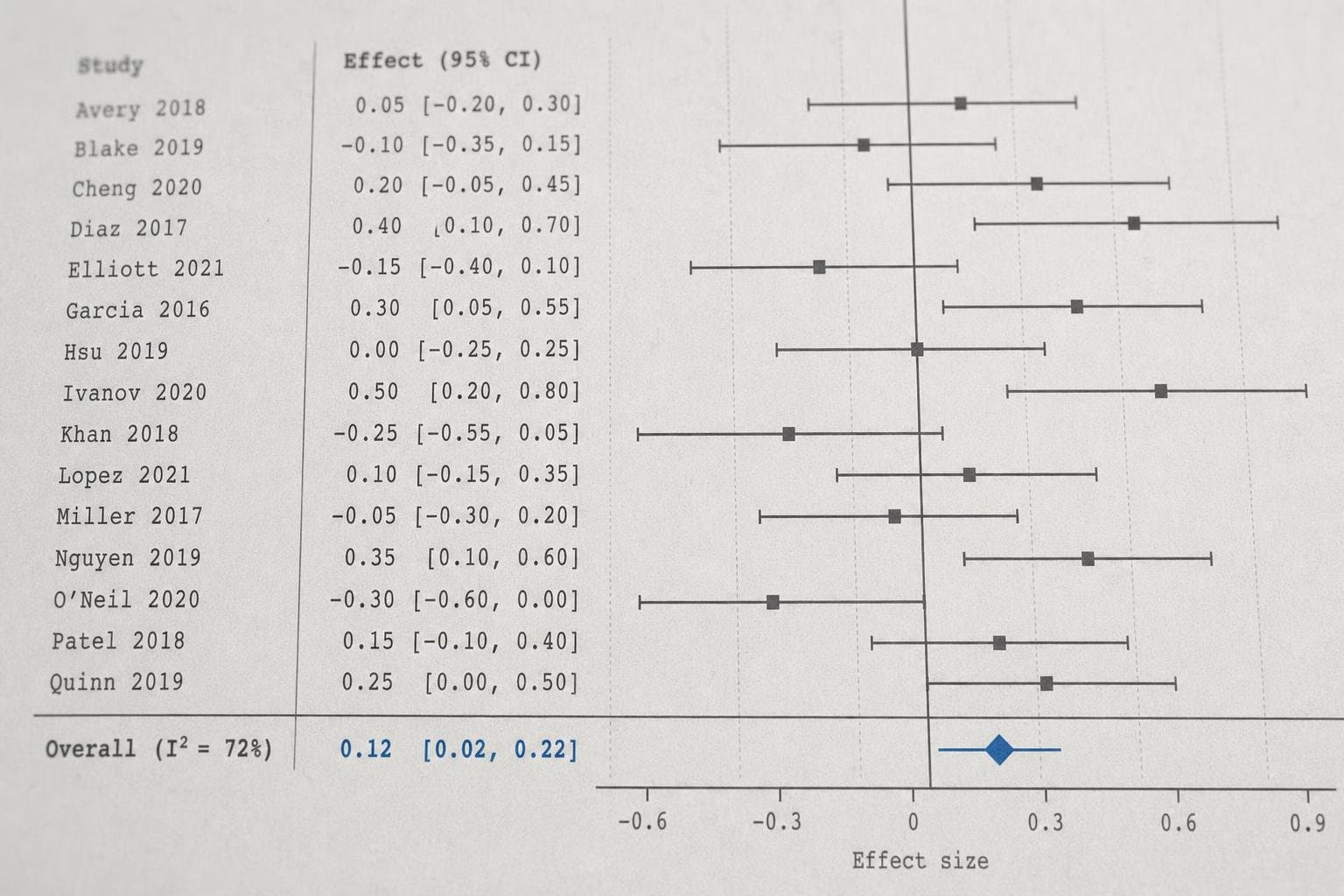
A 2026 systematic review and meta-analysis found that a gluten-free diet produced a statistically significant improvement in gastrointestinal symptoms and quality of life for people with self-reported non-celiac gluten sensitivity, but the pooled effect size was modest — 0.88 on a 95% confidence interval spanning 0.20 to 1.55 (PubMed). That's a real effect, not nothing. But the heterogeneity across the included studies was enormous — an I² of 97.77%, meaning almost all of the variation in results came from differences between studies rather than from the treatment itself (PubMed). When a meta-analysis reports heterogeneity that high, it's telling you the underlying studies weren't measuring the same thing in the same way, and the pooled number should be read as a rough signal rather than a settled fact.
A companion review on Hashimoto's thyroiditis — another condition where gluten-free diets get recommended on faith as much as evidence — found even less to hang onto. Pooling just three randomized trials with 110 total participants, researchers rated the evidence "very uncertain" for whether a gluten-free diet changed thyroid hormone levels, with no meaningful effect on TSH, free T3, or free T4 (PubMed). Antibody levels moved in inconsistent directions across markers. This is the kind of result that should make you suspicious of any claim linking gluten elimination to autoimmune thyroid improvement — not because the idea is impossible, but because the trial base behind it is thin enough to blow over.
The Harder Question Is Whether Gluten Is Even the Trigger
This is where the picture gets genuinely interesting, and where I think the popular narrative skips a step. A major Lancet review published in October 2025 laid out the uncomfortable middle ground: while roughly 10% of adults self-report gluten or wheat sensitivity, controlled challenge studies — where researchers blind participants and feed them gluten or a placebo without either side knowing which is which — find that only 16% to 30% of those self-reporters actually react specifically to gluten (The Lancet). The review points to fermentable carbohydrates (FODMAPs present in wheat alongside gluten) and nocebo effects — symptoms triggered by the expectation of harm rather than any biological mechanism — as major contributors to the symptoms people are blaming on gluten specifically (The Lancet).
A follow-up correspondence in the Lancet this April pushed the critique further, arguing that the challenge studies underpinning this whole field have been methodologically inconsistent for years — differing blinding protocols, challenge materials that often weren't even derived from wheat, and placebo formulations that weren't properly validated to rule out their own symptom-inducing ingredients (The Lancet00260-6/fulltext)). The authors argue that incremental fixes won't be enough and that the field needs a coordinated overhaul of how these trials are designed, including objective markers like gluten immunogenic peptide monitoring rather than relying purely on self-reported symptoms (The Lancet00260-6/fulltext)).
What This Actually Means If You Think Gluten Is Your Problem
None of this means people are imagining their symptoms. It means the condition commonly labeled "gluten sensitivity" is probably several overlapping things — some genuine reaction to wheat components, some FODMAP sensitivity unrelated to gluten specifically, and some gut-brain interaction amplified by expectation. The Gut review also found that self-reported sensitivity is notably more common in high-income countries than middle-income ones, a pattern that fits a condition shaped partly by marketing and awareness rather than biology alone (Gut's #GUTBlog).
If gluten-free eating genuinely improves your symptoms, that's a reasonable thing to act on — just do it with medical guidance, since unsupervised elimination carries real risk of nutritional gaps and unnecessary cost (Gut's #GUTBlog). But don't assume gluten is the villain until someone's actually ruled out the fructans sitting right next to it in the same slice of bread.


