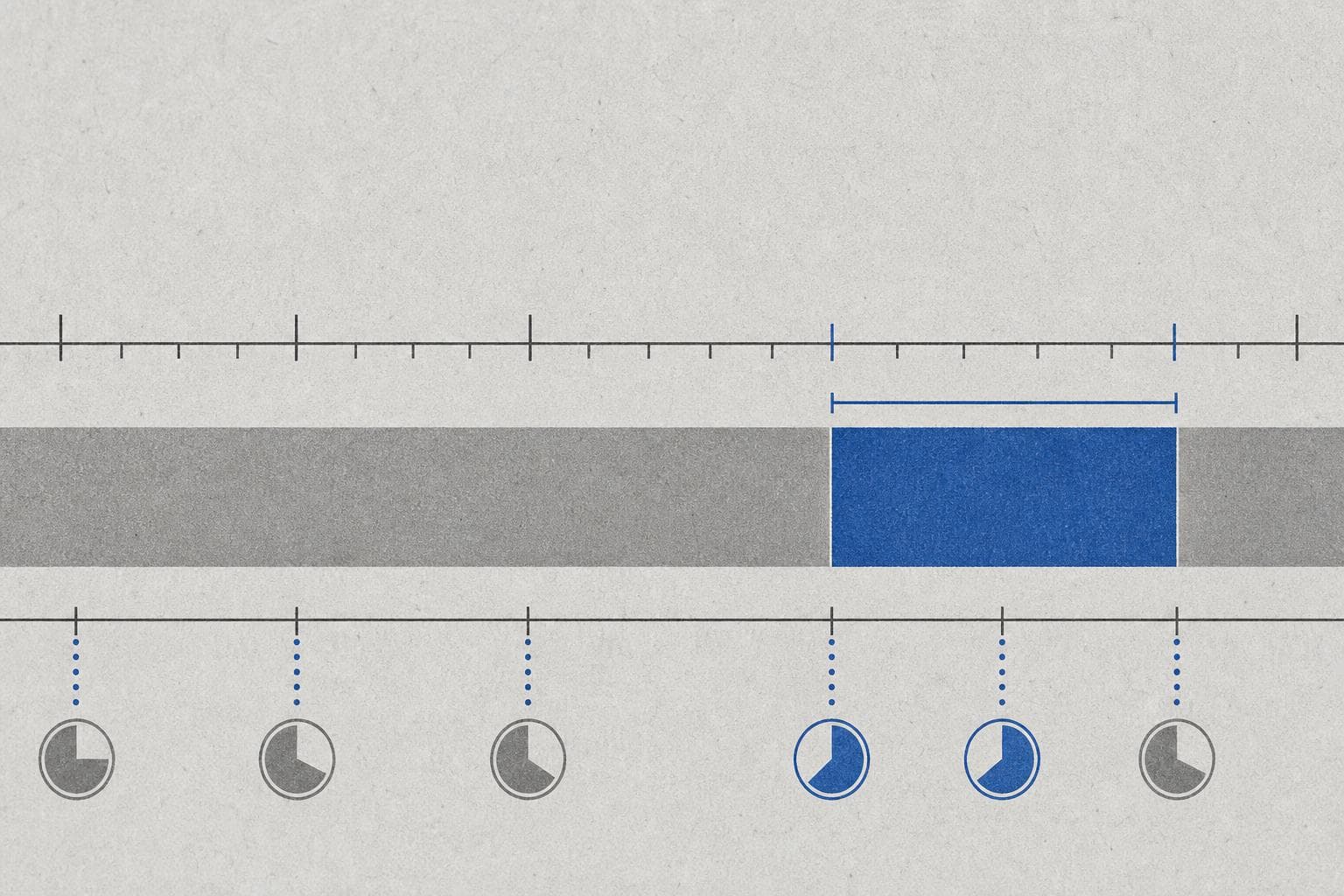

The pitch for intermittent fasting has always been seductive: don't just eat less — eat differently, and unlock metabolic benefits that go beyond simple calorie math. Shrink your eating window to eight hours, the theory goes, and your body will respond in ways that calorie restriction alone can't explain. Better insulin sensitivity. Improved blood sugar. A circadian reset that fundamentally changes how your metabolism works.
It's a compelling story. It's also looking increasingly shaky.
The Claim: Timing Is the Active Ingredient
Intermittent fasting — particularly time-restricted eating (TRE), where you confine meals to a window of eight to ten hours — has been promoted not just as a weight-loss tool but as a metabolic intervention in its own right. The argument goes beyond calories: aligning food intake with circadian rhythms, the theory holds, improves insulin sensitivity, reduces cardiovascular risk, and produces benefits you wouldn't get from simply eating the same amount of food spread across a longer day.
This idea has real scientific roots. Animal studies showed genuine metabolic protection from TRE independent of calorie intake. Earlier human trials reported improvements in blood sugar, cholesterol, and body composition. The wellness industry ran with it, and the 16:8 protocol became one of the most widely practiced dietary interventions on the planet.
The Appeal: We Want Metabolism to Be Hackable
Part of what makes TRE so sticky is that it reframes deprivation as strategy. You're not dieting — you're timing. The implicit promise is that biology has a cheat code, and you've found it. That framing is psychologically very different from "eat less," which is both obvious and demoralizing.
There's also a genuine mechanistic plausibility to the circadian angle. The body does have internal clocks that regulate metabolism, and meal timing does influence them. The question was always whether that influence was strong enough to produce meaningful health benefits on its own — or whether it was a secondary effect of the calorie reduction that TRE tends to produce incidentally.
The Evidence: Calories Do the Heavy Lifting
A study from the German Institute of Human Nutrition Potsdam-Rehbruecke (DIfE) and Charité — Universitätsmedizin Berlin, published in Science Translational Medicine, was designed specifically to answer this question. The ChronoFast trial, led by Prof. Olga Ramich, tested an eight-hour eating window while carefully controlling for calorie intake — something most earlier studies failed to do. The result: when calories stayed the same, TRE produced no measurable improvements in insulin sensitivity or cardiovascular markers.
What did change was the body's internal clock. Meal timing shifted circadian rhythms and altered sleep patterns — confirming that the biological mechanism is real. But that clock shift didn't translate into the metabolic benefits that had been attributed to TRE. The implication is pointed: the benefits seen in earlier studies were likely driven by the calorie reduction that shorter eating windows tend to cause, not by the timing itself.
This finding sits alongside a broader picture that's more complicated than either TRE advocates or skeptics would prefer. A systematic review and network meta-analysis in The BMJ examined intermittent fasting strategies across randomized clinical trials and their effects on cardiometabolic outcomes — though the full findings weren't available for detailed extraction. A meta-analysis in PMC found improvements in metabolic outcomes among people with metabolic syndrome, but the study populations were overweight or obese and the intervention durations ranged from one to sixteen weeks — conditions where calorie reduction is almost impossible to fully rule out. A systematic review in Nutrition Reviews on 16:8 TRE and glucose metabolism found effects on fasting glucose and insulin markers, but noted publication bias in at least one lipid outcome.
The pattern across this literature is consistent: when studies don't carefully control for calorie intake, TRE looks promising. When they do, the independent effect shrinks considerably.
What to Actually Take From This
None of this means intermittent fasting is useless. If an eight-hour eating window helps you eat less without feeling like you're on a diet, that's a legitimate and underrated benefit — adherence is the variable that kills most dietary interventions, and TRE works for a lot of people precisely because it's a simple rule to follow.
What the evidence doesn't support is the stronger claim: that TRE produces metabolic benefits on top of whatever calorie reduction it causes. The circadian mechanism is real, but its practical significance for human metabolic health remains unproven at controlled calorie levels.
The honest takeaway is unglamorous: if intermittent fasting helps you maintain a calorie deficit you can live with, it's a reasonable tool. If you're eating the same amount and just compressing the window, don't expect your metabolism to reward the inconvenience.


