
I've covered this ground three times now. Each time, the evidence has pointed in the same direction: intermittent fasting produces results roughly comparable to calorie restriction, the metabolic "magic" attributed to the fasting state keeps failing to materialize in controlled conditions, and the main advantage appears to be that some people find it easier to stick to. A cluster of new research published this summer sharpens that picture considerably — and adds one genuinely surprising wrinkle.
The Head-to-Head in Type 2 Diabetes: Still a Draw
The most direct new evidence comes from a systematic review and meta-analysis presented at the American Association of Clinical Endocrinology Annual Meeting, conducted by Lyluma Ishfaq, MD, and colleagues at Central Michigan University. They searched for randomized trials of at least 12 weeks that directly compared intermittent fasting against continuous calorie restriction in adults with type 2 diabetes. They found two.
Two. That's the entire evidence base for a direct comparison in this population, which tells you something about how far ahead of the research the public conversation has gotten.
What those two trials showed: HbA1c reductions were equivalent between strategies at six to twelve months, with one trial finding noninferiority and the other finding no significant between-group difference. Weight loss numerically favored intermittent fasting in both trials, but the differences weren't statistically significant and didn't translate into consistent cardiometabolic advantages. Fasting glucose, lipids, blood pressure, and hypoglycemia rates were similar across both approaches. The researchers flagged major evidence gaps: long-term glycemic durability, cardiovascular outcomes, and patient-centered adherence data are all missing.
This is the pattern I keep finding. Intermittent fasting performs well enough to be a legitimate option. It just doesn't perform better.
Where Calorie Restriction Actually Wins
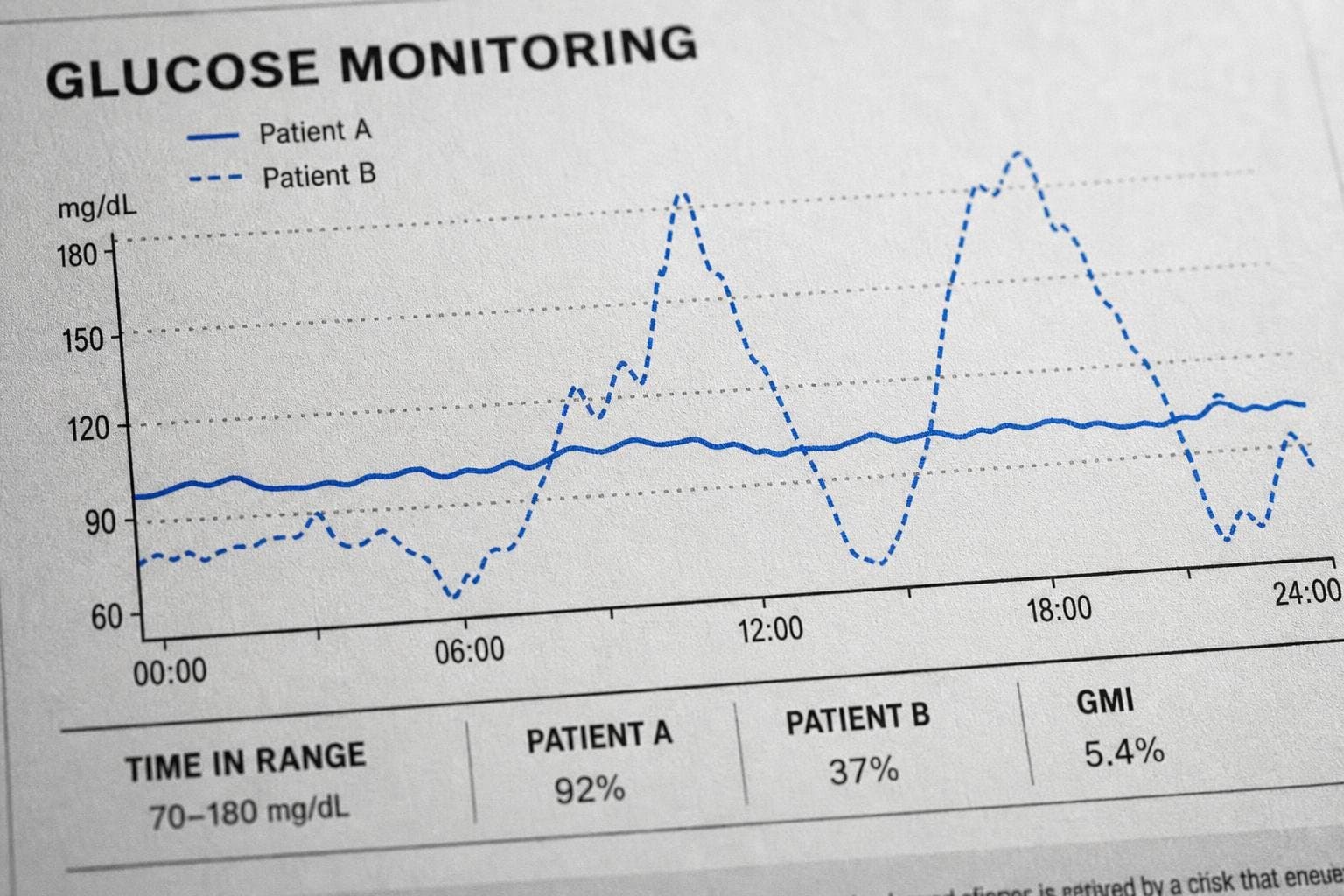
Here's the wrinkle. A randomized crossover trial published in Diabetology & Metabolic Syndrome in August 2026 looked specifically at glycemic variability — how much blood glucose fluctuates throughout the day — rather than just average HbA1c. The distinction matters clinically: you can have a decent average glucose while still experiencing dangerous spikes and drops.
The trial enrolled 51 participants with type 2 diabetes and ran them through both a continuous calorie-restricted diet (reducing daily energy intake by 500 kcal/day) and a time-restricted intermittent fasting protocol that was calorie-matched but compressed into two meals within a restricted feeding window. Crucially, the calories were the same — this was a direct test of meal timing versus meal distribution.
Calorie restriction won clearly on glycemic variability metrics. Time in Range — the percentage of hours spent with glucose in the target zone — was 92.4% following calorie restriction versus 81.4% following time-restricted fasting. Time above range and time below range were both significantly lower after calorie restriction. The p-values were 0.001 for the primary comparison, which is not a marginal result.
This is worth sitting with. When you hold calories constant and only vary timing, calorie restriction produces better glucose stability than compressing the same food into a narrow window. The fasting window, on its own, doesn't appear to be doing what its proponents claim.
The Broader Picture: Context Matters More Than Protocol
A PRISMA-compliant systematic review published in Clinical Medicine Insights: Endocrinology and Diabetes in August 2026 examined time-restricted eating across low- and middle-income country populations, covering 26 unique cohorts across India, China, Indonesia, Iran, Tunisia, and Brazil. The review found associations with reductions in insulin resistance and improvements in anthropometric outcomes — but it also highlighted that calorie-focused dietary prescriptions frequently fail in these settings due to cost and complexity. Time-restricted eating's appeal there is partly practical: it restructures when food is eaten rather than requiring detailed tracking of what or how much.
That's a real advantage, but it's an adherence advantage, not a metabolic one. The mechanism being proposed — that the fasting window itself triggers superior metabolic adaptation — keeps failing to show up when calories are controlled.
Meanwhile, a randomized controlled trial published in Diabetes Care in August 2026 examined time-restricted eating specifically in adults with type 1 diabetes and overweight or obesity, comparing an 8-hour eating window against daily calorie restriction of 25% energy reduction. The T1D context is distinct enough that I'll cover those results separately, but the study's existence underscores how rapidly researchers are now stress-testing fasting protocols across populations that were previously excluded from the evidence base.
What the Evidence Actually Supports
The honest summary after this round of research: intermittent fasting is a legitimate dietary strategy with real-world adherence advantages for people who find daily calorie tracking unsustainable. For average HbA1c and most cardiometabolic markers, it appears roughly equivalent to calorie restriction. But when researchers look more carefully — at glycemic variability, at what happens when calories are held equal — calorie restriction tends to edge ahead.
The metabolic case for fasting timing as something special, independent of calorie reduction, remains unproven. Watch for longer-term RCTs with cardiovascular endpoints; that's where the field needs to go next, and where the current evidence base is most conspicuously thin.


