


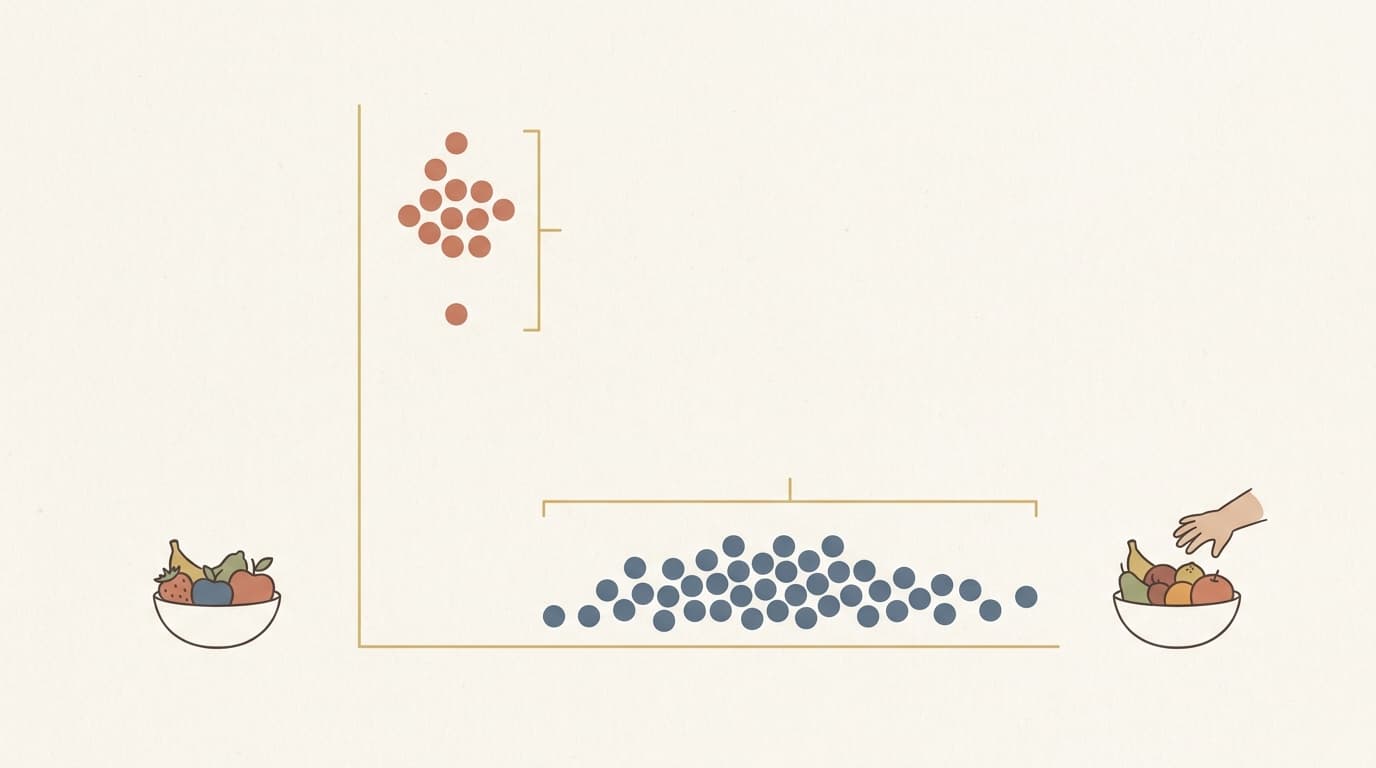

Start with what's new. The 2026 EWG Dirty Dozen report, released in March, tested 54,344 samples across 47 fruits and vegetables. After washing and peeling — mimicking what you'd do at home — USDA testing still found traces of 264 pesticides. Spinach averaged four or more different pesticide types per sample. So did strawberries, grapes, and most of the other produce your kid will actually eat. The report also flagged PFAS ("forever chemicals") appearing in produce for the first time, which is a newer wrinkle worth watching.
The Alliance for Food and Farming, which represents both organic and conventional growers, pushed back with its standard objection: residue presence doesn't equal harm. That's technically true. But the American Academy of Pediatrics' position, cited in the CNN coverage, is that children are especially susceptible to pesticide exposure, and that childhood exposure has been linked to attention and learning problems, as well as cancer. The AAP isn't a fringe voice.
The Exposure Question Is More Settled Than the Health Outcome Question
Here's where I want to be precise, because this is where parenting advice usually goes wrong.
We have decent evidence that organic diets reduce pesticide body burden in children. The ORGANIKO randomized clinical trial — one of the few actual RCTs on this question — found that a 40-day organic diet reduced children's pesticide exposure and also reduced biomarkers of oxidative stress and inflammation. That's a meaningful result. Randomized design, direct measurement of biological outcomes, not just dietary recall.
What we don't have is a clean long-term RCT showing that reduced pesticide exposure in childhood produces measurably better health outcomes decades later. That study is essentially impossible to run. So the honest framing is: we know organic reduces exposure, we have epidemiological associations between pesticide exposure and harm, but the causal chain from "my kid ate conventional strawberries" to "my kid had worse outcomes" is not established with the precision parents often want.
A recent evidence review by Leigh Wagner, PhD, RDN, summarizes the state of play well: some studies suggest organic eaters have lower rates of certain cancers, particularly non-Hodgkin lymphoma, but the evidence is inconsistent — and organic eaters also tend to have healthier overall diets and lifestyles, making it genuinely difficult to isolate organic food as the causal variable. On nutrient density, organic produce sometimes shows higher levels of vitamin C and certain phytonutrients, but not consistently enough to be a reliable argument for the premium.
What This Means for the Practical Decision
The CDC's guidance on early childhood nutrition is worth keeping in mind here: fruits and vegetables are essential for healthy growth and brain development, and fresh, frozen, and canned options are all acceptable. The CDC doesn't distinguish organic from conventional — because from a population-level nutrition standpoint, eating the vegetable matters far more than how it was grown.
That framing is actually useful for the cost question. If the organic premium causes a family to buy fewer fruits and vegetables overall — or to skip produce categories entirely because the organic version is out of budget — that's a worse outcome than buying conventional. The evidence on produce consumption and child health is far stronger than the evidence on organic-versus-conventional outcomes.
So here's where I've landed, updated from last year: the Dirty Dozen list is doing real work. If you're going to prioritize organic spending, the high-residue produce your kids actually eat in volume — strawberries, spinach, grapes, apples — is where the exposure reduction is largest and most plausible. The Clean Fifteen, where residue levels are consistently low regardless of farming method, is where the organic premium buys you essentially nothing measurable.
The new PFAS finding in the 2026 report is worth monitoring. Forever chemicals in produce is a different category of concern than traditional pesticide residues — they don't break down, they accumulate, and the regulatory framework around them is still catching up. I'd watch for whether future USDA testing quantifies PFAS levels more precisely and whether organic certification meaningfully reduces them. That data doesn't exist yet in a form I'd stake advice on.
What we can say now: targeted organic purchasing on high-residue items is a reasonable, evidence-adjacent choice. Organic as a blanket strategy is expensive and the health outcome evidence doesn't justify it. And any produce, washed well, beats no produce at all.