
There's a persistent folk theory about meditation: that it works slowly, that benefits accumulate over months of practice, and that the neurological action is somewhere in the long game. New research is complicating that picture in specific and interesting ways — not by overturning the long-game story, but by revealing that something measurable happens much sooner than most people assume, and that what happens depends heavily on who is meditating.
Two studies published in recent weeks, taken together, sketch a more granular picture of meditation's neural mechanics than we've had before. One tracks the timing of brainwave changes during a single session. The other looks at what years of practice actually does to the brain's baseline architecture. They're asking different questions, but the answers rhyme.
The Brain Doesn't Wait for You to Settle In
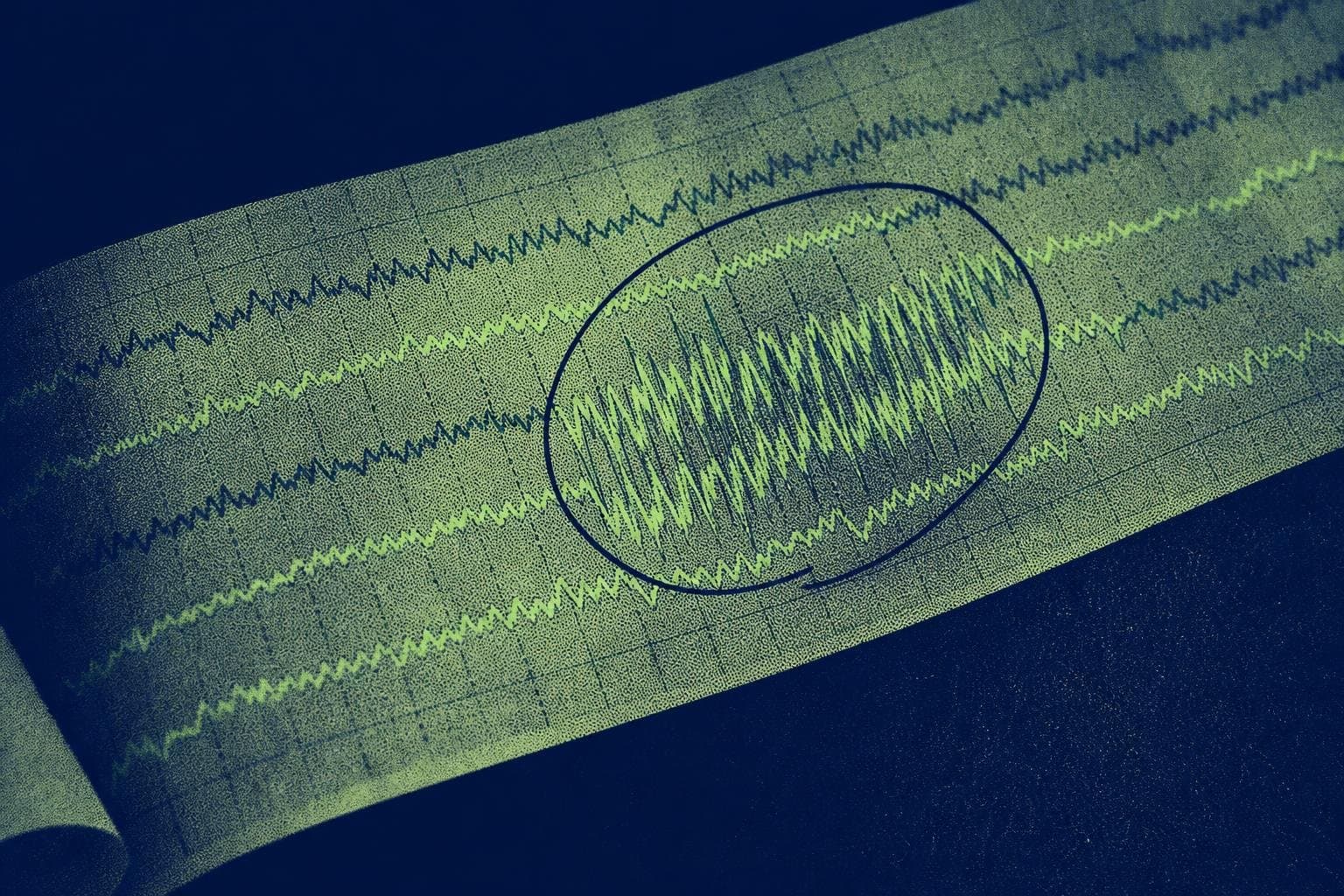
A study published in the journal Mindfulness tracked EEG activity in participants practicing breath-watching meditation from the very first moment of a session. The researchers, based at the Centre for Consciousness Studies at the National Institute of Mental Health and Neuro Sciences in Bengaluru, India, found that measurable changes in brain activity began within two minutes of starting practice — and reached peak intensity around the seven-minute mark.
That's a surprisingly tight window. The study's lead researcher, Malipeddi Saketh, noted that most prior meditation research had compared broad states — "rest" versus "meditation" — averaging data across entire sessions in ways that obscure moment-to-moment dynamics. By tracking the temporal evolution of brainwave changes, the team identified specific windows where neural shifts are strongest.
A few important caveats: the study examined breath-watching meditation in the Isha Yoga tradition specifically, so generalization to other practices requires caution. The research also doesn't tell us whether the seven-minute peak represents an optimal stopping point or simply a plateau before a different phase of neural activity begins. What it does establish is that the brain isn't waiting for you to feel settled — it's already reorganizing.
What "Advanced" Actually Looks Like in the Brain
The timing study tells us about the when. A separate paper published this month in Communications Biology addresses the what — specifically, what distinguishes the brains of long-term meditators from novices and non-meditators at a structural level.
The study, also drawing on participants from the Isha Yoga tradition, used EEG to measure intrinsic neural timescales (INT) — roughly, how long neural activity in a given region remains correlated with itself over time. Longer timescales are associated with higher-order cognitive processing; shorter timescales with more immediate sensory responsiveness.
The key finding: advanced meditators showed similar INT durations whether they were directing attention inward (breath-watching) or outward (a cognitive task). Novices and controls showed the more typical pattern — longer timescales during internal attention, shorter during external. The reduced difference in advanced meditators correlated with stronger self-reported experiences of non-duality, the dissolution of the boundary between self and environment that contemplative traditions describe as a marker of deep practice.
This is worth sitting with carefully. The study is correlational — it cannot establish whether meditation caused the INT pattern, whether people with this neural profile are drawn to long-term practice, or some combination. The researchers operationalized "non-duality" through psychological scales and self-report, which introduces its own measurement challenges. But the finding is specific enough to be interesting: not just "meditators have different brains" but a proposed neural signature — convergent timescales across attention modes — that tracks with a particular experiential quality.
The Gap Between Signal and Mechanism
What these two studies share, beyond the Isha Yoga connection, is a methodological seriousness about temporal dynamics. Both are asking not just whether meditation changes the brain, but when and how the change unfolds. That's a more tractable scientific question than the broad-stroke comparisons that dominated earlier research.
What neither study resolves — and what remains the genuinely hard problem in this area — is the causal chain. The Mindfulness timing study can tell us that brainwave changes peak at seven minutes, but not what those changes are doing functionally. The Communications Biology study can identify a neural signature associated with non-dual experience, but the direction of causation is unresolved.
A resting-state fMRI study published in Mindfulness examining neural correlates of self-related trait changes after eight weeks of Mindfulness-Based Stress Reduction (MBSR, n=39) versus an active control (n=25) found significant improvements in self-judgment, self-kindness, rumination, and reflection in the MBSR group — but no significant group-by-time interaction effects in the brain imaging data. The behavioral changes were real; the neural mechanism remains unclear.
That's not a failure. That's where the field actually is: accumulating specific, replicable behavioral signals while the underlying neural story remains partially legible. The seven-minute window is real. The timescale convergence in advanced meditators is real. What they mean, mechanistically, is still being worked out — and that's the more honest, and ultimately more interesting, version of the story.
The Communications Biology paper on non-duality and intrinsic neural timescales was published June 12, 2026. The Mindfulness timing study and the MBSR fMRI study do not carry publication dates in the available source material.


