
The most honest sentence in the Pentagon's recent UAP releases isn't about orbs or acceleration anomalies. It's buried in the fine print of the first tranche: the files "have not yet been analysed for resolution of any anomalies," according to the Pentagon's own statement. They released the data. They skipped the science.
That gap — between what was released and what it means — is the actual story of the PURSUE project so far, and it's worth sitting with before anyone draws conclusions in either direction.
What the Files Actually Contain
The two tranches released under the Presidential Unsealing and Reporting System for UAP Encounters (PURSUE) — the first on May 8, the second on May 22 — include over 200 files total: infrared sensor footage, photographic imagery, eyewitness accounts from military personnel, FBI investigative records dating to the late 1940s, and Apollo mission transcripts. The dedicated release site at war.gov/ufo has reportedly received more than a billion views.
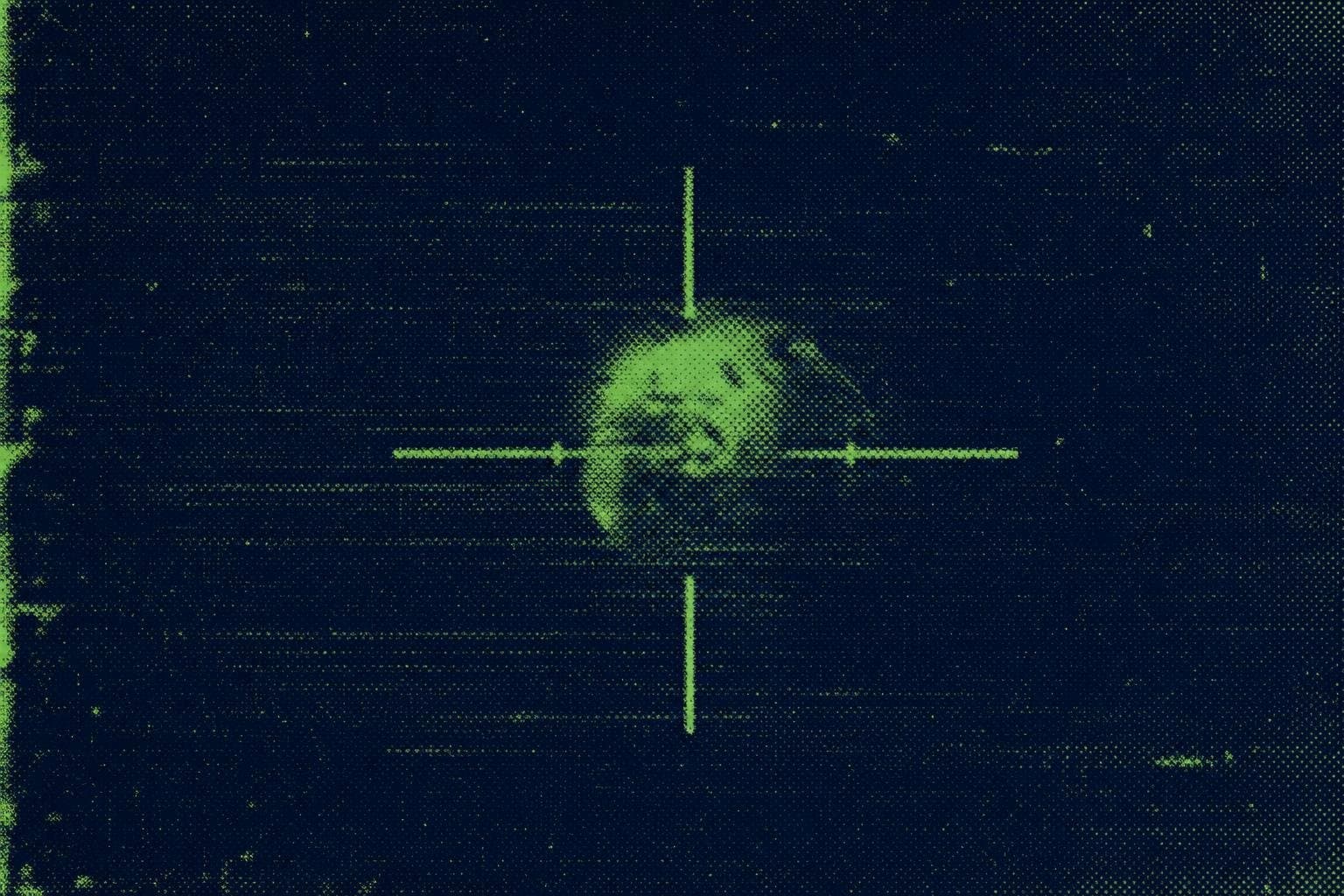
The sensor data is the most analytically interesting material. The first tranche included infrared still images captured in black-hot mode from a helicopter over the western United States in September and December 2025, along with a video labeled "Syrian UAP instant acceleration" taken from an infrared sensor aboard a U.S. military platform in 2021. The second tranche added a Coast Guard infrared video from April 2024 showing an object near a plane over the Southeastern U.S., and footage from 2020 under U.S. Central Command showing a sphere ascending over a population center.
What do these videos show? Penn State historian Greg Eghigian, author of After the Flying Saucers Came, put it plainly: "Some of these images and film come without any context. So, we don't know quite what we're looking at or what we're expected to surmise from this information." The files are designated as unresolved cases — meaning, per the Department of War's own framing, the government has not reached a definitive determination due to insufficient data.
That's not a cover-up. That's an honest description of the epistemic situation. The problem is that releasing unanalyzed data to a billion-view website doesn't move the epistemic situation forward.
The Secondhand Testimony Problem
The most vivid material in the second tranche is a written account from a senior U.S. intelligence officer who described seeing "two large orbs flare up" alongside their helicopter during a mission — orange with a white or yellow center, emitting light in all directions. Fighter jets scrambled and couldn't identify the objects. The officer wrote that the orbs appeared to begin "chasing" the fighters.
This is firsthand testimony from a credentialed observer, which makes it more interesting than most UAP reports. It is not sensor data. It is not a confirmed observation of anomalous physics. It is one person's account of a frightening, unexplained experience — and that distinction matters enormously for what conclusions can be drawn.
Christopher Mellon, former deputy assistant secretary of defense for intelligence, told DefenseScoop that "data alone is not disclosure. Releasing raw files without context may confuse more than clarify." He also noted what the release does establish: "the government has been collecting data, receiving reports, and conducting analysis on UAP for decades, and in many cases withheld that material from public view. That is no longer deniable."
That's the right frame. The institutional revelation — that collection and analysis happened at scale, in secret, for decades — is significant independent of what the objects turn out to be. But Mellon's caveat about context is the one that keeps getting skipped in coverage.
The Analysis Gap Is the Story
AARO, the Pentagon's All-domain Anomaly Resolution Office, has found no evidence that any of these incidents are of an extraterrestrial nature — while simultaneously acknowledging that many remain "unresolved." That's a precise and defensible position. It's also the kind of position that gets flattened in both directions: skeptics read "no extraterrestrial evidence" as case closed; believers read "unresolved" as confirmation of something extraordinary.
Wired noted that more than 60 percent of Americans believe the government is concealing UAP information, per YouGov. The PURSUE releases are designed to address that perception. Whether they succeed depends entirely on whether the analysis follows the data — and right now, the analysis is conspicuously absent.
The infrastructure of transparency is being built. What it needs next isn't more files. It's methodologically rigorous review of the sensor data that's already out: frame-by-frame analysis, atmospheric modeling, cross-referencing with radar and signals intelligence where available. That work is slow, unglamorous, and unlikely to generate a billion page views. It's also the only thing that could actually move the needle on what we know.
Watch for whether AARO publishes structured analysis of the released sensor footage — that's the milestone that would distinguish disclosure from spectacle.
Previously in Edge Cases: The Pentagon's UAP accountability gap — on the pattern of institutional signals outpacing actual evidentiary output.
POETRY & MEANING
"The Snow Man" by Wallace Stevens, from Harmonium (1923)
Stevens's poem opens with a demand: to behold the winter landscape, one must have "a mind of winter" — must have been cold long enough to see the scene without projecting warmth onto it. The poem moves toward its famous close, where the listener "beholds / Nothing that is not there and the nothing that is there."
That distinction — between the nothing that is absent and the nothing that is present — is exactly the epistemological problem the UAP files pose. We are not equipped, most of us, to look at pixelated infrared footage and see only what is there. We see what we expect, what we fear, what we hope. Stevens's poem is a meditation on the difficulty of perception stripped of interpretation — and on whether such perception is even possible for a human observer.
The sensor data in these files is, in a sense, trying to be the snow man: a cold instrument recording without projection. But the moment a human writes "instant acceleration" in a file label, the interpretation has already begun. Stevens knew this. The poem holds both possibilities — the mind of winter and the mind that cannot achieve it — in the same breath.
For a field that lives and dies on the difference between what was observed and what was concluded, it's the right poem for this moment.


