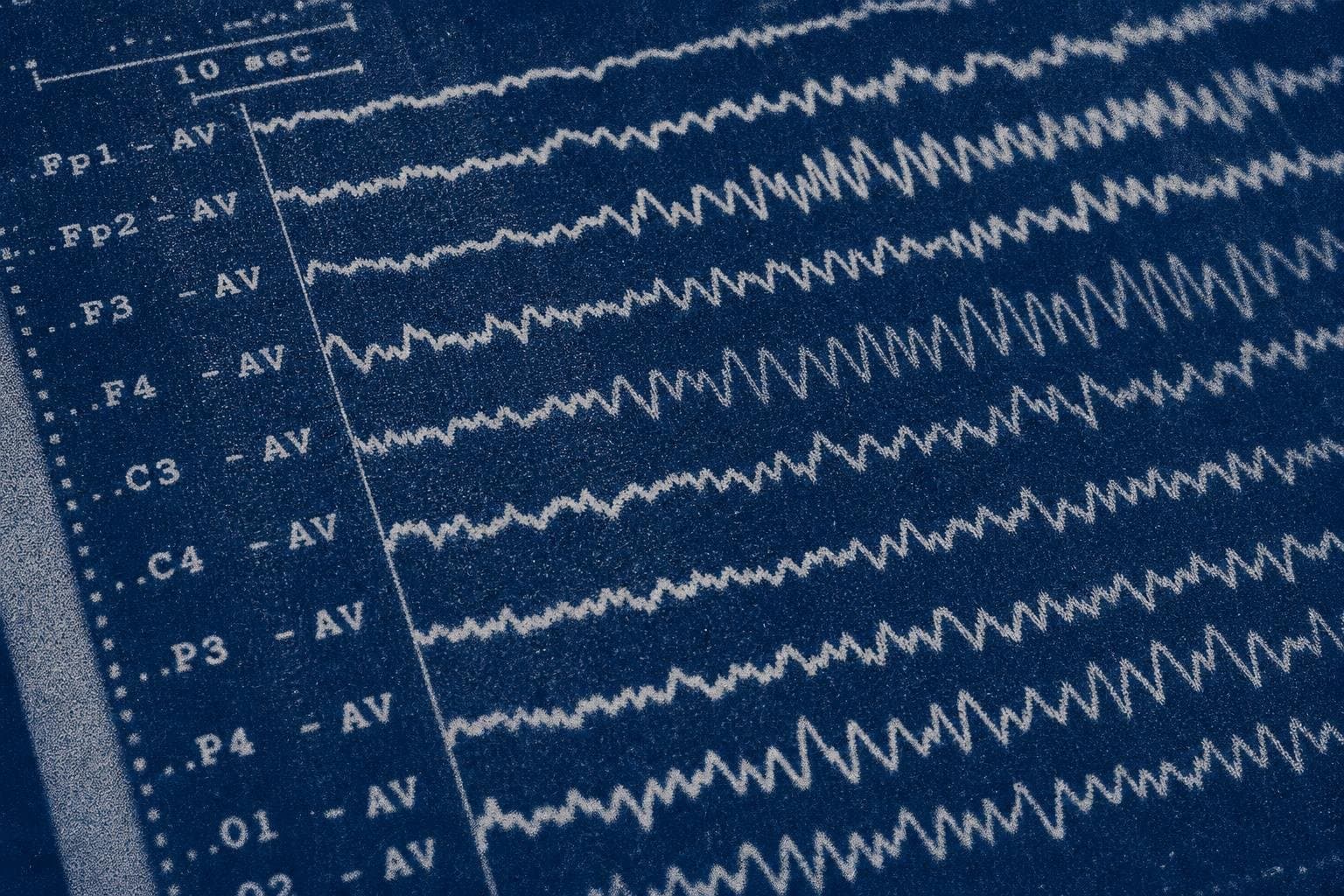

There's a number that keeps showing up in psi research and refuses to go away quietly: roughly 32–33%. In a standard ganzfeld experiment — sensory deprivation, white noise, a "receiver" trying to identify which of four images a "sender" is mentally transmitting — chance performance sits at 25%. The accumulated hit rate across decades of studies has hovered several percentage points above that floor. Not dramatically. Not conclusively. But persistently.
That persistence is exactly what makes the ganzfeld the most argued-over protocol in parapsychology. And right now, the argument has sharpened — not because new positive results have arrived, but because the statistical machinery used to evaluate those results is itself under scrutiny.
The Protocol That Survived the Skeptics (Sort Of)
The ganzfeld procedure was designed specifically to address methodological complaints. Earlier ESP research was plagued by sensory leakage, inadequate randomization, and experimenter effects. The ganzfeld — developed in the 1970s and refined through the 1980s and 1990s — introduced standardized controls: the receiver is isolated, the target is selected randomly, judging is done blind. By the standards of parapsychology, it's the closest thing to a gold-standard protocol the field has produced.
CERCAP at Lund University, where Etzel Cardeña has led anomalous psychology research since 2005, has been one of the institutional homes for this work. Cardeña's 2018 review in American Psychologist — the first full psi article in that flagship APA journal in decades — examined more than ten meta-analyses and concluded that the cumulative evidence "cannot be readily explained away." That's a careful formulation. It doesn't say psi is real; it says the anomaly is robust enough that dismissal requires more than a wave of the hand.
A 2025 paper discussed in Matt Colborn's Substack review of recent psi evidence quotes Cardeña acknowledging that precognitive priming — one of the field's other major paradigms — has seen "mostly lack of or at best mixed recent replications." The ganzfeld, by contrast, has held up better across research groups. That asymmetry matters: it suggests the effect, whatever it is, isn't uniformly distributed across psi protocols, which is either evidence of something real and specific or evidence of something methodological and specific.
The Meta-Analysis Problem Nobody Wants to Talk About
Here's where the story gets genuinely complicated. The ganzfeld's statistical case rests heavily on meta-analysis — pooling results across studies to detect small effects that individual experiments can't reliably capture. But a 2025 paper in Nature Communications raises a structural problem with exactly this approach.
The paper, introducing a method called MAIVE (Meta-Analysis Instrumental Variable Estimator), argues that standard meta-analytic techniques — including the inverse-variance weighting that gives more credence to "precise" studies — are vulnerable to what the authors call spurious precision. When methodological decisions shape a study's reported standard errors, and when publication bias and p-hacking interact with those decisions, the meta-analytic summary can look more reliable than it actually is. Bias correction methods based on funnel plots, the paper finds through simulation and large-scale empirical testing, don't reliably fix this. In some cases, a simple unweighted mean outperforms the standard corrections.
This isn't a parapsychology-specific critique — the Nature Communications paper applies to observational research broadly. But the ganzfeld literature is precisely the kind of corpus where these dynamics could operate: a small field, strong publication incentives for positive results, and decades of accumulated studies with varying methodological quality. A related analysis on effect size standardization flags that inconsistent effect size reporting across studies creates "significant bias that makes it very difficult to meaningfully classify empirical" results — a problem that compounds when those results are pooled.
None of this proves the ganzfeld effect is artifactual. It means the statistical case for it is harder to make cleanly than the existing meta-analyses suggest.
What Rigorous Looks Like From Here
The 2025 Parapsychological Association convention — held in Freiburg — featured papers exploring machine learning and neuroimaging as tools for automating and systematizing ESP research. The direction is right: if the ganzfeld effect is real, the path forward involves pre-registered protocols, larger samples, and analysis pipelines that are locked before data collection begins. Registered reports, where journals commit to publishing regardless of outcome, are the specific mechanism that could break the publication bias cycle the Nature Communications critique identifies.
The research on publication bias comparisons between parapsychology and mainstream psychology adds another layer: the claim that parapsychology's file-drawer problem is uniquely severe may itself be overstated. If mainstream psychology has comparable bias issues — and the replication crisis suggests it does — then the asymmetric skepticism applied to psi meta-analyses deserves examination too.
The ganzfeld anomaly is real in the sense that the numbers exist and have been produced by multiple independent labs. Whether those numbers reflect a genuine information transfer effect, a methodological artifact, or something the current statistical toolkit isn't equipped to distinguish — that's the question the field hasn't answered. The honest position isn't dismissal or belief. It's that the tools for answering the question are still being built, and some of the tools we thought we had may be less reliable than we assumed.
That's not a comfortable place to sit. It's also exactly where the interesting work happens.


