
Half the people in a new psilocybin imaging study said the drug gave them one of the most meaningful experiences of their lives — not in a self-help retreat questionnaire, but in a 62-person neuroimaging study just published in Nature. That's a striking proportion for a drug administered in a scanner, with electrodes on the scalp and a research team watching. It's also a useful reminder that "mystical experience" in this literature isn't a vibe — it's a measured variable, and researchers across several groups are getting more precise about what it correlates with and what it doesn't.
What the Largest Single-Site Dataset Actually Shows
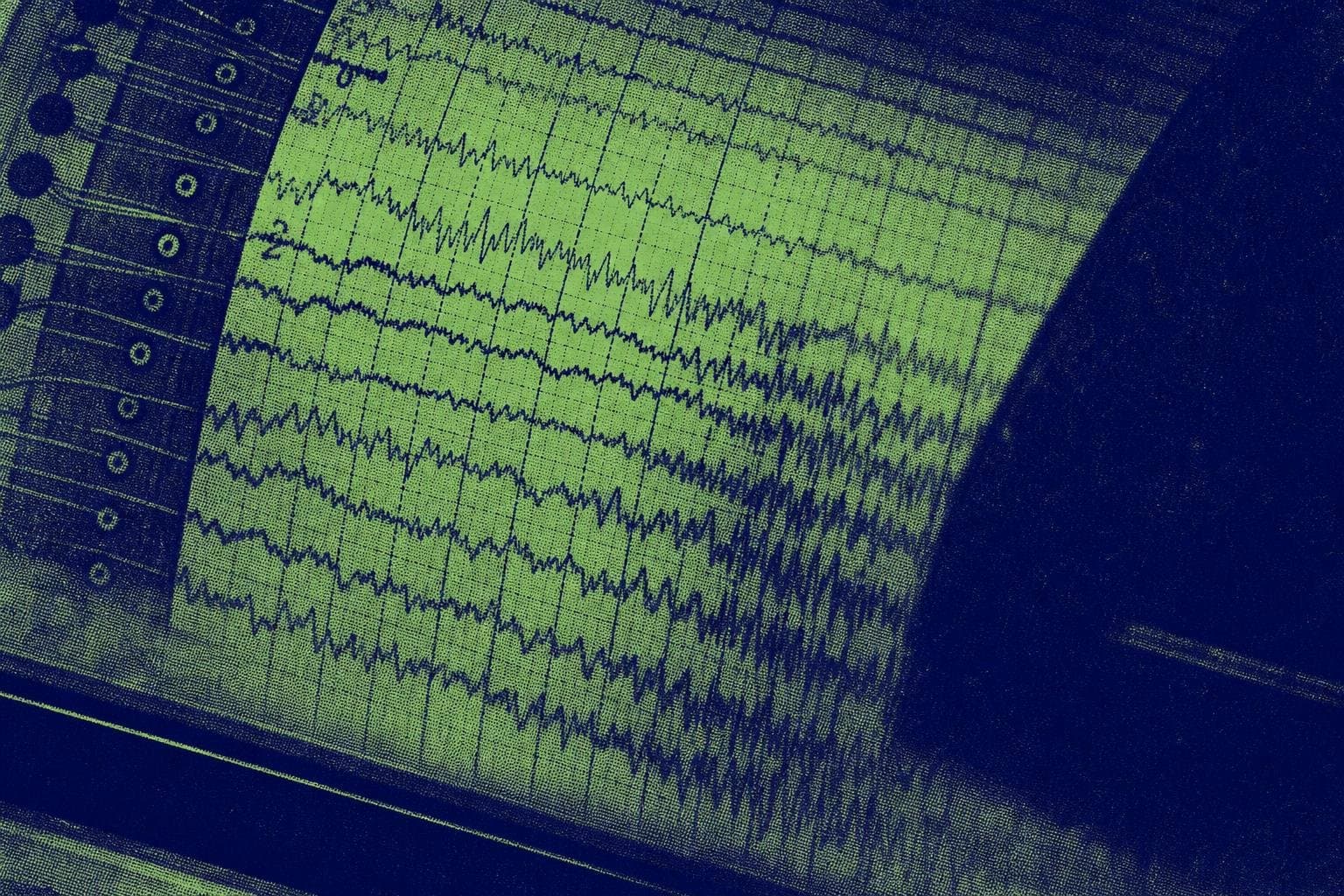
The Nature study scanned 62 adults with fMRI and EEG before and during a psilocybin session, while they rested or engaged with meditation, music, and film. The headline finding isn't that the brain goes chaotic — the standard "entropic brain" framing — but that activity reorganizes into structured, context-sensitive patterns. Networks that normally separate internal processing from external input started integrating, producing what the authors call "embeddedness": a felt continuity with the environment rather than separation from it. The strength of that context-alignment scaled with both the depth of the self-dissolving experience participants reported and the mindset change they described the next day.
That's a correlational finding, built on machine-learning representations of individual brain trajectories rather than time-averaged group measures — a real methodological advance over earlier entropy-based accounts, but still a single-site study of subjective report tracking with functional connectivity patterns, not proof that the brain states cause the downstream psychological change. A separate perspective piece on psychedelics and disorders of consciousness, published in Molecular Psychiatry, leans on this same entropic-brain framework, which suggests the field is still negotiating which account — disorder or latent order — actually fits the data better.
The Measurement Problem Behind the Measurement Problem
None of this works without decent instruments for quantifying "mystical experience" in the first place, and that's been a soft spot in the field for years. A validation study in the International Journal of Methods in Psychiatric Research, with Johns Hopkins researchers Frederick Barrett and William Richards among the authors, works on exactly that problem — validating an English-language Psychedelic Experience Scale and comparing it against the widely used Mystical Experience Questionnaire across psilocybin and LSD sessions in two controlled settings. Richards helped develop the original MEQ decades ago, so this is the field auditing its own founding instrument rather than taking it on faith. Better psychometrics won't settle what mystical experience means, but they make cross-study comparison — psilocybin versus LSD, one lab versus another — actually possible instead of aspirational, which matters given how much the recent neuroimaging work depends on self-report scales to anchor its brain-activity findings.
Clinical Translation Is Still Outrunning Mechanism
A state-of-the-art review in the BMJ, authored by the Johns Hopkins Center for Psychedelic and Consciousness Research, lays out where the clinical evidence actually stands: psilocybin for treatment-resistant depression and MDMA for PTSD have the strongest support, with both now in phase 3 trials for various conditions. But the review is equally clear about the limits — functional unblinding (it's hard to run a placebo-controlled trial when participants can tell whether they got the drug), inconsistent therapeutic protocols across sites, and trial populations that don't look like the general psychiatric population. Precise mechanism is still unresolved; the BMJ authors describe effects on neural circuitry, emotional processing, and psychological flexibility as plausible pathways, not confirmed ones.
That gap between "well-tolerated under controlled conditions" and "we know why it works" extends further out at the speculative edge of the field. The Molecular Psychiatry perspective raises the question of psilocybin, LSD, and DMT as potential tools for disorders of consciousness — coma, vegetative state, minimally conscious state — reasoning that increased neural entropy might restore communication between isolated brain regions. The authors are careful to flag this as feasibility reasoning built on initial pilot and case studies: controlled clinical evidence of sustained recovery is, in their own words, absent. It's a legitimate direction for a research program, not a therapy anyone should expect soon, and it stands in useful tension with the Wiley validation study's much narrower, instrument-building ambitions — one paper is trying to measure an experience precisely, the other is trying to extend the drug's reach to patients who can't report an experience at all.
What to Watch
The throughline across these sources is a field professionalizing its measurement infrastructure faster than it's resolving its causal questions. Watch for whether the Nature group's "embeddedness" metric gets replicated outside a single site, whether the validated Psychedelic Experience Scale gets adopted widely enough to make cross-trial comparison routine, and whether the BMJ review's call for better-blinded trial designs gets taken up before phase 3 data arrive. The mystical experience is real as a measured phenomenon. What it tells us about consciousness, or about why some people's depression lifts and others' doesn't, is still the open part of the sentence.


