



In 2000, a psychology student in Vienna got a call from his mother about his grandmother, who had vascular dementia and had barely spoken in a year. "Somehow, she's back again," his mother said. That grandmother was lucid again, briefly, before she died — and the student, Alexander Batthyany, spent much of his subsequent career trying to figure out what "back again" actually means, neurologically and philosophically (The New York Times).
That story is the kind of anecdote this field has run on for decades: moving, specific, and until recently, almost impossible to generalize from. What's changed isn't the phenomenon. It's that someone finally tried to measure how often it happens.
The New Number, and What It Actually Measures
A study published in The International Journal of Psychiatry in Medicine this year surveyed 5,940 adults who had observed a family member or patient with Alzheimer's or another dementia, drawing from a nationally representative U.S. sample. Among those observers, 43.6% reported witnessing at least one episode of unexpected lucidity in the person they were caring for (PubMed).
That's a striking number, and it's worth being precise about what it is and isn't. This is not a clinical trial, and it's not a chart review. It's a survey of observers — caregivers and family members reporting on what they believe they saw, after the fact, often years after the person died. The researchers, led by Jeff Levin at Baylor University, found the episodes distributed across age, sex, and clinical presentation, with no obvious subgroup more or less likely to experience them (PubMed). That's useful epidemiological information about reported frequency of belief in the phenomenon — it is not a neurological measurement of what happened in anyone's brain. The paper's own framing is notably cautious: it suggests lucid episodes may be "a normative feature of the dementing process," not an anomaly requiring exotic explanation.
This is the distinction that tends to get flattened in popular coverage of terminal lucidity, and it's worth holding onto here. A 43.6% prevalence rate among retrospective caregiver reports tells you something about how common the experience of witnessing this is. It doesn't yet tell you what's happening at the level of neural circuitry, and it can't rule out memory effects — grief tends to sharpen some recollections and smooth over others.
What the Case Reports Add, and What They Don't
The individual accounts are where the phenomenon gets its emotional weight, and they're worth taking seriously as data even while being clear about their limits. A caregiver told the Washington Post that the day before her father died, after months of being largely unresponsive, he suddenly looked at her and said "Hi, Honey" — his last words (The Washington Post). Cleveland Clinic's clinical summary describes the broader pattern: people recognizing long-forgotten faces, recalling old memories, or picking up a musical instrument they haven't touched in years, typically in episodes lasting minutes to a few hours before the person declines again (Cleveland Clinic).
These are firsthand or secondhand witness accounts, not controlled observations. Cleveland Clinic is explicit that terminal lucidity "isn't an official diagnosis," and notes that most clinicians who work with dying patients see only a handful of cases across entire careers — which is itself a useful corrective to the idea that this is either universal or vanishingly rare (Cleveland Clinic). The gap between "clinicians rarely witness it directly" and "nearly half of surveyed caregivers report it" is itself interesting — it may reflect who's in the room at the moment it happens, or it may reflect how memory and meaning-making shape what gets reported years later. The sources here don't resolve that tension, and neither will I.
Where the Actual Mystery Lives
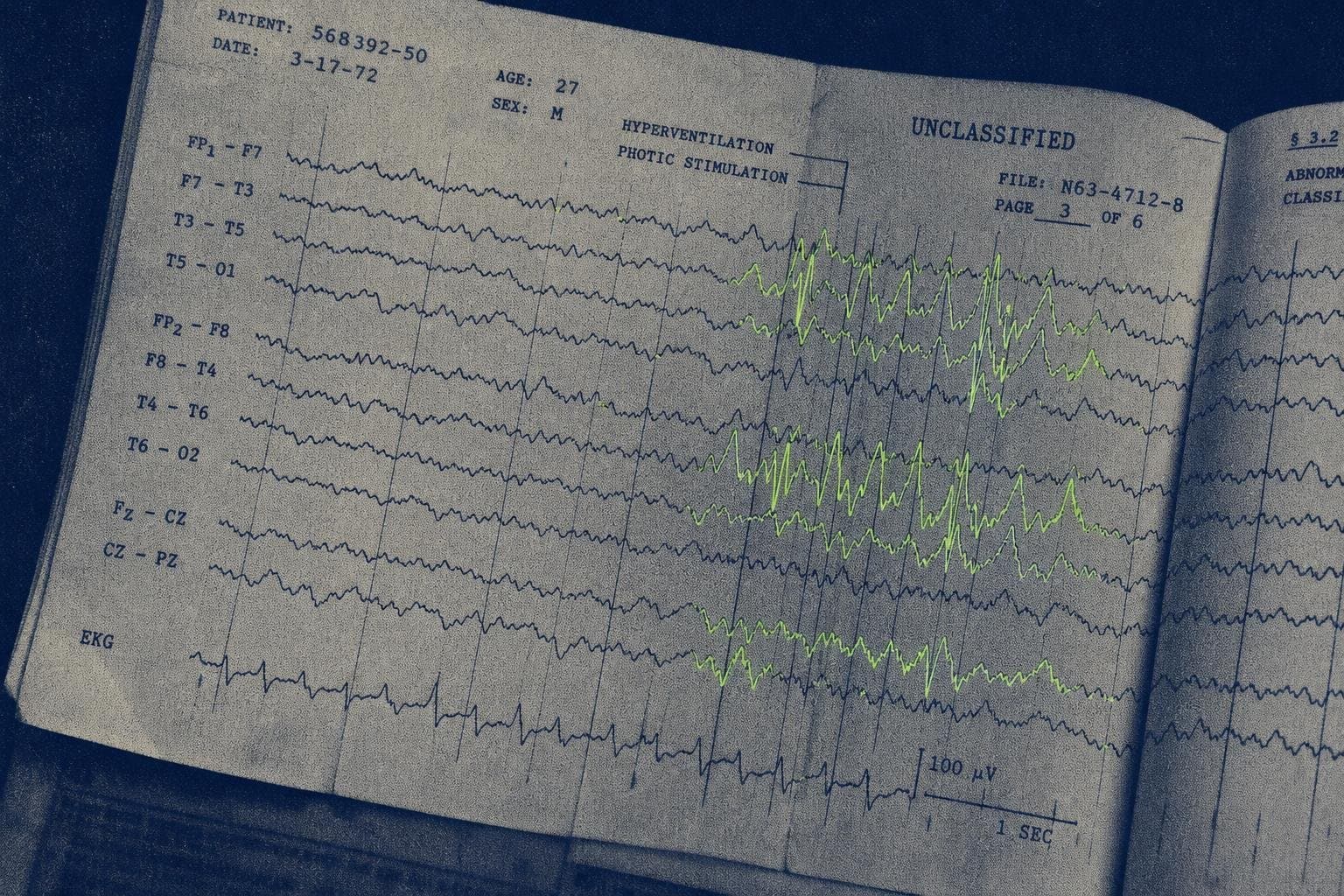
What nobody has done yet — and what would move this from anecdote to mechanism — is capture terminal lucidity happening under EEG or imaging conditions, in real time, matched against a documented history of cognitive decline. That's an enormously difficult study to design, for obvious ethical and practical reasons: you can't schedule a death. Until someone manages it, or until retrospective chart-review studies with verified clinical histories replace self-selected caregiver surveys, the honest position is that we have a well-documented reported experience and a set of competing theories — network-level neural reorganization, final surges of metabolic activity, something stranger — none of which has been tested against brain data.
The Vienna grandmother, the "Hi, Honey," the 43.6% — these are consistent enough to take seriously as a real pattern in how dementia ends for some people. What they are not, yet, is an explanation.