
A new systematic review just did something the field of parapsychology rarely manages: it looked at more than seven decades of its own work and said, plainly, that the evidence doesn't yet support firm conclusions.
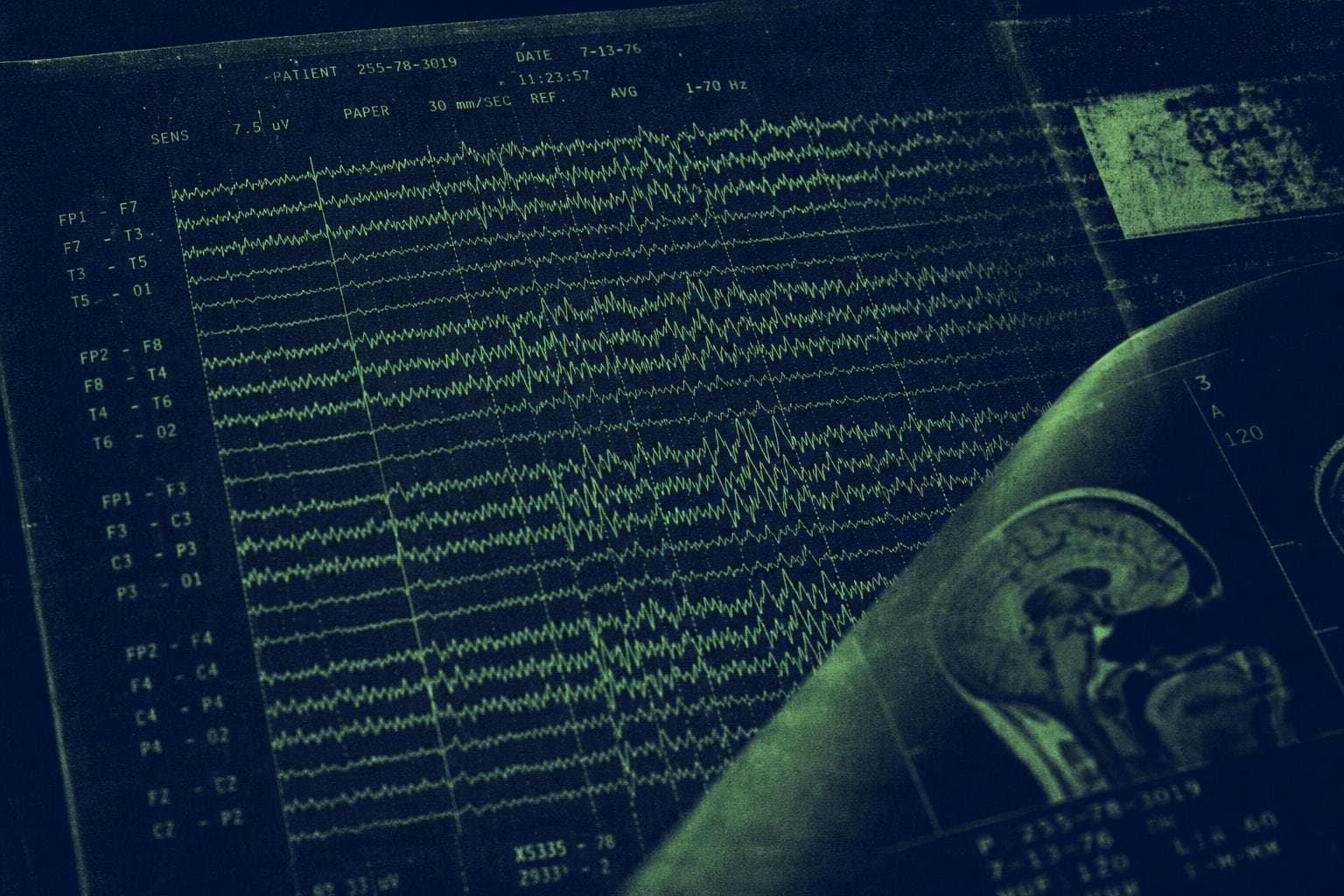
The paper, published in NeuroImage by Acunzo, Denton, Weiler, and Kelly, is the first systematic review of neuroimaging studies of extra-sensory perception — covering 143 reports and qualitatively evaluating 129 individual studies. That's a substantial body of work. The conclusions it reaches about that body of work are sobering.
The Methodological Reckoning the Field Has Needed
The review organizes its 129 studies into two broad categories: explicit psi paradigms, where participants make overt responses (guessing which card, which image, which target), and implicit psi paradigms, where psi is assessed purely through neurophysiology — brain activity that might correlate with a future or distant stimulus, without the participant consciously reporting anything.
The explicit paradigms mostly didn't show above-chance behavior. Which raises an uncomfortable question the review addresses directly: investigators frequently proceeded to neural analyses anyway, implying unacknowledged shifts in the operational definition of psi. In other words, when the behavioral test failed, researchers sometimes pivoted to looking for brain correlates of something that hadn't been demonstrated behaviorally. That's a methodological problem regardless of what you think about psi.
The implicit paradigms fared somewhat better — they more often reported psi-consistent effects — but those findings were heterogeneous and seldom replicated. Heterogeneous and unreplicated is the signature of a field that hasn't yet found its signal, if there is one.
The recurring methodological issues the review identifies will be familiar to anyone who followed the broader replication crisis in psychology: small sample sizes, inadequate multiple-comparison control, and analytical flexibility. The last one — what's sometimes called the garden of forking paths — is particularly corrosive in fields where surprising results are publishable and data can be sliced many ways. When you have many ways to slice your data and a result that's surprising enough to publish, the false positive rate climbs fast.
The Bem Precedent, Still Unresolved
This is the context in which to read the ongoing Daryl Bem situation, which remains one of the stranger episodes in modern experimental psychology. Bem's 2011 "Feeling the Future" paper reported nine experiments, eight of which found statistically significant evidence that people could be influenced by events that hadn't happened yet — using standard psychological paradigms run, essentially, backward in time. The effects were small (around 53% where chance predicts 50%) but consistent across studies.
The reaction was swift. Ritchie, Wiseman, and French attempted direct replications, and the failures became part of a broader discussion about replication as the cornerstone of scientific progress — a discussion that was already destabilizing psychology well beyond the psi literature. Critics pointed to optional stopping, publication bias, and the low prior probability that retrocausal influence is real. These are legitimate concerns — the same ones the NeuroImage review identifies in the neuroimaging literature.
What makes the Bem case genuinely interesting rather than just cautionary is that a decade on, his data has stood up to meta-analytic scrutiny — at least in the sense that the aggregate effect size across replications hasn't collapsed to zero. That's not the same as confirmation. A small, persistent statistical anomaly that survives meta-analysis is not evidence that precognition exists; it's evidence that something is producing a consistent deviation from chance, and we don't know what. It could be a real effect. It could be a systematic methodological artifact that meta-analysis can't wash out. The physics of time makes the prior probability question genuinely complicated — linear time is not as categorically fixed as folk intuition suggests — but complicated prior probability is not the same as license to accept weak evidence. Distinguishing between a real effect and a persistent artifact is exactly what the field hasn't yet managed to do.
What the Review Actually Offers
The NeuroImage paper closes with 13 methodological recommendations and 6 directions for future research — which is either encouraging (the field is getting serious about its own standards) or a sign of how much ground remains to cover, depending on your mood.
Two specific neural candidates survive the review's scrutiny as worth investigating further: alpha-band power in forced-choice designs, and a target-related negative slow wave in event-related designs. These are tentative leads, not findings. The review is careful to frame them as testable candidates rather than established correlates.
That framing matters. The honest position, after 70-plus years of neuroimaging research on ESP, is that definitive conclusions about the neural correlates of ESP remain premature. Not "the evidence is negative." Not "the effect is real." Premature. The field has produced anomalies it can't explain and methods it can't fully trust, and the two problems are entangled in ways that make clean resolution difficult.
What the NeuroImage review represents is something rarer than a positive finding: a field looking at its own record with enough rigor to say that the record doesn't yet support what some of its practitioners have claimed. That's the infrastructure of credibility being built — slowly, belatedly, but genuinely. Whether there's a real signal underneath the methodological noise is a question that better-designed studies, with pre-registration and adequate sample sizes, might eventually answer. The review gives researchers a cleaner map of where to look. Whether anyone follows it is the next question worth watching.


