



The standard move for dismissing psi research is to call it unnatural — a category error, a wish dressed up as data. A new paper in the Journal of Scientific Exploration tries a different approach: what if psi is too natural to dismiss, and the real problem is that parapsychology has never built the biological scaffolding to say so?
The paper, "Towards a Natural History of Psi," proposes an evolutionary framework using what the author calls consilience of inductions — drawing on convergent evidence from multiple independent disciplines to argue toward a common conclusion. The argument isn't that psi is proven. It's that the existing experimental record, combined with comparative biology, neuroanatomy, and evolutionary theory, is consistent with psi being an ancestral capability predating the vertebrate divergence, preserved by stabilizing selection because it confers survival advantages.
That's a specific, falsifiable-in-principle claim. Which is more than most psi discourse manages.
The Argument Is More Interesting Than the Conclusion
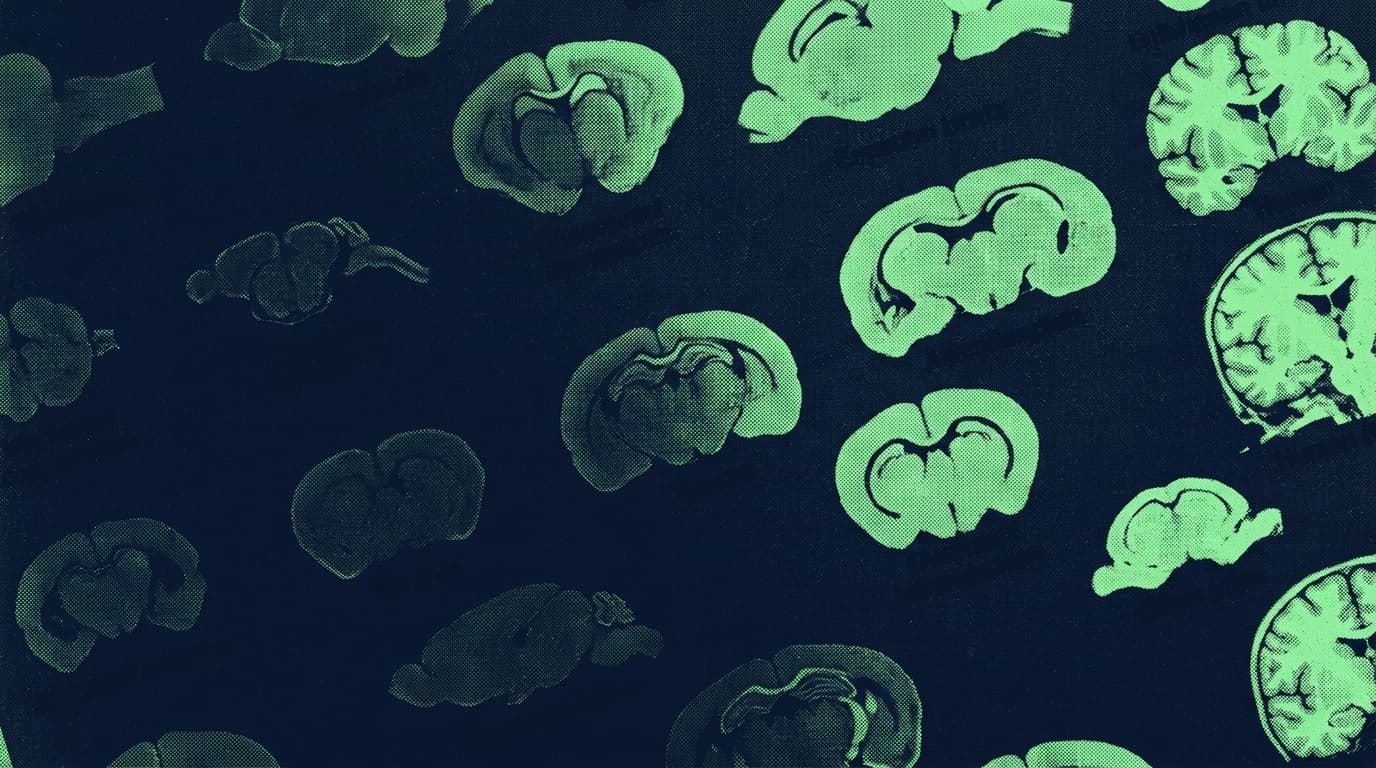
The paper's most provocative structural move is its treatment of the neocortex as an inhibitor rather than an enabler of psi. The outer brain layers — recent evolutionary innovations concentrated in primates — are framed as suppressing psi function, not generating it. The implication: the more "advanced" the brain, the more it gets in the way. This would explain why animal psi experiments (yes, those exist, and the paper reviews a substantial body of them) sometimes show cleaner results than human studies, and why altered states — sleep, hypnosis, meditation — tend to be associated with stronger psi effects in the experimental literature.
I'm not endorsing the conclusion. But the structure of the argument is worth taking seriously. Parapsychology has spent decades accumulating positive experimental outcomes without a coherent biological story to put them in. The field has been, as the paper notes, almost entirely anthropocentric in its theorizing. Proposing that psi might be a feature of vertebrate nervous systems generally — not a special human faculty — is the kind of reframing that either gets demolished by comparative neuroscience or opens genuinely new research directions.
The honest answer is we don't know which yet.
Why This Matters for Legitimacy, Not Just Theory
The question of academic legitimacy for anomalous phenomena isn't really about whether any individual study is convincing. It's about whether the field can build the kind of theoretical infrastructure that lets mainstream science engage with it on shared terms.
The consilience method itself is worth flagging. It's the same logic Darwin used — no single piece of evidence proves evolution, but fossil records, biogeography, comparative anatomy, and embryology all point the same direction. Applied to psi, the method is only as strong as the independence of its evidence streams. If animal psi experiments, human survey data, and neuroanatomical correlates all trace back to the same methodological vulnerabilities, consilience doesn't rescue them. The paper doesn't fully reckon with this, which is the main thing a rigorous critic would press on.
What Comes Next
The paper closes by identifying a concrete research agenda: focus on brain structures common across vertebrates, then work toward identifying genetic bases of whatever those structures are doing. That's a testable program, not a promissory note. Whether any lab with the resources to run comparative neurogenetics work will touch it is a different matter — institutional risk-aversion in mainstream neuroscience is real, and "psi genetics" is not a grant-friendly phrase.
Watch for whether this framework gets cited in subsequent JSE issues or picked up by researchers in adjacent fields like animal cognition or evolutionary neuroscience. Citation patterns in edge science are often more diagnostic than the papers themselves. A framework that only circulates within parapsychology has a different epistemic status than one that starts appearing in comparative biology literature — even critically.
The infrastructure of legitimacy, when it's built right, gets constructed from the inside out: theory first, then methodology, then institutional recognition. This paper is attempting the first step. The second step is considerably harder.