
The field of parapsychology has spent decades accumulating findings that don't survive contact with the next lab. A new review from the University of Virginia's Division of Perceptual Studies is trying to change that — not by defending the anomalies, but by diagnosing why the research keeps failing to cohere.
RESEARCH ROUNDUP
The Most Comprehensive Audit of ESP Neuroscience Ever Attempted
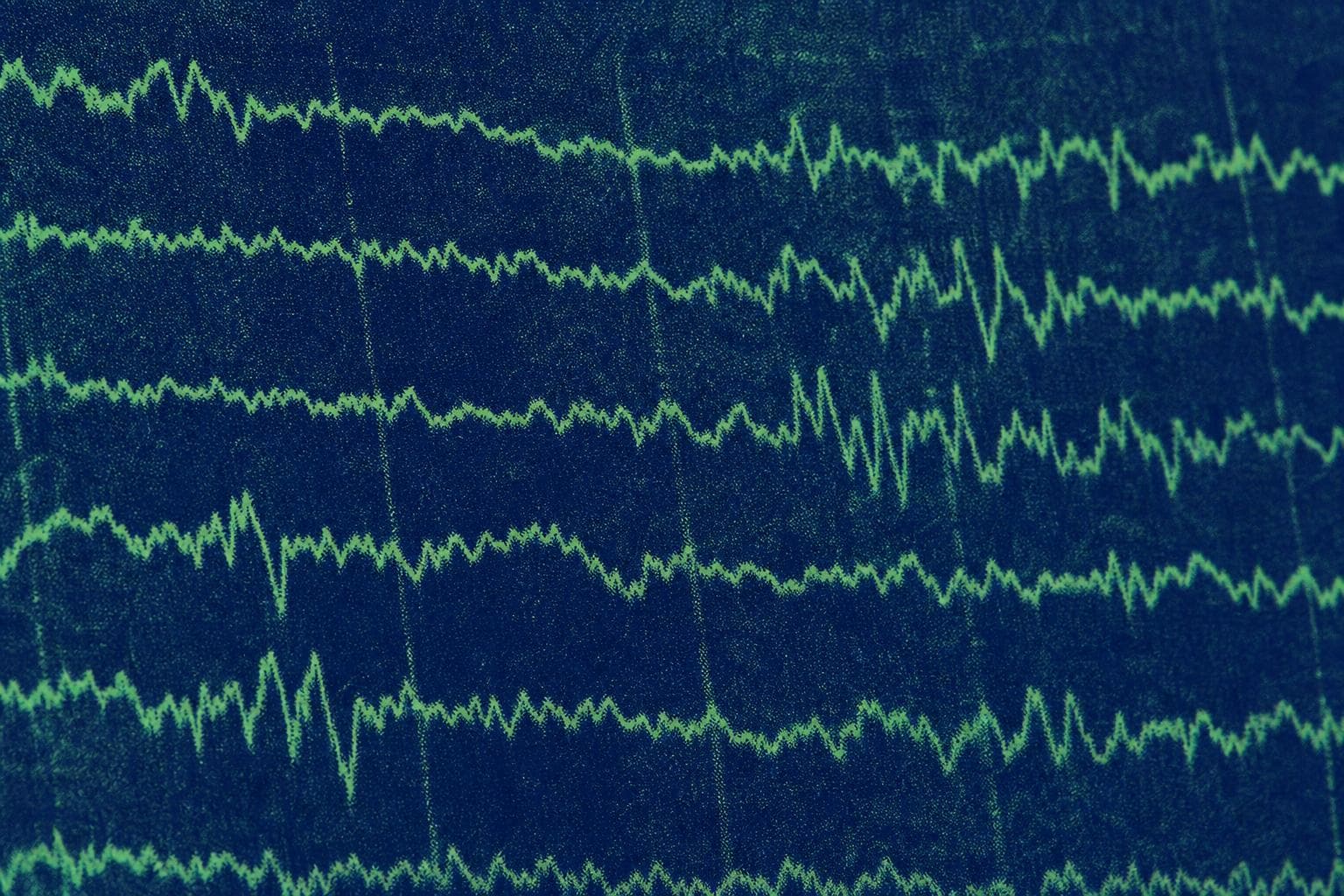
Researchers at UVA's Division of Perceptual Studies have completed what they describe as the most comprehensive review ever performed of neuroimaging research into extra-sensory perception — covering more than 70 years of work, evaluating 129 studies drawn from over 140 scientific reports. The findings are a useful corrective to both camps: the skeptics who assume nothing worth examining exists, and the enthusiasts who treat every positive result as confirmation.
What lead researcher David J. Acunzo and colleagues actually found was a methodological disaster zone. Small sample sizes, inconsistent analytical approaches, inadequate controls, and a near-total failure of replication. The problems aren't unique to parapsychology — they mirror the broader psychology replication crisis — but they've been particularly damaging here, where the prior probability is already low and critics are watching closely.
The review's value isn't in validating psi. It's in the scaffolding it proposes going forward: clearer operational definitions, systematic replication protocols, and the kind of cumulative research design that lets findings build on each other rather than existing as isolated curiosities. Acunzo is explicit that it's "premature" to draw any conclusive statements about ESP from the existing record.
That said, the review doesn't dismiss everything. Among the areas flagged as worth further investigation: studies of alpha band power — a specific measure of brain activity recorded while subjects attempt to identify figures drawn on cards. The signal is weak and contested, but it's one of the few threads that has appeared across multiple independent lines of work. Whether it survives pre-registered replication attempts is a different question, and the review is careful not to upgrade "promising" to "established."
The methodological recommendations themselves are the news here. Parapsychology has a long history of producing interesting anomalies that dissolve under scrutiny. A field-wide push toward registered reports, larger samples, and standardized protocols would at minimum clarify what's actually there — and what was always noise.
Consciousness Research: The Hard Problem Gets Harder
Separately, neuroscientist Christof Koch presented at the Bial Foundation's "Behind and Beyond the Brain" Symposium in Porto in early April, arguing that materialism's grip on consciousness research is weakening under its own unresolved tensions. Koch — formerly of Caltech and MIT, now at the Allen Institute for Brain Science — focused on three pressure points: the persistent failure to explain subjective experience through physical brain mechanisms alone, questions from modern physics about what counts as "real," and the stubborn existence of anomalous experiences like terminal lucidity and near-death states that don't fit standard frameworks.
Koch's preferred alternative is Integrated Information Theory, which treats consciousness as a function of integrated information in any system — a scientific framing of panpsychism. IIT remains contested and has its own methodological critics, but Koch's argument is less about IIT specifically than about the inadequacy of the dominant paradigm. When a leading figure in mainstream neuroscience is publicly questioning whether the brain produces consciousness or merely participates in it, that's a signal worth tracking.
Psilocybin and Lasting Brain Changes
A placebo-controlled, within-subjects study published in Nature Communications examined whether a single psilocybin experience produces enduring functional and anatomical brain changes, using EEG and MRI. The summary available indicates the study was exploratory in design — which means findings should be treated as hypothesis-generating rather than confirmatory. The broader significance: researchers are now asking whether psychedelic-induced states leave measurable structural traces, which connects directly to questions about consciousness, neural plasticity, and the mechanisms underlying anomalous experiences.
FIELD DISCOURSE
The Ganzfeld as a Case Study in What Psychology Gets Wrong
A doctoral thesis from the University of Edinburgh (available through the ERA repository) uses the psi ganzfeld experiment as a case study for broader methodological failures in psychology. The argument, as summarized, is that parapsychology's problems aren't exotic — they're a concentrated version of the same issues that produced the replication crisis across social psychology, cognitive science, and medicine. The ganzfeld paradigm, which attempts to measure anomalous information transfer under sensory reduction, has generated decades of contested meta-analyses. Using it as a lens on general methodology is a smart move: it forces the question of what standards we actually hold research to, and whether we apply them consistently across fields we find more or less credible.
The implication worth sitting with: if parapsychology cleaned up its methods and still found nothing, that would be a meaningful result. If it cleaned up its methods and found something replicable, that would be a different kind of meaningful result. Either way, the methodological work is the prerequisite.
POETRY & MEANING
The UVA review's central argument — that 70 years of data have produced more noise than signal, and that the work of clarification is still ahead — calls to mind a poem that has been doing something similar for decades.
"The Snow Man" by Wallace Stevens, first published in Poetry magazine in 1921 and collected in Harmonium (1923), is a poem about the discipline required to perceive clearly. Stevens describes what it takes to behold "nothing that is not there and the nothing that is." The poem moves through a series of subtractions — of projection, of wishful interpretation, of the human tendency to hear meaning in wind — until it arrives at a kind of bare attention that is both rigorous and vertiginous.
The connection to this week's research is not metaphorical decoration. The UVA review is essentially asking parapsychology to become a snow man: to strip away the methodological noise, the small samples, the inconsistent analyses, and look at what remains. The honest answer, for now, is that we don't know what remains. Stevens would recognize that as a starting point, not a failure.


