



In September 2023, NASA Administrator Bill Nelson stood at a podium and promised openness. The agency's UAP Independent Study Team had just delivered its final report, and the message from Nelson and Dr. Daniel Evans, the team's Designated Federal Officer, was unambiguous: NASA would apply rigorous science to a subject long treated as beneath it, and would do so transparently (Grant Lavac's Substack).
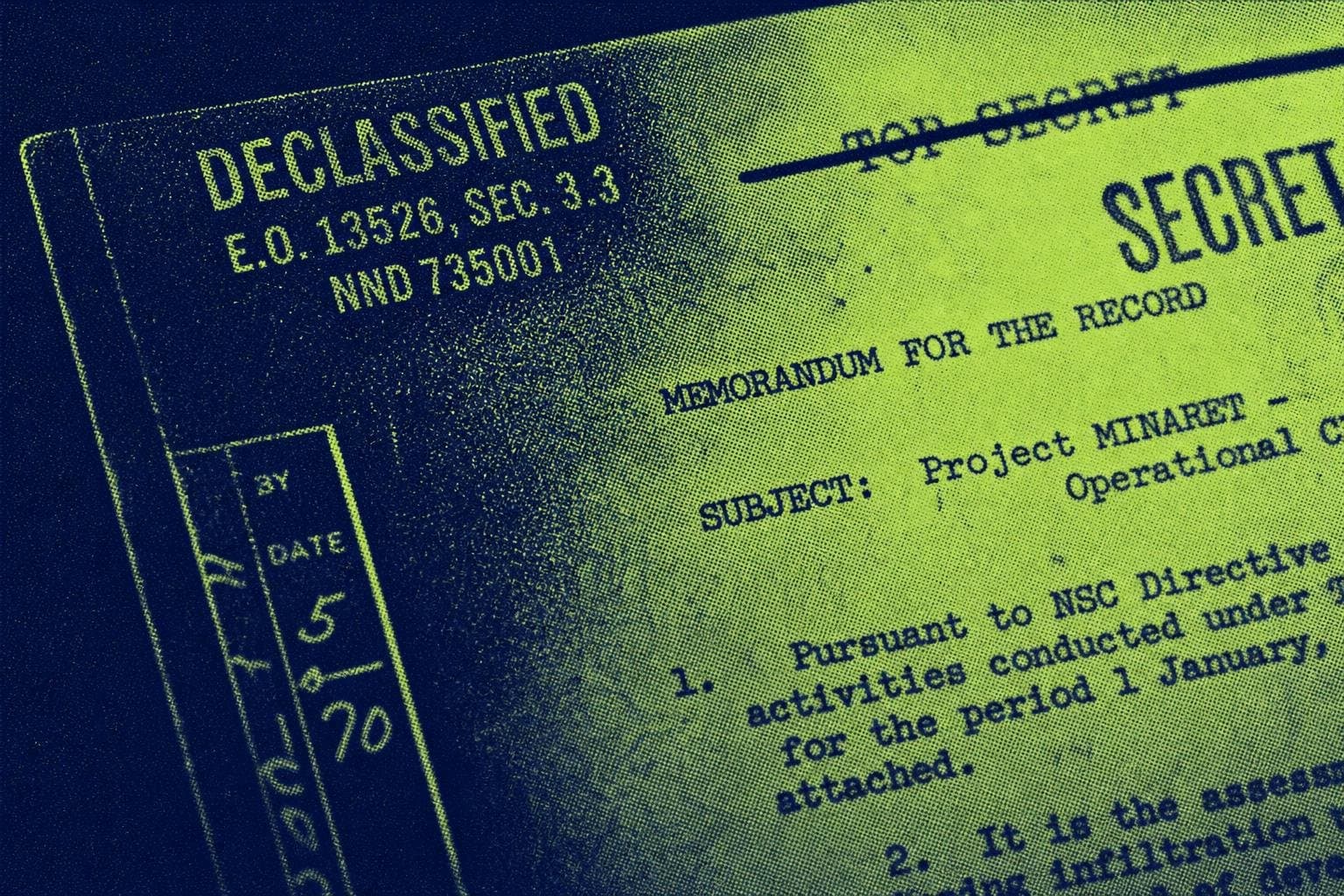
Three years later, a FOIA request has surfaced a quieter story running underneath that public commitment. Evans told a requester in NASA FOIA case 26-00029-F-HQ that the agency "does not hold or manage records classified specifically as UAP documents." A separate request, filed in May 2026 and fulfilled in September, returned 3,668 pages of internal correspondence between Mark McInerney — NASA's Director of UAP Research — and research librarians at Goddard Space Flight Center (Grant Lavac's Substack). The records are not alien contact logs. They are a paper trail of a government scientist doing exactly what you'd want a government scientist doing: asking librarians to pull literature.
The Gap Between "No Records" and "No Interest"
This is the distinction this newsletter keeps returning to: institutional signal versus institutional evidence. NASA's public line — no UAP records exist — is technically defensible if "records" means something like confirmed sightings or physical evidence intake. But the Goddard correspondence shows McInerney's office running a methodical literature search in the latter half of 2023, organized around five lines of inquiry: advanced airframes, propulsion concepts, and, notably, human perception (Grant Lavac's Substack). In one thread, McInerney asked for literature on spherical and triangular drone designs, and librarians reported that true triangular platforms were scarce in open-source material and tended to overlap with known stealth aircraft like the B-2. That's a mundane, almost reassuring detail — an analyst trying to rule out conventional explanations before reaching for anything stranger.
What's more interesting is the apparent disconnect between what the public was told and what was actually happening inside the building. "We hold no official records" is a statement about classification categories, not about activity. A research office can generate thousands of pages of internal inquiry without any of it qualifying as a formal UAP case file. Whether that's an honest bureaucratic distinction or a convenient one depends on how charitably you read institutional communications departments, and I'd stop short of calling it a cover-up. But it's exactly the kind of gap between official reassurance and internal paper trail that FOIA requests exist to expose, and it's worth remembering the next time an agency says it "has nothing" on a topic.
What the Documents Don't Tell Us
Here's the part that matters for calibrating expectations: this FOIA release is administrative, not evidentiary. It tells us a federal research director was curating a literature review — not that NASA has analyzed any specific sighting, produced new sensor data, or reached any finding about anomalous craft. The records describe a research process, not a result. If you were hoping for NASA's version of a smoking-gun video, this isn't it; it's closer to a syllabus.
That matters because the gap between "office exists and is working" and "office has produced findings" is the recurring theme in UAP coverage across institutions. I've written before about the Pentagon's version of this same gap — AARO's expanding mandate running well ahead of any released, peer-reviewed analysis of actual evidence (/p/the-pentagons-uap-accountability-gap-is-getting-harder-to-ignore). NASA's situation is the softer-edged civilian cousin: a smaller office, a lower public profile, and now a documented record that its internal activity doesn't match its public "nothing to see here" framing. Neither agency has released primary sensor data or peer-reviewed findings that would let outside scientists actually evaluate a claim. Both have created structures — study teams, directors, library requests — that look like progress while the evidentiary cupboard stays essentially where it was in 2023.
What to Watch
The next test isn't another FOIA haul of internal emails. It's whether McInerney's office, or any NASA-affiliated researcher, publishes something a peer reviewer could actually engage with — a methodology, a dataset, a null or positive result. Until that happens, the honest summary of NASA's UAP research posture one year on is the same honest summary that applied before this release: an office exists, people inside it are reading and thinking, and none of that reading has yet become a finding the rest of us can check.