
Carl Sagan's old property in Ithaca, New York, is about to host a telescope built to look for things nobody can identify. That's a good setup for a magazine piece. It's a less clean setup for a research update, because the most important fact about this observatory is that it doesn't exist as an operating instrument yet — it exists as a construction plan, a funding commitment, and a press release.
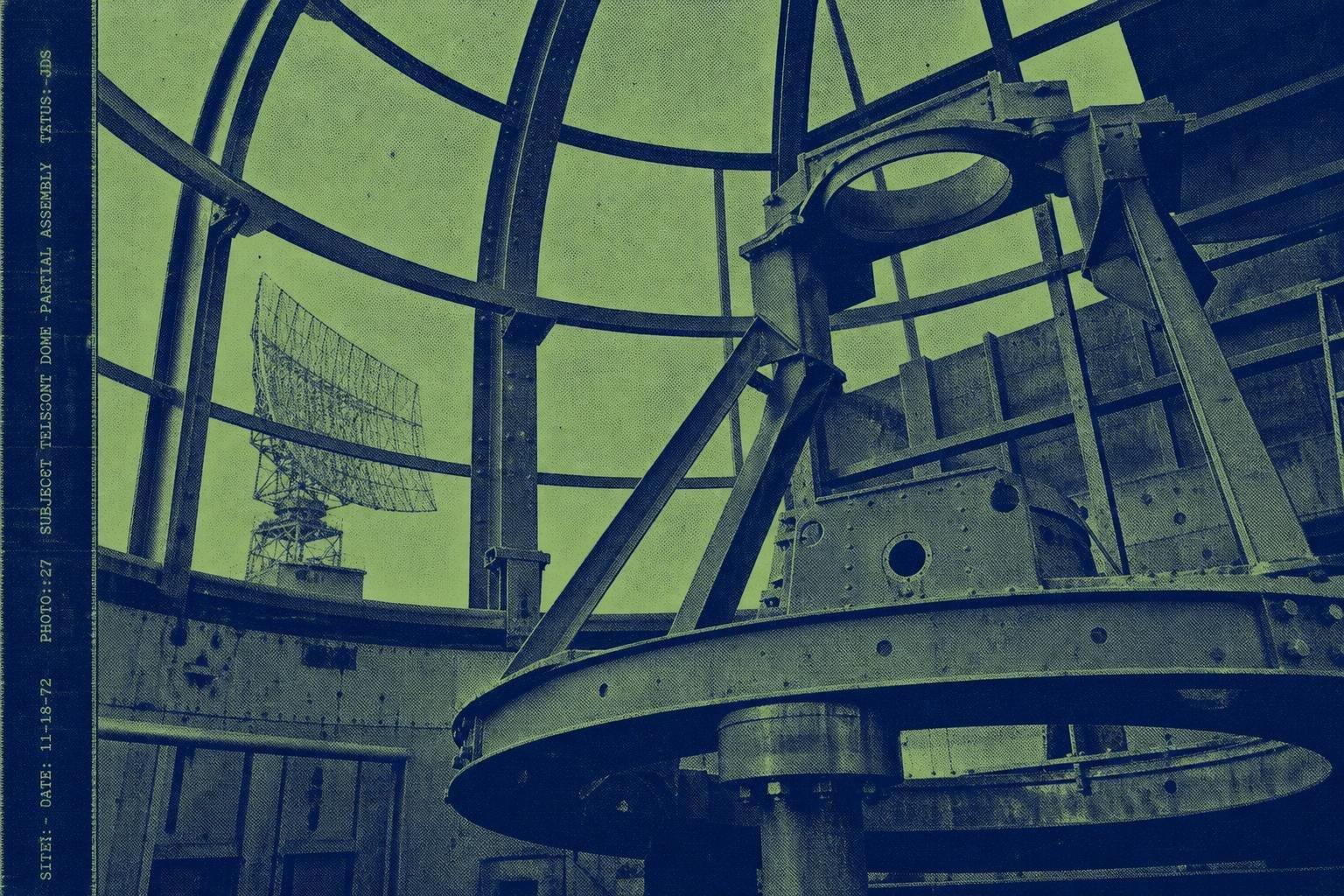
Harvard astrophysicist Avi Loeb announced this month that his Galileo Project is partnering with entrepreneur Adam Weitsman to build a fourth Galileo Project observatory, this one combining a passive radar system with a 0.7-meter PlaneWave CDK700 telescope for high-resolution imaging and spectroscopy of unidentified anomalous phenomena (Loeb, Medium). The design concept is his own, conceived a couple of months before the press release, and the site sits on land once owned by Sagan — a detail that is doing a lot of symbolic work in the framing, whatever else it does scientifically (Loeb, Medium).
Reporting on the announcement adds useful texture but not much more certainty. Loeb told IBTimes UK the observatory was funded as of an October interview, but he did not identify the funding source or disclose a budget beyond naming Weitsman as a backer in the press release itself (IBTimes UK). The passive radar is meant to scan the sky and cue the telescope toward objects of interest, which is a sensible engineering idea — radar has wide field of view and poor resolution, optical telescopes have narrow field of view and fine resolution, so pairing them solves a real detection problem. But "designed to solve a real problem" and "has produced results" are different claims, and right now only the first one is true.
The Trump Anecdote Is Secondhand Testimony, Not a Data Point
The timing of this announcement overlapped with renewed attention to pilot sightings after President Trump described, in an 8 November interview on CBS's 60 Minutes, encounters that U.S. Air Force pilots had reportedly described to him, including an object he said passed an F-22 at three times the aircraft's speed (IBTimes UK). Trump offered no flight data, imagery, or independently assessed measurements, and did not name the pilots or specify when or where the incident occurred. That's not confirmation of anything — it's a president relaying what he says others told him, filtered through memory and years of retelling, with zero verifiable specifics attached.
Loeb, separately, told NewsNation's Jesse Weber that he had spoken with pilots of his own and found their accounts "credible but puzzling," without establishing whether they were the same pilots Trump referenced (IBTimes UK). He also said these pilots reported seeing no visible signs of propulsion — an observation about what wasn't seen, not a finding about what the object was or how it moved. Loeb chairs a UAP Science Advisory Council that reportedly expects to examine aviator evidence, but he announced no findings from that review. Stack these up and you get two credible people describing secondhand impressions of other people's memories, with no instrument data behind either account. That's worth tracking. It is not evidence in the sense the Ithaca observatory is designed to eventually produce.
The Citizen-Science Crowd Is More Honest About What "Detection" Means
A useful contrast comes from an unrelated corner of this field: independent instrument-builders publishing station designs on Zenodo for passive, multi-sensor "aerial census" setups that cost roughly $400–$1,000 in parts (Zenodo; Zenodo). Both papers make a point of stating, explicitly, that they do not claim to detect UAP as a positive class — because UAP is a residual category, something only earns the label after ordinary explanations (aircraft, drones, birds, meteors, balloons, satellites) are tested and ruled out. What these stations do is log everything, filter known classes, and archive what's left as candidates. It's a modest claim, and it's the right one. I'd argue the Galileo Project's Ithaca plans are implicitly making the same bet at a much larger budget — the radar-telescope pairing is a residual-category filter with better optics. The difference is that the citizen-science papers say the quiet part out loud.
What to Watch
The real test of the Ithaca observatory isn't the press release, it's whether the telescope goes operational and what — if anything — the radar cueing system flags once it's running. No completion date or first-light target has been reported. Watch for whether Loeb's UAP Science Advisory Council publishes anything from its review of aviator evidence, since that's the step between "pilots told us something puzzling" and an actual claim worth evaluating. Until either of those things happens, what we have is infrastructure and testimony — useful groundwork, but not yet the thing it's built to find.


