



The Defense Innovation Unit was built to go fast. For a decade, that was the point — pull commercial tech into the defense market, bypass the bureaucracy, get capability to warfighters before the acquisition system strangled it. It worked, up to a point.
Now the Pentagon's own industrial base leadership is saying the workaround model has hit its ceiling.
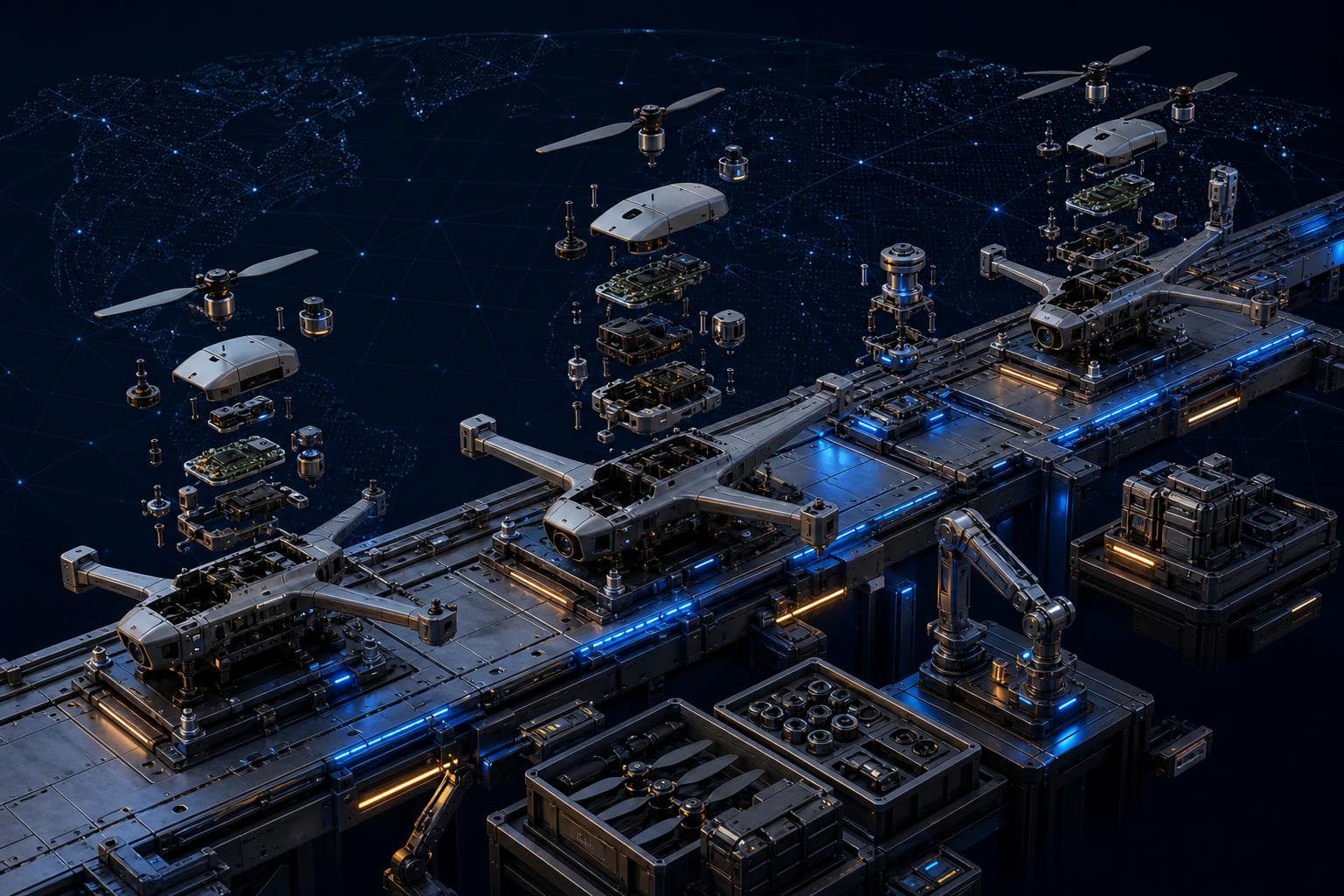
At the Xponential/MDEX conference in Detroit last week, Assistant Secretary of Defense for Industrial Base Policy Michael Cadenazzi made the argument plainly: the "collective number of outside the lines initiatives have not resulted in fundamental structural improvement of the core acquisition system." Fast prototypes aren't the problem anymore. Production at wartime scale is. A promising drone or autonomous system that can't be manufactured reliably, certified quickly, and supported through a resilient supply chain doesn't solve anything — it just delays the reckoning.
That's a significant shift in how the Pentagon frames the startup opportunity. For years, the pitch to defense tech investors was essentially: build something innovative, get a DIU contract, prove the concept, grow from there. The new pitch is harder. Cadenazzi pointed to FPV drones as the tell — the Pentagon is only now funding its first bulk purchases of the most basic drone type for military use, years after Ukraine demonstrated their battlefield value. Speed to prototype was never the bottleneck. Speed to scale was.
Anduril's freshly closed $5 billion Series H at a $61 billion valuation — more than double its valuation from a year ago — looks different through this lens. The company doubled revenue to $2.2 billion in 2025. That's not a prototype story. That's a production story, which is exactly what the Pentagon says it needs more of. The Air Force's decision to pair Shield AI's software with Anduril's Fury autonomous fighter rather than hand the whole contract to either company also signals something: the DoD is deliberately avoiding single-vendor lock-in, even with its most favored startups.
The implication for investors is worth sitting with. The defense tech companies that will command the next generation of valuations aren't just the ones with the best hardware or the most elegant autonomy stack. They're the ones that have figured out supply chain resilience, workforce depth, and certified production lines — the unglamorous infrastructure that turns a prototype into a program of record.
The workaround era produced real winners. The scaling era will produce different ones. Watch which companies in the current funding cycle — Hermeus at $1 billion+, Castelion's hypersonic Blackbeard missile program, Reveal's SOCOM biometrics push — are building for volume from day one versus those still optimizing for the demo.