


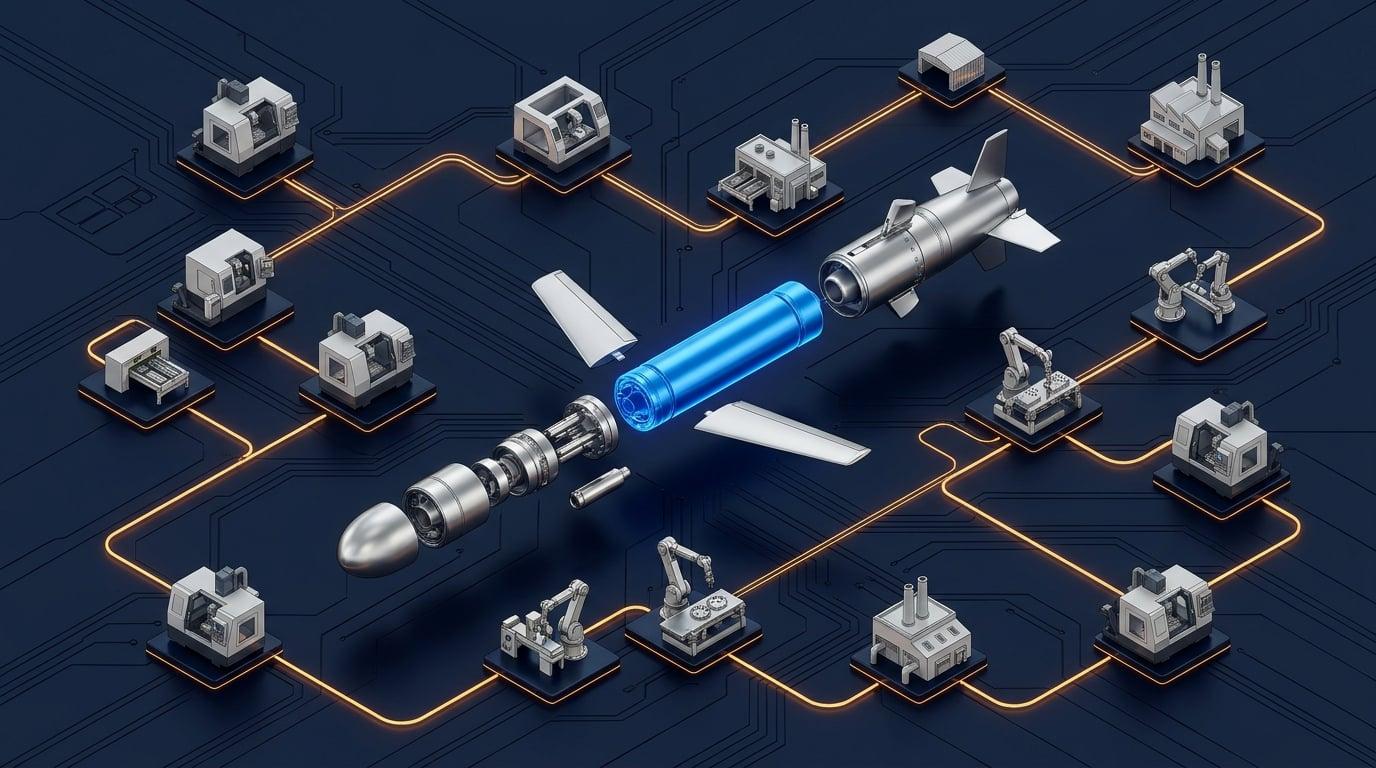

More than 850 Tomahawks were expended in the opening weeks of Operation Epic Fury in Iran — outpacing both deliveries and historical usage rates from Iraqi Freedom, Desert Storm, and Enduring Freedom combined, according to Axios. That single data point tells you why RTX just handed solid-rocket motor development work for the missile to Ursa Major and Avio USA jointly, rather than sole-sourcing it the old way.
This is the supply chain story I keep coming back to: the bottleneck in modern munitions isn't software or autonomy, it's whether anyone can actually manufacture solid rocket motors fast enough. Ursa Major has spent years positioning itself as an alternative motor-maker precisely because the incumbent base couldn't surge. Now there's a live-fire case study proving the thesis — a major weapon consumed faster than the industrial base could replace it, with Japan and the Philippines also buying in and Ukraine still waiting in line, per Axios.
Qualifying a second (and third) motor vendor isn't glamorous. It won't generate a nine-figure valuation headline. But it's the kind of unsexy redundancy that determines whether the U.S. can actually sustain a shooting war, as opposed to winning the opening salvo and running dry. Avio's CEO framed the award as a step toward expanded U.S. manufacturing, which is the tell — this is an onshoring and surge-capacity play dressed up as a routine subcontract.
Pair this with the Pentagon's Office of Strategic Capital pushing $450 million in loans to launch and space-monitoring firms like Rocket Lab and Stoke Space to close a looming launch-vehicle gap, per Breaking Defense, and a pattern emerges: the government is quietly underwriting production capacity wherever a single point of failure threatens operational tempo. Watch whether Ursa Major's qualified-motor status actually translates into volume orders — that's where the thesis gets tested.