


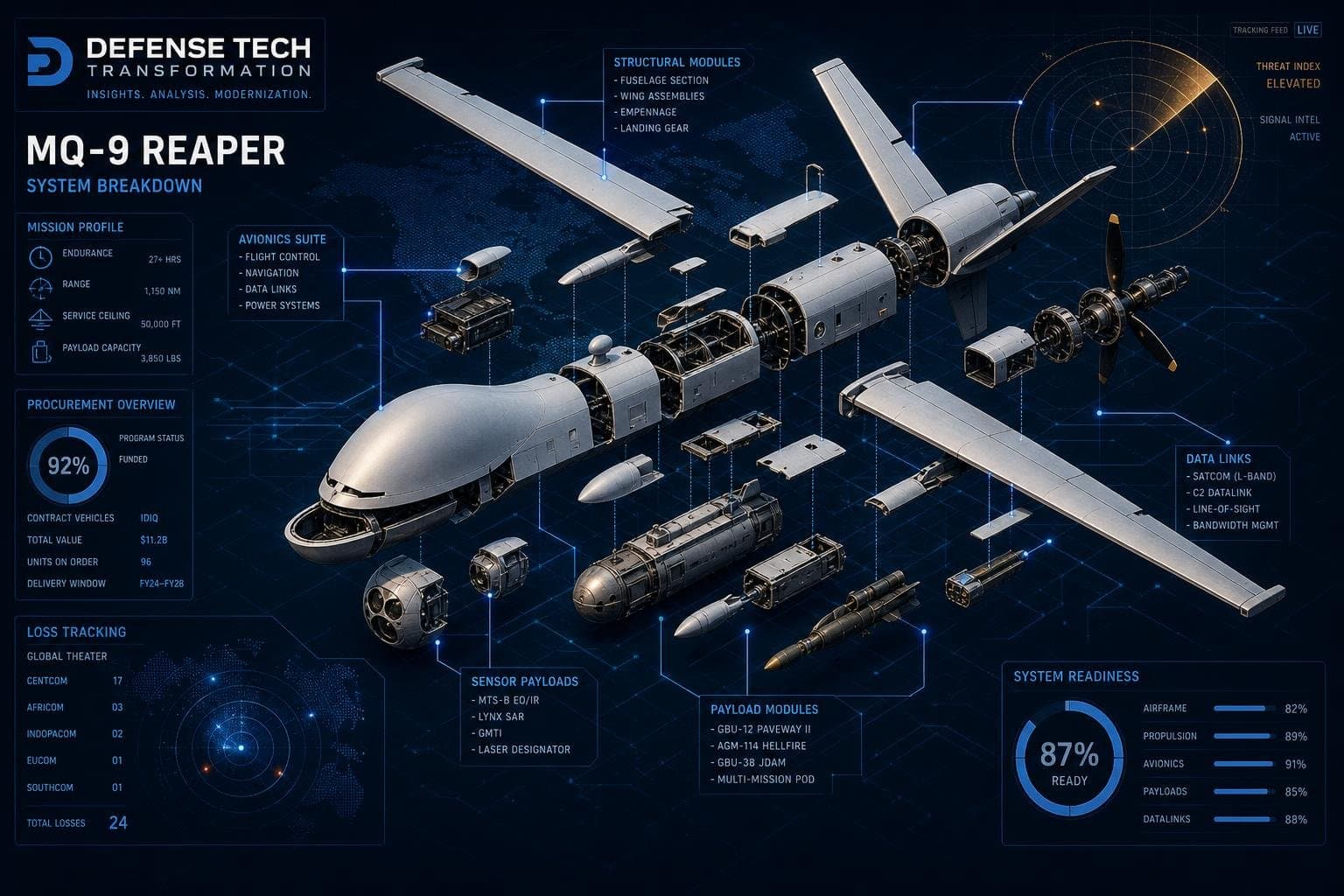

Nearly 30 MQ-9 Reapers lost in roughly six weeks of combat against Iran. That's the number that explains everything happening in drone procurement right now.
The DIU's new Massed Modular Aircraft solicitation is a direct response to that attrition rate — and the language in the notice is unusually candid about what went wrong. Reliance on "low-density, high-value" platforms is "unsustainable" against layered air defenses, the notice states. The fix: drones designed "with the expectation that some will be lost in combat."
That's a philosophical shift, not just a procurement update. The Reaper was built to be preserved. The MMA is being designed to be expended.
The specs are ambitious for something meant to be cheap. Per the DIU solicitation, the MMA needs at least 2,800 pounds of payload, a combat range of 2,300 nautical miles, and the ability to operate from improvised airstrips — all while being cheap enough to field in numbers that can absorb losses and still overwhelm defenses. Full-scale prototype flight within 21 months of award, IOC targeted for FY2031.
General Atomics — whose MQ-9A production line went dark in 2025 — says it will compete. That's interesting. The incumbent whose platform just proved inadequate against a mid-tier adversary is now chasing the contract to replace it.
The real question for investors and startups watching this: the MMA's requirements sit in an uncomfortable middle zone between cheap attritable drones and exquisite ISR platforms. Whoever cracks the cost-at-scale problem for a 2,800-pound-payload drone wins a program that could define unmanned strike doctrine for a generation. Watch which primes and defense-tech startups respond