



The Army's new contract with Anduril isn't really about missiles. It's about time.
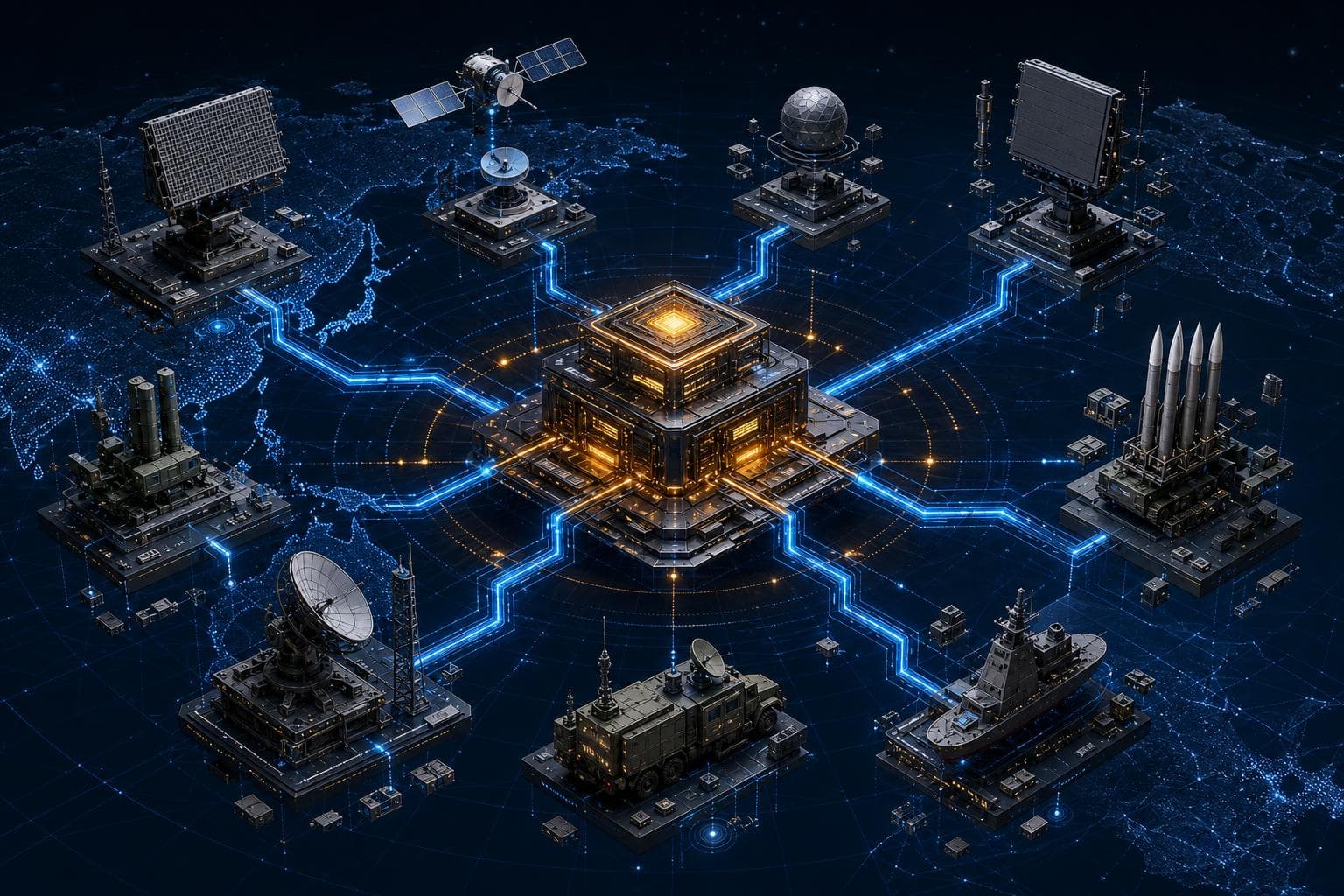
Anduril's Battle Manager prototype, announced this week, uses the company's Lattice software to pull data from separate, existing missile defense systems into a single operating picture across the Indo-Pacific theater. The problem it's solving isn't exotic: commanders currently have to manually collect information from different systems before they can make engagement decisions. In a conflict where inbound threats move at speed, that workflow is a liability.
What Lattice does is assign specific observation tasks to sensors across multiple weapons systems — so the human operator sees a continuously updated threat picture rather than a patchwork of feeds. The contract also includes modeling and simulation tools that let commanders test engagement scenarios before they're needed in the field.
This is the pattern worth watching. The Pentagon's data fragmentation problem isn't new, and neither is the frustration with it. What's new is that the threat environment — layered missile defense across multiple services and domains in the Pacific — has made the cost of fragmentation concrete enough to fund a fix. Anduril didn't invent a new sensor or a new weapon. It built software that makes existing hardware talk to each other. That's a different kind of defense startup than the ones chasing next-generation kinetics.
The same logic is showing up elsewhere. The DIU's C-UAS targeting solicitation — with a May 15 deadline — asks for AI-aided target recognition on CROWS turrets, moving platforms, and eventually dismounted small arms. The specs are specific: detect drones under 55 pounds at ranges beyond 600 meters, engage targets moving at 30 meters per second or faster. Again, the underlying weapons aren't new. The ask is software and sensing that makes them faster and more precise against a threat class that didn't exist at scale five years ago.
The investor framing here matters. These aren't bets on breakthrough hardware — they're bets on integration software and AI inference running on legacy platforms. The total addressable market isn't "new weapons programs." It's every existing system that becomes more capable with better software on top. That's a much larger number, and a much faster procurement path, because you're not replacing anything.
Scale AI's $500 million Pentagon contract for data processing and decision support fits the same frame. The Pentagon isn't buying new sensors. It's buying the ability to make sense of what its existing sensors already collect.
The thesis consolidating across all three of these: the next phase of defense modernization isn't about building new things. It's about making the existing inventory intelligent. The startups that understand that distinction — and can prove integration without replacement — are the ones writing the next chapter.