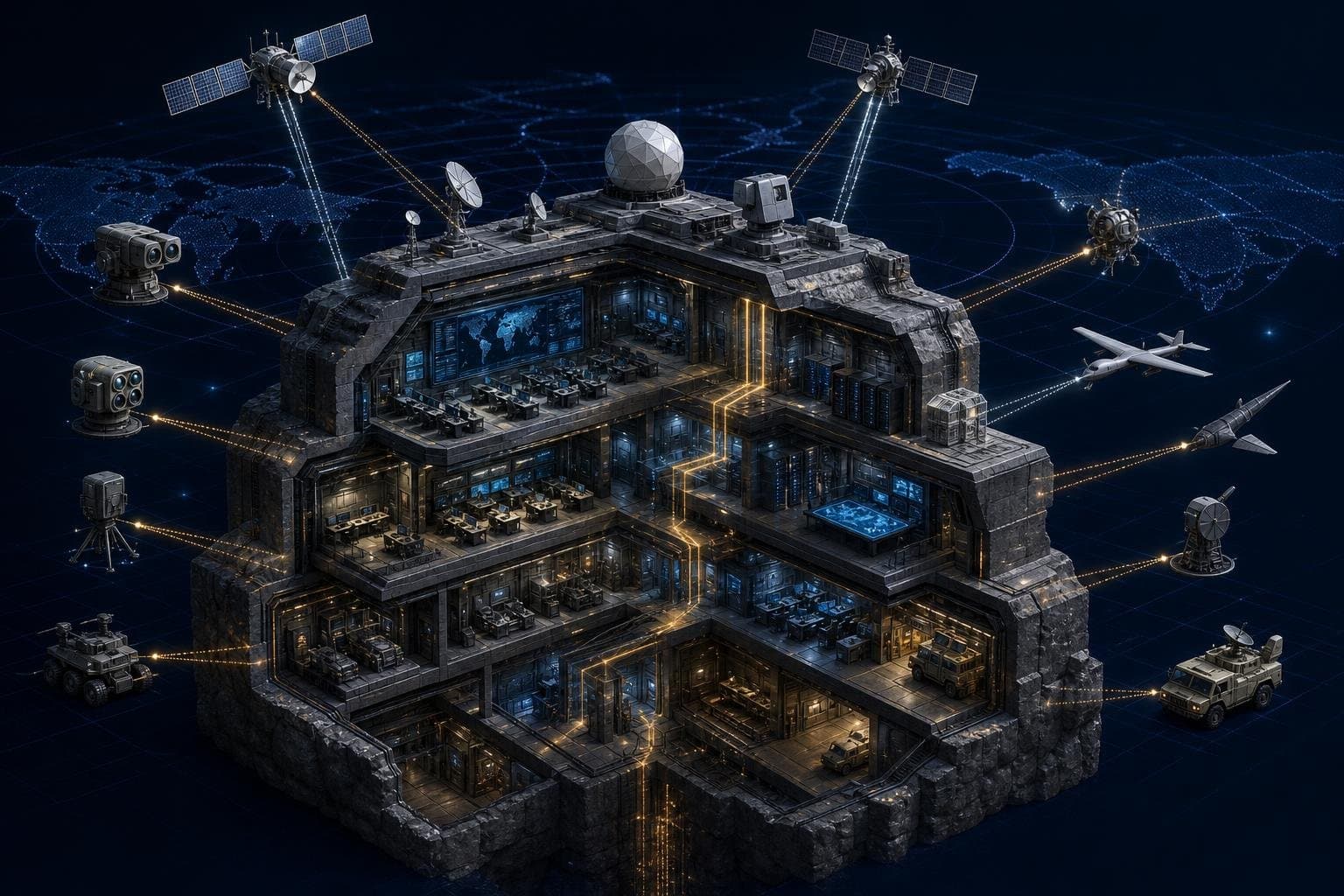

A $121 million construction contract for a new cybersecurity operations facility at Fort Meade — awarded last week to Clark Construction Group — doesn't generate the same buzz as a Series B round for an autonomous threat-detection startup. But it should. That contract, buried in the DoD's September 2 daily awards list, is the Pentagon voting with its construction budget on where cyber defense actually lives: in hardened, purpose-built physical infrastructure, not just software-defined architectures running on commercial cloud.
That tension — between the venture-backed autonomous cyber defense thesis and the institutional reality of how DoD actually builds network resilience — is worth sitting with before accepting the startup narrative at face value.
The Fort Meade Signal Is Structural, Not Incremental
Fort Meade is home to both the NSA and U.S. Cyber Command. A new cybersecurity operations facility there, with a completion date of September 2029, represents a three-year capital commitment to a specific model of cyber operations: centralized, physically secured, and built to last decades. The Army Corps of Engineers is the contracting activity. This isn't a pilot program or an OTA experiment — it's military construction funded at $121.8 million out of fiscal 2024 defense-wide accounts.
What that tells an investor-minded reader: the Pentagon's baseline assumption for its most sensitive cyber operations is still a hardened facility model. Autonomous, AI-driven cyber defense tools — the kind venture capital has been pouring into — will need to plug into that infrastructure, not replace it. The startups that understand this are building integrations and APIs; the ones that don't are pitching replacement architectures to customers who aren't buying them.
Where the Autonomous Cyber Thesis Actually Has Traction
The source pool this week doesn't surface a named venture-backed autonomous cyber defense company winning a DoD network resilience contract — and that's worth saying plainly rather than papering over with category-level optimism. What the sources do show is the Pentagon making concrete bets on adjacent modernization problems that illuminate where autonomous software tools are gaining real footing.
The Army's Project Convergence Capstone 6 trial, reported by Breaking Defense, is instructive here. The service is explicitly stress-testing its Next Generation Command and Control architecture — which runs on Starlink, 5G, and WiFi-enabled commercial systems — under harsh field conditions. Soldiers in the Mojave were draping wet T-shirts over overheating Starlink terminals to keep data links alive. That's not a failure story; it's a requirements-generation story. Brig. Gen. Shane Taylor's framing — "before we go spend quadruple the cost" on bespoke tech, "there are some things that we can do" to make commercial options work — signals exactly the kind of cost-conscious, commercial-first procurement environment where nimble software companies can compete.
The cyber resilience implication: if the Army is building its tactical network on commercial hardware that overheats in the desert, the software layer managing that network's security posture becomes load-bearing. Autonomous tools that can detect anomalies, reroute traffic, and maintain network integrity without a contractor standing next to the terminal — that's the actual gap the NGC2 architecture creates. The startups positioned to fill it aren't the ones pitching enterprise SOC dashboards; they're the ones who've thought hard about degraded, contested, austere environments.
The Procurement Reality Check
The broader procurement picture this week reinforces a pattern I've been tracking across several recent issues: the Pentagon is moving fast on kinetic and physical modernization — AeroVironment just landed a $464.8 million production contract for its LOCUST X3 laser counter-drone system, the Army's first-ever production contract for a high-energy laser weapon — while cyber and network resilience modernization moves through longer, more institutional cycles.
That asymmetry matters for anyone tracking where defense tech venture dollars are going versus where DoD dollars are actually flowing. The laser contract is an Other Transaction Authority agreement, which means AV moved faster than a traditional FAR-based procurement would allow. OTA is increasingly the mechanism that lets newer companies compete — but the cyber domain hasn't yet seen the same concentration of OTA awards that the counter-drone and directed energy spaces have generated.
The COSCO intelligence collection story reported by Reuters — U.S. officials alleging that the Chinese shipper uses concealed equipment to collect intelligence for Beijing — adds geopolitical texture to why network resilience investment is accelerating. Supply chain infiltration at the hardware level is precisely the threat that makes autonomous, continuous network monitoring compelling to DoD buyers. The threat is real and documented; the question is whether the procurement mechanisms are moving fast enough to match it.
The Bet Worth Watching
The Fort Meade facility comes online in 2029. Between now and then, the Pentagon will be making software and tooling decisions about what runs inside it — and that's where the autonomous cyber defense startup thesis has its best near-term window. Watch for OTA solicitations out of Cyber Command and NSA in the next 12-18 months that specify AI-driven anomaly detection, zero-trust enforcement automation, or autonomous incident response. Those will be the signal that the institutional infrastructure build is ready to absorb the software layer the venture community has been funding.
The construction contract is the foundation. The software contracts are what get built on top of it.


