


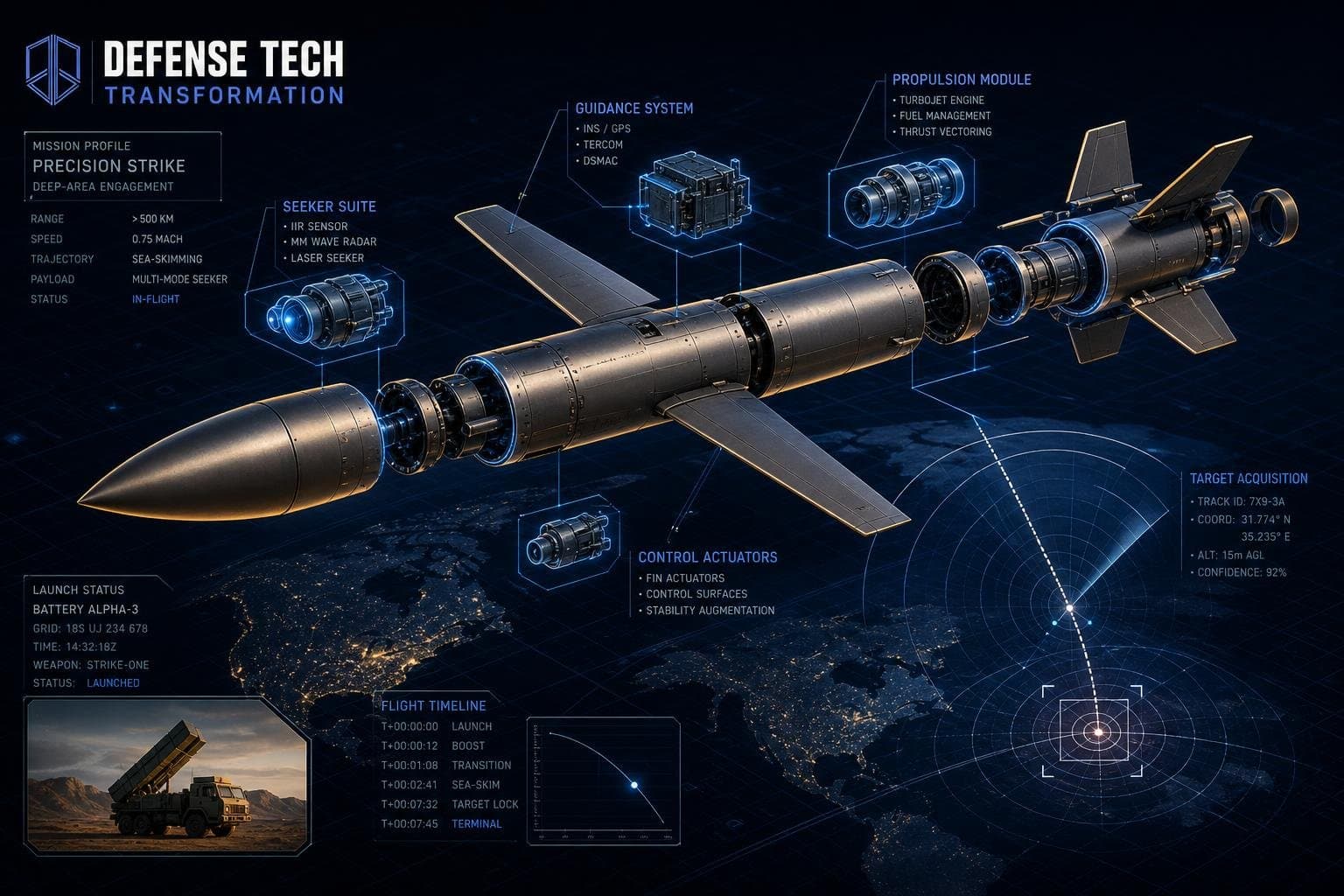

The Iran conflict burned through expensive guided munitions fast enough to expose a structural problem: the U.S. military can't sustain high-tempo strikes when each shot costs millions. The Pentagon's answer, announced this week, is the Ground-Based Affordable Mass (G-BAM) challenge — a DIU-run competition demanding ground-launched precision strike systems that cost under $250,000 per round, reach targets beyond 600 nautical miles, and are ready for flight demonstration in roughly 90 days.
That timeline is the tell. This isn't a five-year acquisition program dressed up in startup language. DIU wants mature, proven systems — not paper concepts — with companies already capable of producing 100-plus units monthly or on a credible path to do so. The pitch deadline is August 5. Phase II flight demos happen in early November. Up to $250 million is budgeted for prize execution and follow-on transition, with top performers eligible for prototype OTA agreements and production contracts.
The Autonomy Czar Connection Changes the Stakes
G-BAM isn't a standalone program. Breaking Defense reports it's explicitly aligned with the Direct Reporting Portfolio Manager for Unmanned Systems (DRPM-UxS) — the new autonomy czar shop the Pentagon is standing up as a single joint integrator for all unmanned and autonomous systems. That alignment matters because it means winning G-BAM isn't just a contract; it's a pathway into the Pentagon's emerging autonomous systems architecture. Systems that succeed here get a "common assessment and transition pathway" across multiple services.
The capability ask is specific enough to be revealing: automatic target recognition, autonomous terminal guidance, alternative PNT, and post-launch retasking. The Pentagon wants something that can find and hit a target without a human in the loop at the terminal phase — and do it cheaply enough to expend at scale.
This is the cost-curve argument made operational. I've written before about how drone math is reshaping procurement logic; G-BAM extends that logic to ground-launched strike. The Tomahawk costs roughly $2 million per shot. A $250,000 autonomous munition with 600-nautical-mile reach doesn't replace it — it frees it for targets that actually warrant the price tag.
Watch the August 5 submission deadline for signals about which startups are positioned to compete. The companies that show up with hardware, not slide decks, will tell you where the next wave of defense tech investment is already concentrated.