



The numbers tell the story bluntly. CSIS estimates that U.S. Patriot interceptor stocks dropped from 2,330 before the Iran conflict to somewhere between 759 and 827 afterward. THAAD inventories fell from 452 to between 234 and 278. Replacing them isn't fast: PAC-3 MSE interceptors carry a roughly 42-month delivery timeline; THAAD runs about 53 months. Deputy Defense Secretary Steve Feinberg's response was a memo dated August 5 giving defense industry leaders 21 days to submit plans for "significantly faster, more aggressive delivery schedules." "Years-long development cycles are not acceptable," he wrote.
That's not a procurement reform. That's a wartime ultimatum.
The Supply Chain Response Is Already Moving — But It Reveals the Deeper Problem
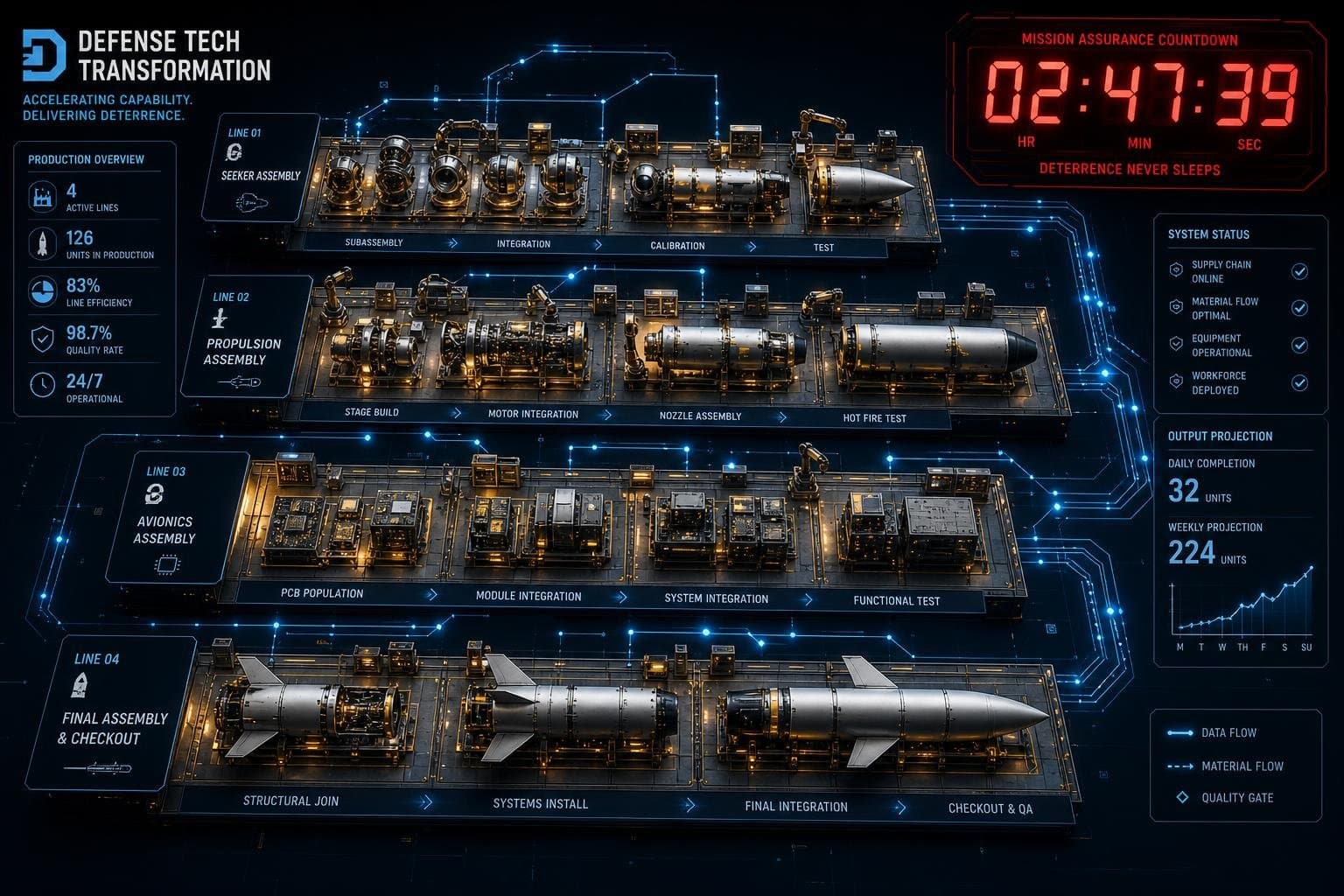
The Pentagon isn't waiting for the 21-day responses to come back before acting. Defense News reports that the department signed seven-year framework agreements with Boeing and RTX to expand production of SM-3 Block IB and Block IIA components — avionics and ejector assemblies — allowing Boeing to begin building before a formal contract is even in place. The Missile Defense Agency separately awarded Raytheon a $745 million contract for fully assembled SM-3 Block IIA interceptors for the U.S. and Japan. L3Harris, meanwhile, committed to nearly tripling PAC-3 propulsion output and quadrupling THAAD propulsion components under separate framework deals.
This is the Pentagon trying to solve a structural problem with contractual urgency — and it will work, partially. The primes can accelerate. But the bottleneck was never Boeing or Raytheon; it was the sub-tier suppliers who make the seekers, the propulsion components, the avionics. Seven-year frameworks give those suppliers the demand signal they need to invest in capacity. That's the right instinct.
What's missing from this picture is the startup angle — and it's conspicuous. The Feinberg memo went to Boeing, Lockheed Martin, and RTX. The companies being asked to "put skin in the game" are the same ones whose decade-long production timelines created the stockpile problem in the first place. The [Booz Allen / a16z partnership thesis](https://techcrunch.