


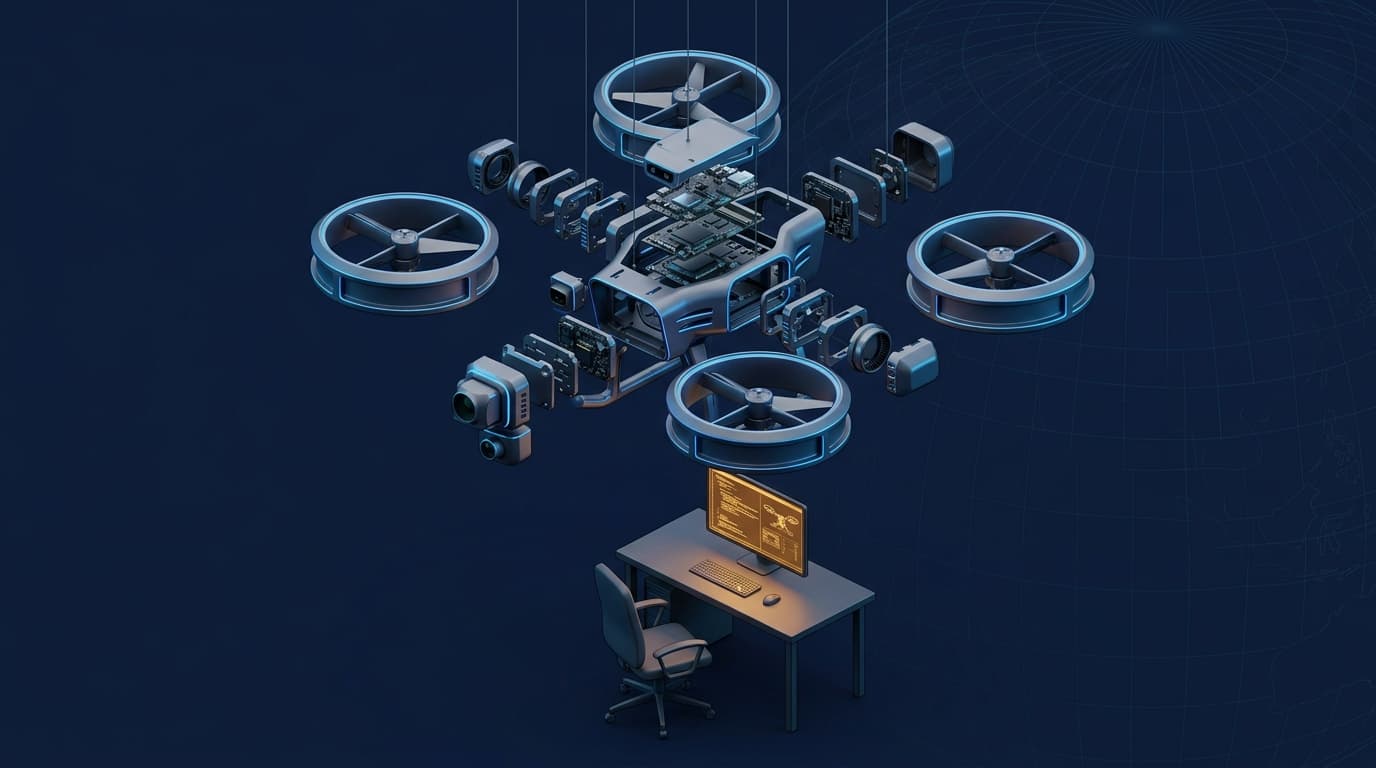

The Pentagon just asked Congress for $54 billion to fund its Defense Autonomous Warfare Group — a 24,000% budget increase that former CIA director David Petraeus called "the largest single commitment to autonomous warfare in history." The money is real. The ambition is real. The talent to execute it is the part nobody's budgeting for.
Defense manufacturing is already bleeding out on retention. Bureau of Labor Statistics data shows median tenure in machinery manufacturing fell from 6.2 years to 5.0 years between 2014 and 2024 — a 21% drop in a decade. Nearly a third of machinists are 55 or older. The occupation isn't growing; it's churning through replacement hires. That's the physical production side. The software and autonomy side is arguably worse, because the competition isn't other defense primes — it's Google, Anthropic, and every well-funded AI startup offering RSUs and no security clearance wait.
Shield AI's new $800 million Navy ISR contract is a useful case study in what winning looks like right now. Their V-BAT runs Hivemind autonomy software that keeps operating when GPS and comms are degraded — exactly the kind of capability the DAWG budget is chasing. But Shield AI didn't build that by posting jobs on USAJobs. They built it by convincing engineers that hard autonomy problems in contested environments are more interesting than recommendation algorithms.
That's the actual competitive moat for defense tech startups: mission pull. The engineers who want to work on genuinely hard problems — not just hard in a distributed-systems sense, but hard in a "this has to work when someone is jamming it" sense — exist. They're a minority, but they're recruitable. The companies that figure out how to find them and keep them will capture a disproportionate share of what's coming.
Lockheed Martin apparently read the same memo. They just expanded their venture arm from $400 million to $1 billion, which is partly a technology bet and partly a talent acquisition strategy dressed up as capital deployment.
The $54 billion is the headline. The talent pipeline is the constraint that determines whether any of it ships.