



The threat isn't here yet. The preparation is already overdue.
That's the uncomfortable math behind a presolicitation notice published on May 6, 2026, that most defense watchers missed: the F-35 Joint Program Office is moving to modify the fighter's In-Line File Encryption Device software to support quantum-resistant algorithms. According to defence-blog.com's coverage of the notice, the contract will go sole-source to Lockheed Martin Aeronautics — the only entity with the software architecture access to actually execute it — with capability statements from other potential offerors due by May 21.
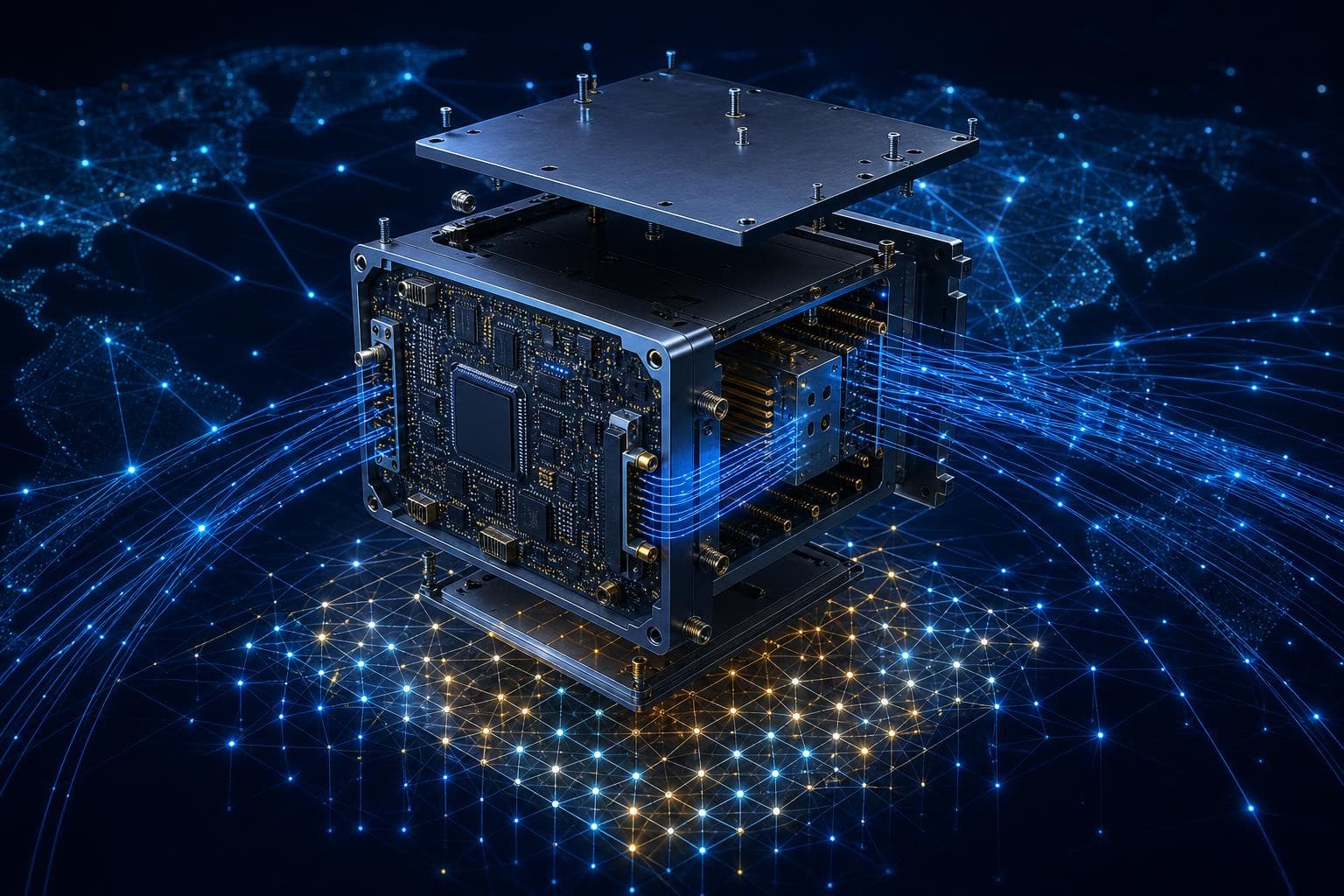
The operational constraint buried in that notice is the one worth focusing on: the update must be deployable in the field without opening the physical enclosure. For an aircraft operating across more than a dozen countries and three service branches, that's not a minor technical footnote. It means the cryptographic transition has to work like a software patch, not a depot overhaul. The Pentagon is trying to future-proof one of its most complex weapon systems against a threat that doesn't fully exist yet — and it has to do it without grounding the fleet.
"Harvest Now, Decrypt Later" Is Already Happening
The reason this work is urgent isn't that quantum computers can currently break military encryption. It's that adversaries don't need to break it in real time. The threat model is collect-now, decrypt-later: adversaries harvest encrypted communications today and hold them until quantum hardware matures enough to crack the underlying math. By that point, the secrets are years old — but they're still secrets.
NIST has spent years developing quantum-resistant cryptographic standards precisely because this window is closing. The F-35 notice is one of the first visible signs that those standards are now reaching operational military platforms. It won't be the last.
Where Startups Fit — and Where They Don't
The F-35 contract going sole-source to Lockheed is the expected outcome for a platform this complex. But the broader quantum security transition is creating real openings for smaller companies, and two recent Air Force awards show what that looks like in practice.
Boulder-based Icarus Quantum secured a Direct-to-Phase II SBIR contract from the Air Force to develop high-efficiency entangled photon sources — the hardware layer that makes quantum networking physically possible. The company's deterministic quantum dot platform reportedly achieves photon generation efficiency above 70%, compared to roughly 1% for traditional probabilistic sources. That's not a marginal improvement; it's the difference between a lab curiosity and something that could actually anchor a quantum communications network. The target is delivering a commercial-grade entangled photon generator to the Air Force Research Laboratory by 2028.
On the software and systems side, Swiss startup Terra Quantum landed a U.S. Air Force contract ahead of its planned Nasdaq listing. The company works across quantum key distribution, quantum-enhanced machine learning, and hybrid quantum-classical computing — the kind of near-term stack that doesn't require fault-tolerant quantum hardware to deliver value today. As Startup Fortune reported, the contract scope and dollar value weren't disclosed, which is typical for agreements touching sensitive capabilities. What matters is the structure: a U.S. government customer cleared a foreign supplier through export control screening and committed budget. For a Swiss company seeking a U.S. listing, that's a more credible signal than any valuation round.
The Pattern Emerging Here
The quantum defense investment thesis is splitting into two distinct tracks, and investors should be watching both.
The first is post-quantum cryptography — hardening existing systems against future quantum attacks. This is happening now, on a government mandate, across every classified and operational platform. The F-35 notice is the visible tip. The work is largely unglamorous software integration, but the contract surface is enormous and the timeline is non-negotiable.
The second is quantum-native capability — networking, sensing, and computing that only becomes possible with quantum hardware. Icarus Quantum is working on the physical infrastructure layer. Terra Quantum is building hybrid systems that can run today while the hardware matures. These are longer bets, but the Air Force is already funding them at the SBIR level, which is where the government typically de-risks technology before committing to larger programs.
The companies that will win aren't necessarily the ones with the most advanced quantum research. They're the ones that can bridge the gap between where the hardware is today and what the Pentagon needs to deploy in the field — without requiring a depot visit to install it.
Watch for NIST's post-quantum cryptography implementation guidance to start appearing in more platform-specific solicitations over the next 90 days. The F-35 won't be the last aircraft on this list.