


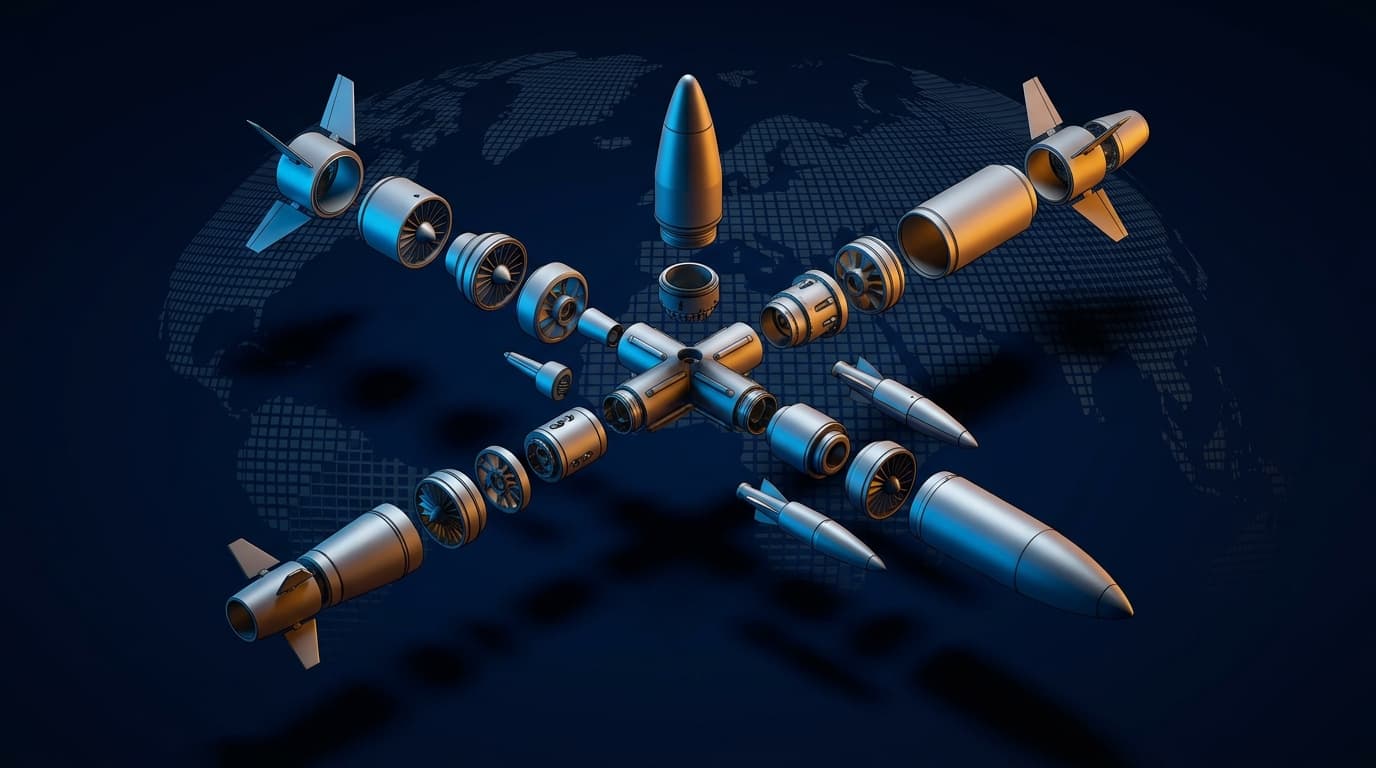

The defense procurement system has a dirty secret that no amount of startup funding fixes: you can design the most capable weapon in the world and still lose a war because you can't build enough of them fast enough.
DARPA put it plainly in a March 31 request for information: propulsion systems are a "notorious bottleneck in missile manufacturing." The agency is now actively scouting technologies that could compress production timelines from months to — and this is not a typo — potentially hours. That's not incremental improvement. That's an admission that the current baseline is indefensible.
The broader context makes it worse. Breaking Defense reported in March that the Pentagon's requirements process has historically treated industrial production capacity as an afterthought rather than a design constraint. Requirements writers optimize for performance. Nobody in that room is asking whether the industrial base can actually manufacture the system at scale. The result: weapons that are exquisite on paper and scarce in the field.
This is the bottleneck that venture capital cannot solve on its own. Shield AI raising $2 billion and Saronic raising $1.75 billion — both in March alone — reflects enormous investor conviction in autonomous systems. That conviction is probably right. But software autonomy deployed on hardware you can only produce in trickles doesn't change the strategic equation. Iran, per the Breaking Defense analysis, is already reading American stockpile depletion rates and production timelines as a signal that the U.S. can be outlasted. That's not a software problem.
The Pentagon's fiscal 2027 budget request gestures at the scale of the reckoning: Air Force missile procurement is projected at $11.36 billion, more than double the $5.14 billion spent in fiscal 2025. OMB projects munitions spending growing nearly eightfold across the decade. The money is arriving. The manufacturing science is still catching up.
Lockheed's new Rapid Fielding Center, opened March 31, is the incumbent's answer to this pressure — a facility designed to compress the concept-to-production timeline by integrating design and manufacturing floors. Whether that's genuine transformation or legacy branding on a faster assembly line remains to be seen.
The real opportunity for defense startups isn't just building smarter weapons. It's building weapons that are manufacturable at speed — and proving it before the contract is signed. The companies that internalize producibility as a first-order design constraint, not a Phase 3 problem, are the ones worth watching in 2027's budget cycle.