



The headline number is $9.7 billion, so naturally everyone is writing about the size of the check. That's the wrong frame.
The Pentagon's Core Enterprise Technology Agreement awarded to Dell Federal Systems isn't new spending — DoD CIO Kirsten Davies was explicit about that. It consolidates existing Microsoft 365 licenses and cloud services from across the services, the Intelligence Community, and the Coast Guard into a single contract vehicle managed by the Navy. The projected savings are $422 million annually, expected to grow as consolidation deepens.
That's the boring version of the story. Here's the version that matters for defense tech.
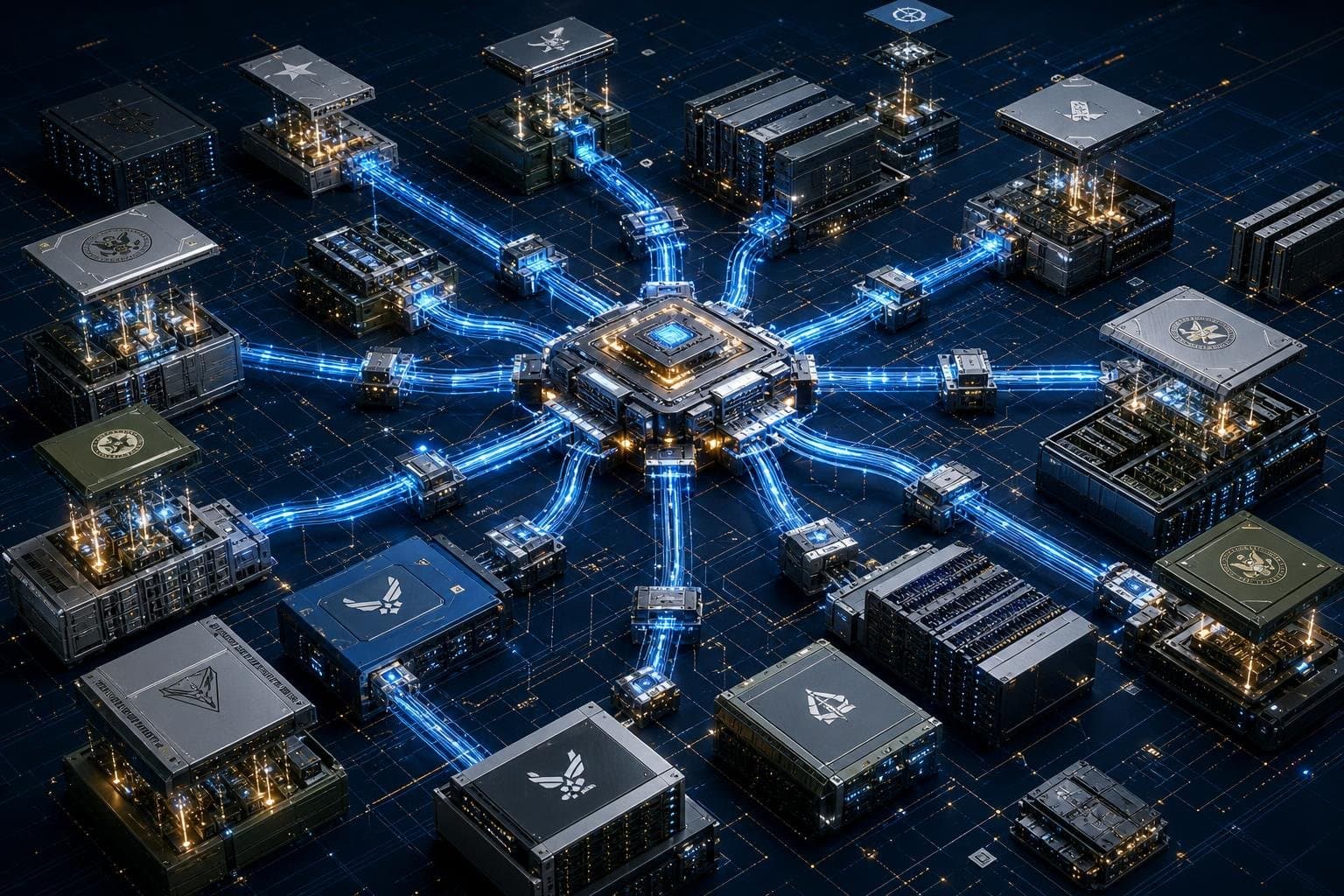
Davies framed the CETA explicitly as "digital connective tissue" for CJADC2 — Combined Joint All-Domain Command and Control. The argument is that you can't build AI-enabled targeting, sensor fusion, or autonomous kill chains on top of a fragmented IT stack where every service branch is running its own licensing arrangements and procurement timelines. The DIU's AI targeting solicitation for counter-drone systems — which wants aided target recognition integrated across vehicles, ships, and dismounted small arms — assumes a data-sharing backbone that actually works. So does SpaceX's $4 billion-plus Golden Dome satellite tracking contract. You can't fuse missile tracking data from a new satellite constellation with ground-based sensor feeds if the underlying software infrastructure is a patchwork of disconnected service contracts.
The pattern the PitchBook Q1 2026 defense tech report flags — a push toward high-low force mix and reindustrialization — only compounds the infrastructure dependency. More autonomous systems, more data, more integration requirements. The plumbing has to work before the advanced capabilities can.
For startups, this is both an opportunity and a constraint. A unified enterprise software layer means the data-sharing assumptions baked into your pitch are more likely to be real. It also means the incumbents who live inside that Microsoft 365 ecosystem have a structural advantage in any AI application that touches DoD data. The interesting question isn't whether the consolidation saves money — Davies says it will. It's which startups are building on top of this new foundation versus which ones are still assuming the old fragmented stack.
Watch for how quickly the services actually migrate onto the CETA vehicle. The contract ceiling is the easy part; the integration timeline is where institutional inertia shows up.