


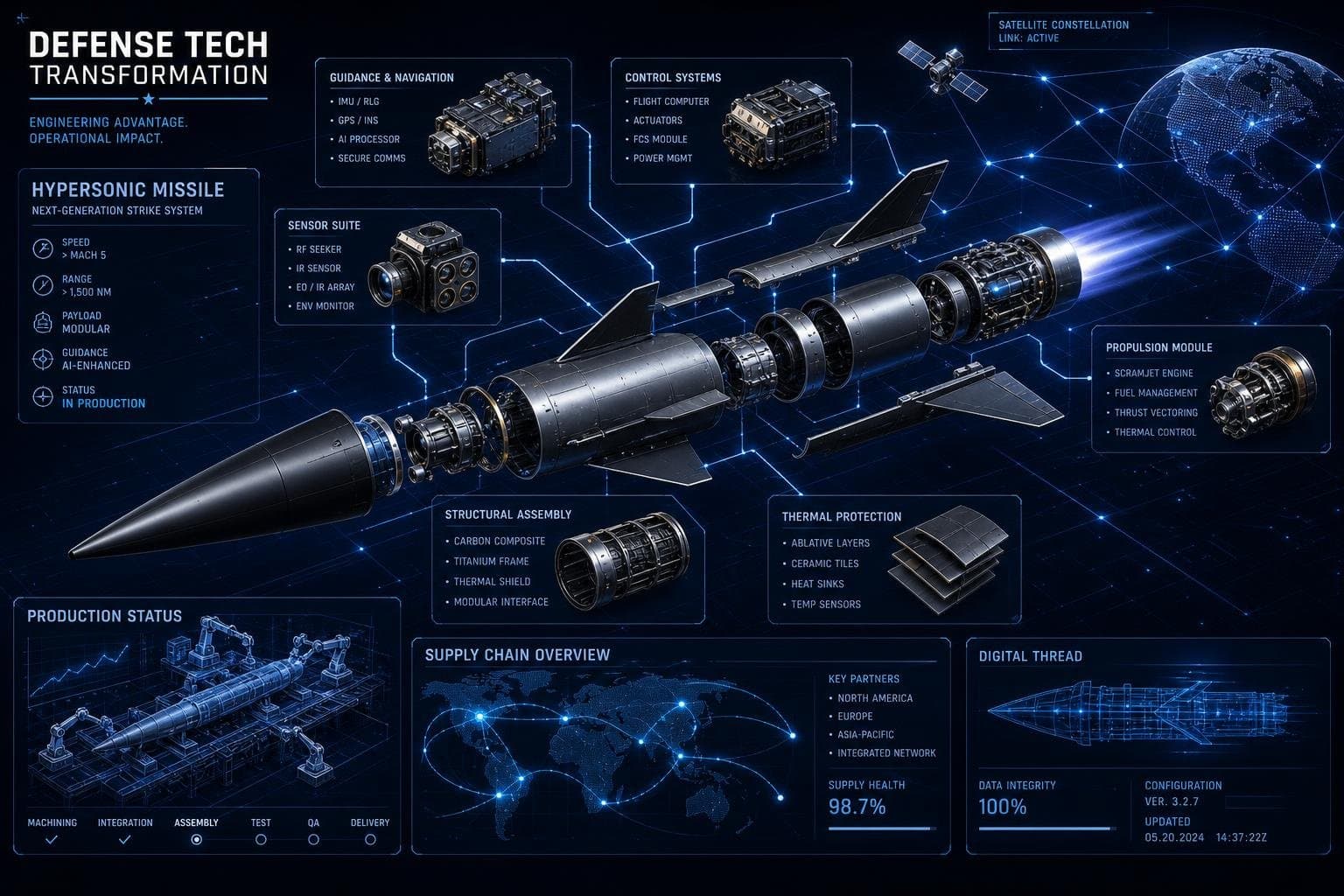

The $200 million Castelion contract announced Tuesday deserves more attention than it's getting. The Navy's Blackbeard hypersonic missile — air-launched, 200-nautical-mile range, compatible with both the F-35 and F/A-18 Super Hornet — isn't remarkable because of what it costs. It's remarkable because of what it replaced.
HALO, the Navy's previous hypersonic anti-surface program, spent years burning through Raytheon and Lockheed Martin competition cycles before getting scrapped in 2024 over budget constraints. The program that was supposed to field before 2030 is gone. Castelion, a startup, is now filling that gap — and doing it through a procurement pathway that explicitly credits private capital investment for reducing "redundant, non-recurring engineering costs."
That framing matters. The Navy isn't just buying a missile; it's validating a model where startups absorb development risk on private funding, then transition directly into production contracts. The February MACE award ($50M), the June pre-production contract ($23.4M), and now this $200M production deal form a clean progression — proof-of-concept to scale in under a year.
Compare that to the Army's PrSM Increment 2 contract — $1.2 billion, sole-sourced to Lockheed, with work running through 2031. Both are legitimate procurement paths. But one of them took a decade and a program cancellation to get here. The other went from startup pitch to fleet-ready weapon in a fraction of the time.
The Iran conflict is accelerating all of this. The Army has reportedly burned through virtually all of its PrSM