


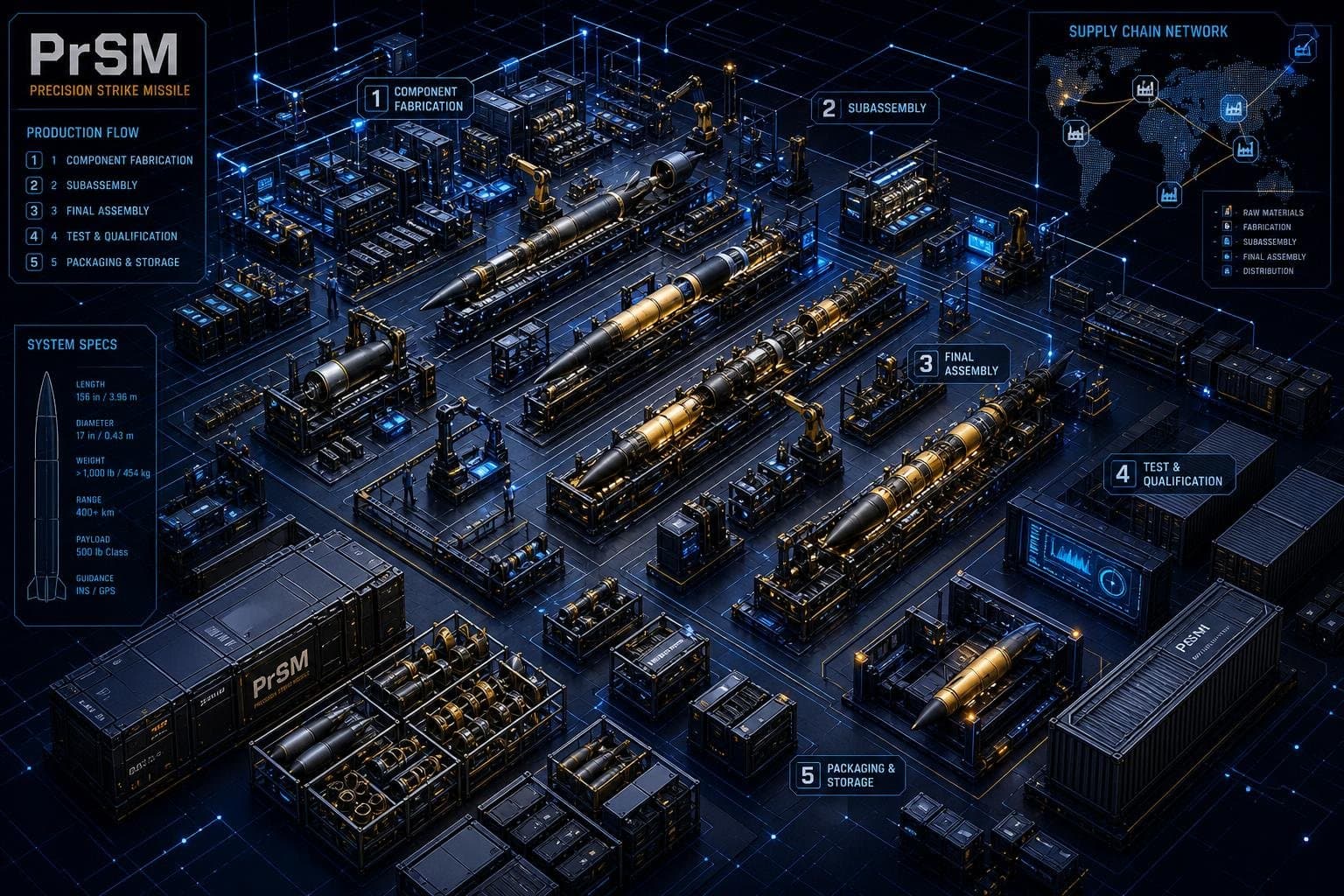

The PrSM story has moved fast since I last touched it in August's Tomahawk piece. What was a procurement acceleration story is now something more urgent: the Army is refilling a depleted magazine while simultaneously upgrading it.
Monday's $1.2 billion contract award to Lockheed Martin for PrSM Increment 2 is the clearest sign yet that the Iran conflict has scrambled the normal development-to-production timeline. Increment 2 adds a multimode seeker capable of locking onto moving maritime targets — a genuine capability leap over Increment 1 — and carries a design range of roughly 500 kilometers, compared to about 300 kilometers for the ATACMS it's replacing. That's not incremental improvement. That's a land-based anti-ship capability that didn't exist in the Army's inventory before.
The urgency is real. Two sources told Reuters last month that the U.S. had expended "virtually all" of its PrSM systems during the Iran conflict. The Army isn't buying Increment 2 because the procurement calendar said so — it's buying because the shelves are bare and the threat environment hasn't paused to wait.
The Industrial Base Is the Actual Bottleneck
The contract structure tells you where the pressure is. Lockheed's bid was the only one solicited and the only one received — this is a sole-source award moving directly from flight testing into production. Meanwhile, Lockheed is investing $8–9 billion to scale munitions output across PAC-3 MSE, THAAD, and PrSM, expanding production and warehousing space by nearly 50% across more than 20 U.S. sites. The GM Defense partnership — delivering Patriot interceptor housing components in 22 days against a timeline that traditionally runs months — shows what's possible when the industrial base is pushed.
The Navy's CTO, meanwhile, told TechCrunch this week that the service is trying to shift toward co-investment with private capital rather than writing checks to primes — explicitly handing the seed-through-Series-B gap to commercial investors. That's the right long-term instinct. But the PrSM contract is a reminder that when magazines run