


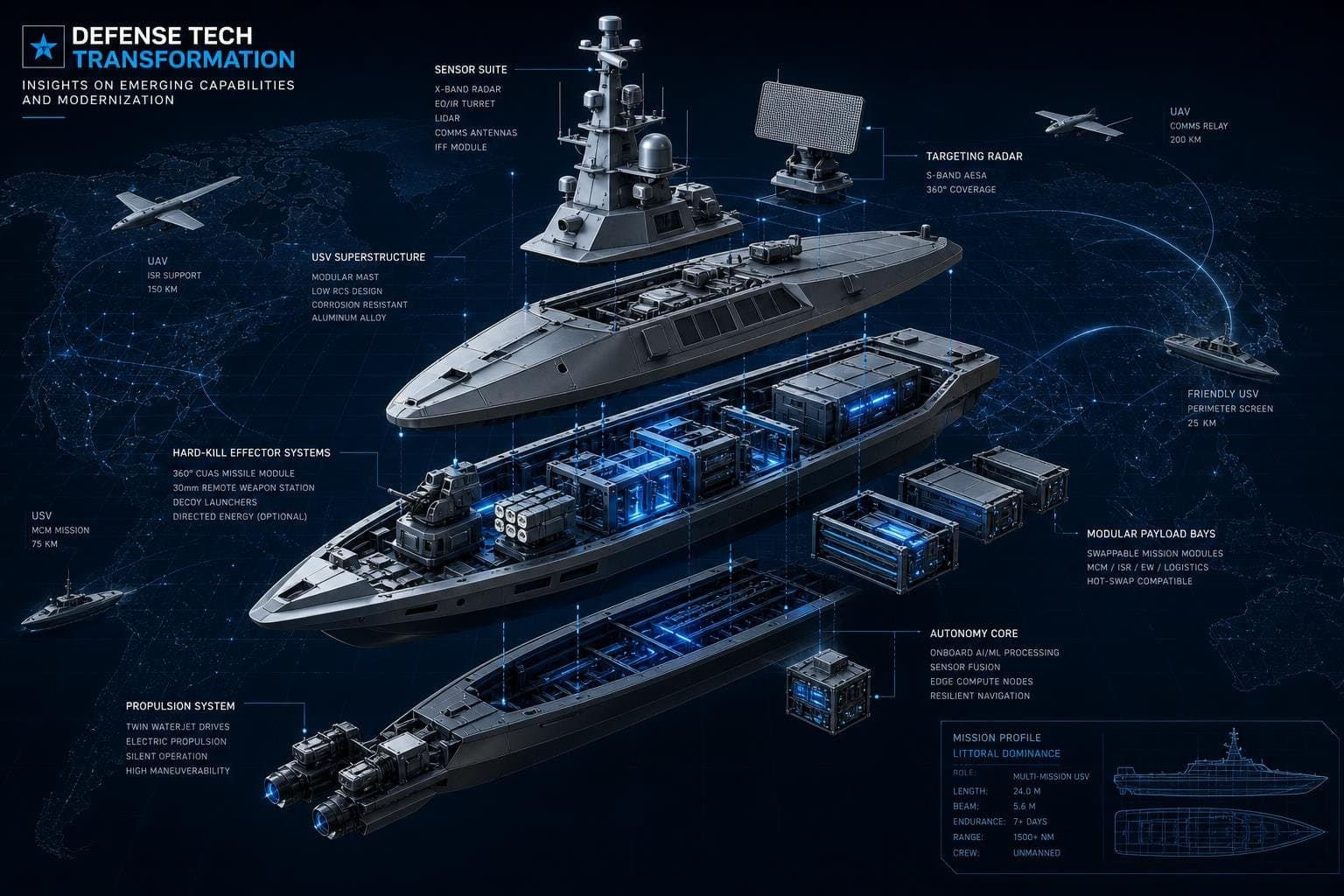

Most Pentagon solicitations read like wish lists. The DIU's new unmanned surface vessel challenge reads like a term sheet.
Sprint 2 of the Suitable Warfighting Adaptive Payloads program wants USVs with a minimum 200-nautical-mile range, a sustained speed of at least 10 knots, "mature hard-kill Counter-Air effectors," and sensor suites that can pick targets out of maritime clutter — all fieldable within 120 days of selection, per the DIU solicitation. Submissions are due November 30, with in-water testing starting early 2027. Up to $40 million in prize money is on the table for this phase alone, matching what Sprint 1 offered when it launched in July.
That specificity is the story. The Navy's problem, as DIU frames it, isn't a lack of capability — it's that expensive, exquisite platforms are being asked to chase cheap, disposable threats like explosive drone boats and small UAS, a cost-exchange ratio that doesn't survive contact with reality. Saronic's Corsair already has combat exposure here: CENTCOM says the vessel was involved in strikes on an Iranian submarine and ship maintenance facility, per Breaking Defense. That's a USV going from prize-challenge entrant to operational asset inside a single year — the kind of timeline legacy shipbuilding programs don't operate on.
The detail worth watching isn't the dollar figure, it's the requirement that counter-air effectors handle Groups 1-3 drones as a baseline, with Groups 4-5 capability merely "highly desired." DIU is explicitly scoping for the threat that actually shows up — swarms of cheap one-way systems — rather than gold-plating for the exotic case. Sprint 3 arrives next spring with on-water testing through summer 2027. Watch whether Sprint 2's winners are companies DIU hasn't funded before.