


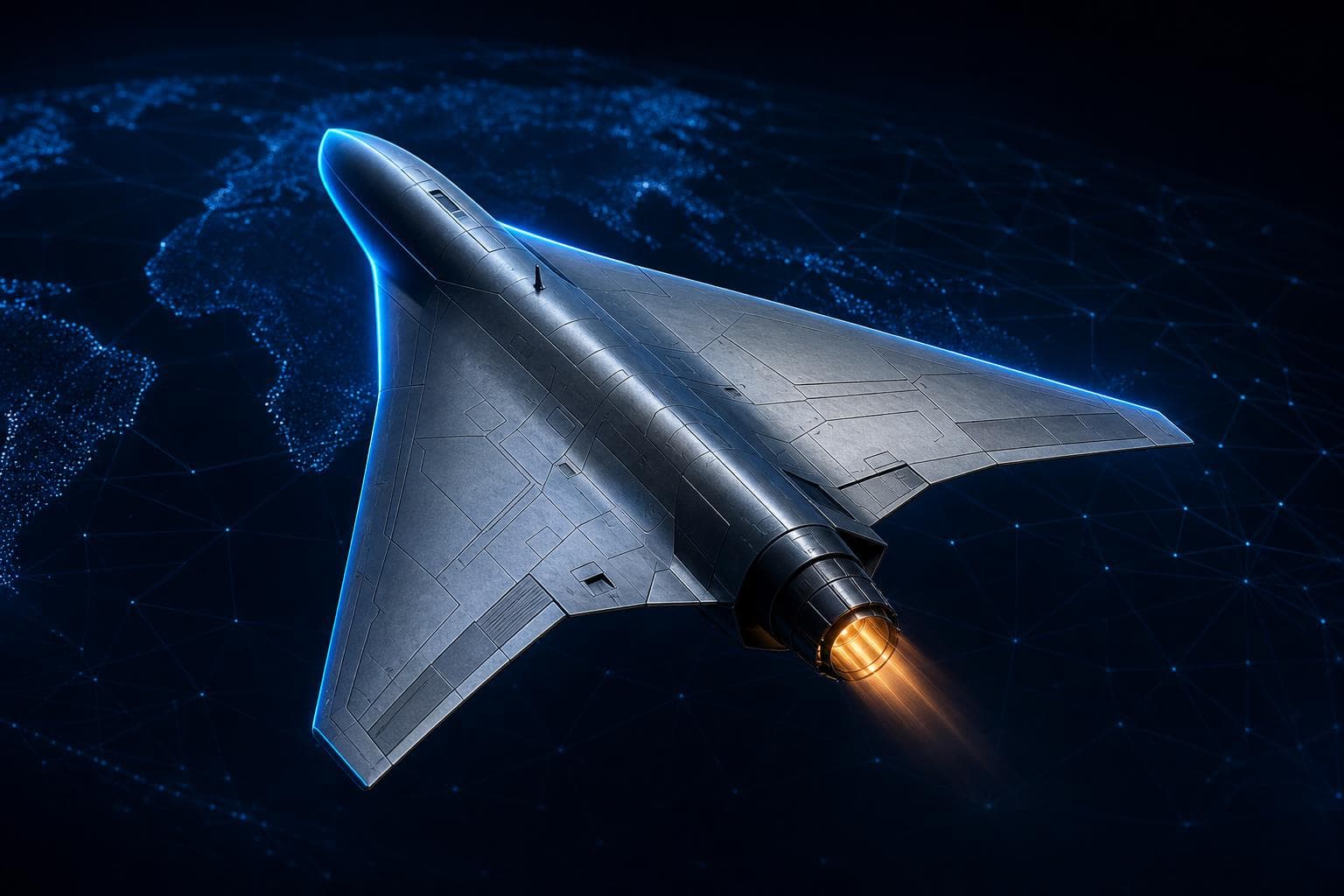

The Defense Innovation Unit's decision to expand Hermeus's Quarterhorse contract to $219 million — adding $159 million to fund payload release at speeds up to Mach 3 — looks like a hypersonics investment. It's actually a cost-curve bet.
DIU military deputy Maj. Gen. Joseph Kunkel said the quiet part out loud: "If we can mass produce this, then it becomes a game-changing warfighting capability, where we use it as a weapon instead of a test platform." That's the frame that matters. The Quarterhorse isn't being funded to be a one-of-a-kind demonstrator. It's being funded to become cheap enough to lose.
This is the same logic driving the Shield AI LUCAS contract — affordable mass, autonomous coordination, expendable airframes. The Pentagon is running the same playbook across speed regimes: push unit economics down until the platform becomes a munition. LUCAS does it at low-and-slow. Quarterhorse is attempting it at Mach 3.
The engineering challenge is real. Hermeus flew the Mk 2.1 at supersonic speeds recently, and upcoming tests will evaluate a new inlet, a precooler, and a steel airframe designed to sustain high Mach. The Mk 3 "Darkhorse" — targeting hypersonic flight via a turbine-based combined-cycle engine — is further out. But CEO Zach Shore's point is that the Mk 2 Quarterhorse can stand as its own product before any of that arrives.
Meanwhile, defense tech VC hit $19.8 billion across 262 deals in Q1 2026, with autonomy remaining the dominant thesis. The capital is chasing exactly this pattern: companies that can compress the cost of capability fast enough to matter operationally, not just technically.
The Quarterhorse's next flight tests — covering the new inlet and precooler — are scheduled for later this year and into 2027. Watch whether Hermeus can demonstrate sustained Mach 3 flight, not just peak speed. Sustained is what makes mass production meaningful. That's the number that turns a test program into a procurement decision.