



The Perennial Autonomy contract is the number that matters this week: a $500 million deal for AI-enabled counter-drone systems, awarded by JIATF-401, the Pentagon's dedicated counter-UAS task force. But the more interesting detail is the unit economics Army Secretary Driscoll cited during budget hearings — Perennial's Merops interceptor runs roughly $15,000 per unit against a Shahed that costs somewhere between $30,000 and $50,000. That's not a capability story. That's an arbitrage story.
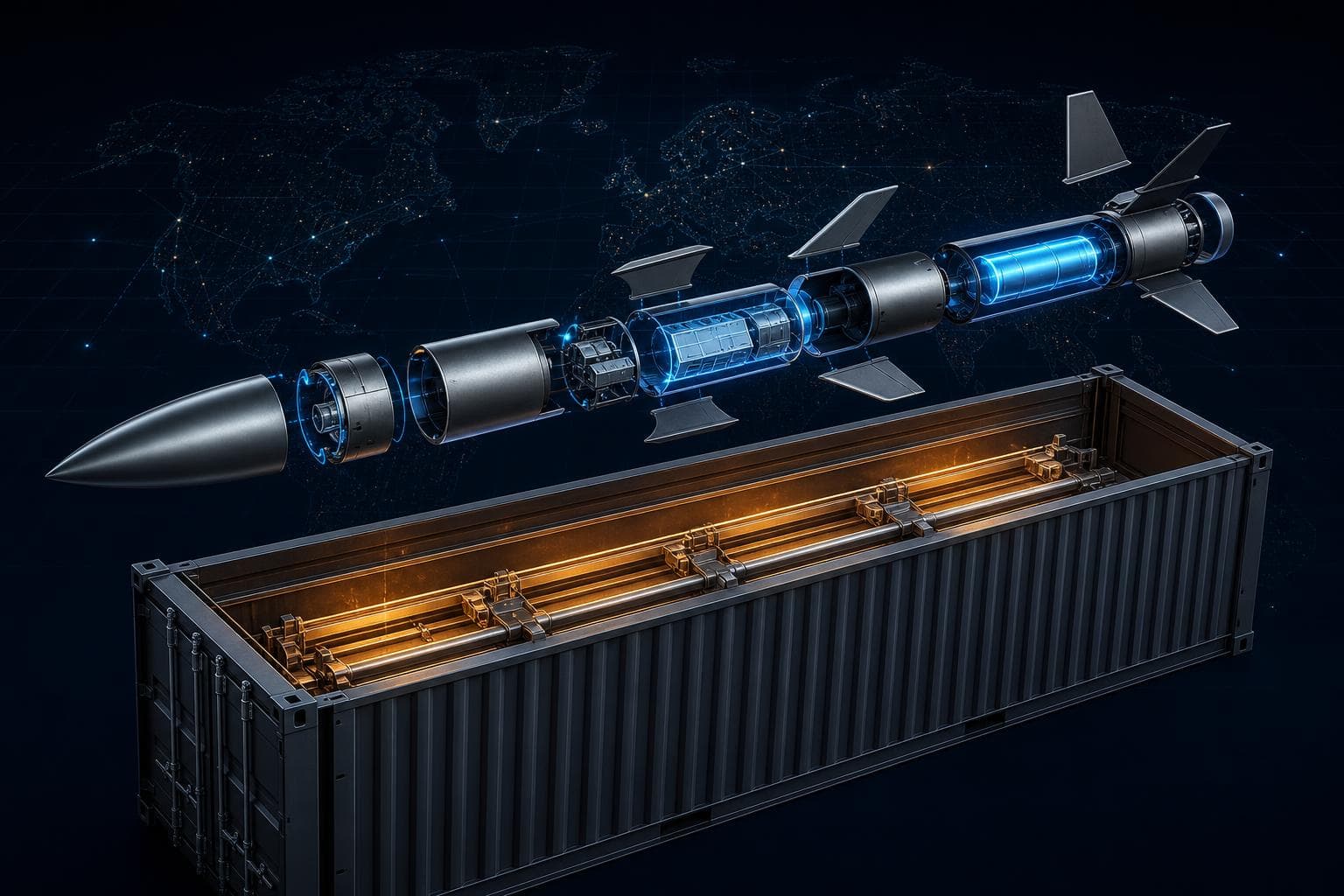
The same logic is running through every major contract this week. Shield AI's Hivemind software is now powering LUCAS drones — a $35,000 platform built to mirror the Iranian drones it's meant to counter. Anduril's Barracuda-500M commits to a minimum of 3,000 surface-launched cruise missiles for the Army starting in 2027, with a design simple enough to assemble in 30 hours using 10 common hand tools. Lt. Gen. McFarlane put it plainly at the Land Forces Pacific symposium: "We got to get it lower if we're going to prevail against the numbers of things that we think will be thrown our way."
That pressure is now reaching the supply chain. Mach Industries' $50 million acquisition of solid rocket motor startup Exquadrum is a direct response to the bottleneck that makes all of this harder — domestic SRM production is effectively controlled by two legacy primes, and lead times are stretching years. Mach isn't just solving its own problem; it's positioning Mach Energetics as supply infrastructure for the broader ecosystem. Vertical integration as competitive moat.
The pattern I'd argue is emerging here: the defense tech companies winning right now aren't the ones with the most sophisticated hardware. They're the ones who understood earliest that the Pentagon's actual procurement problem is industrial — volume, cost, and speed of production, not peak performance. Shield AI's Brandon Tseng framed it as being "better to the American taxpayer." That's a different pitch than the one defense startups were making five years ago, and it's landing.
Watch whether the Barracuda program's June assessment phase — when the Pentagon begins purchasing test missiles from Anduril, CoAspire, Leidos, and Zone 5 — produces any public cost-per-unit data. That number will tell you more about where this is heading than any contract value.