


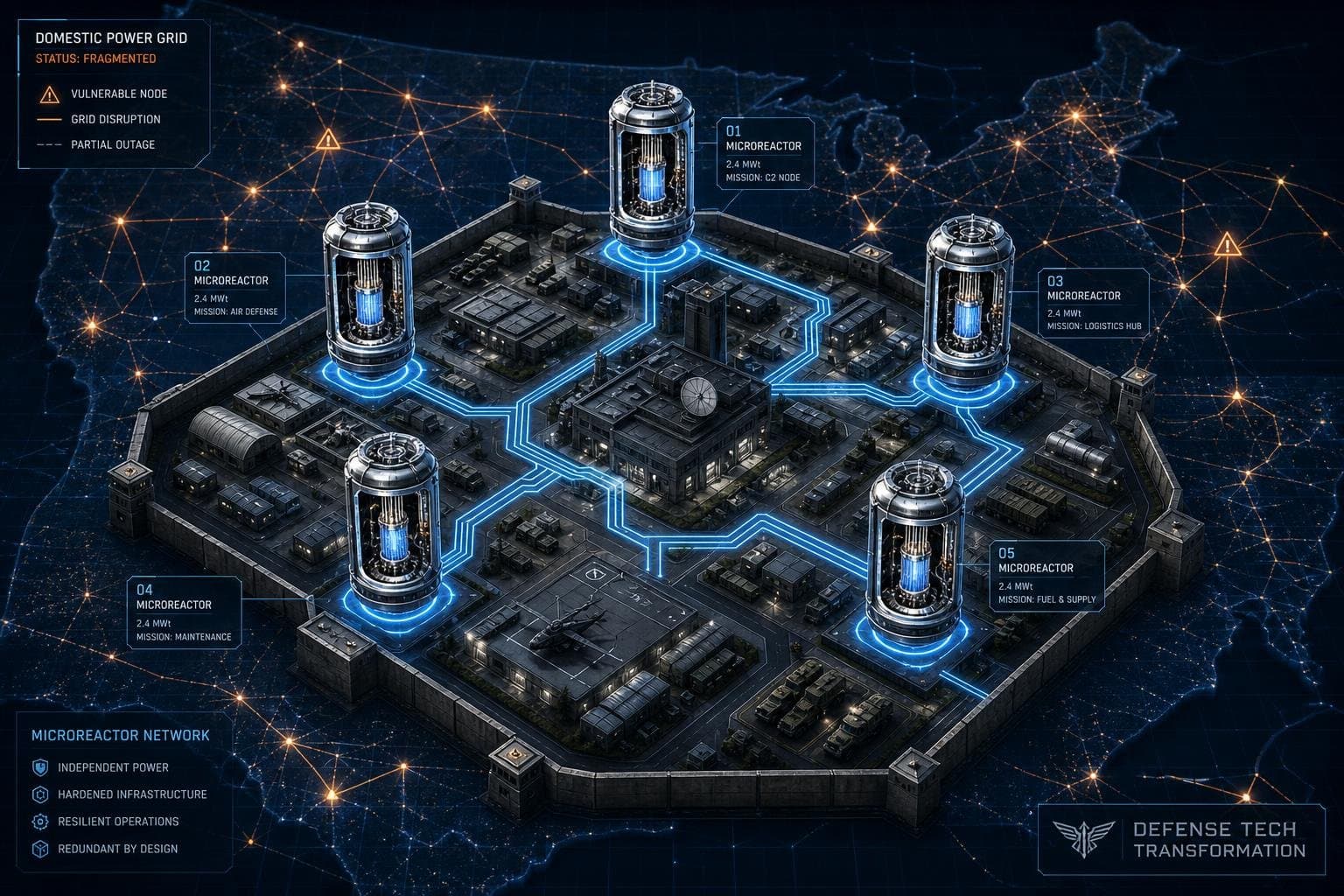

The Pentagon spends enormous energy debating drone swarms and AI logistics. Meanwhile, the Army just made one of the most consequential infrastructure bets in a generation — and it barely registered in the defense tech conversation.
Last week, the Army selected five companies to build nuclear microreactors at installations across the United States, committing up to $2.2 billion combined through its Janus program. The winners — Antares Nuclear, BWXT Advanced Technologies, General Atomics Electromagnetic Systems, Radiant Industries, and Westinghouse Government Services — will each develop reactors at a specific base, with the Army targeting more than 20 microreactors across DoD installations and an operational reactor by September 30, 2028.
The strategic logic is harder to argue with than the technology. As Army officials explained at the announcement briefing, every piece of critical Army infrastructure is currently backed by diesel — and the service now openly acknowledges that domestic grid security and fossil fuel logistics are genuine wartime vulnerabilities. "Unlike in prior conflicts, we now know that our domestic electric grid is potentially at risk in a conflict," said Jeff Waksman, principal deputy assistant secretary of the Army for Installations, Energy and Environment.
The Contract Structure Is the Real Innovation
What's worth noting for investors and procurement watchers isn't just the technology — it's how the Army structured the deal. Vendors are contractor-owned and contractor-operated, and they only get paid if they hit technical milestones. That's a meaningful departure from traditional cost-plus arrangements that reward effort regardless of outcome. The Army is essentially running a performance-based nuclear energy program, which is either a procurement reform story or a very expensive experiment depending on how 2028 goes.
The DIU's involvement signals that this fits the broader push to bring commercial energy technology into the defense base — the same institutional logic driving the FY27 budget's historic $1.5 trillion defense request and the reconciliation fights Congress will face in September. Energy resilience isn't a line item anymore; it's a strategic priority with a deadline and a dollar figure attached.
The mix of companies here — from established nuclear players like Westinghouse to smaller firms like Radiant Industries — suggests the Army is hedging across reactor designs rather than betting on a single architecture. That's the right instinct. Watch the 2028 milestone