



The standard defense startup pitch is: we have a product, now help us navigate procurement. Scout AI is running a different play — and the Pentagon is rewarding it.
Scout AI raised $100 million in a Series A led by Align Ventures and Draper Associates, following a $15 million seed round just 15 months earlier. The company, founded in 2024 by Colby Adcock and Collin Otis, is building an AI model called "Fury" designed to operate and command military assets — starting with logistics, moving toward autonomous weapons. It has already secured $11 million in development contracts from DARPA, the Army Applications Laboratory, and other DoD customers. More tellingly, its technology is being tested by the Army's 1st Cavalry Division during regular training cycles at Fort Hood, with the expectation that the unit deploys with proven products in 2027.
That last detail is the one worth sitting with. Scout isn't pitching a demo. It's embedded in a real unit's training cycle, with a hard deployment deadline attached. That's not a pilot program — it's a forcing function.
The Pentagon Is Selecting for Operational Urgency, Not Just Technical Promise
What Scout represents is a specific thesis about how to win in defense tech right now: don't wait for procurement to find you, get inside the training cycle before the contract competition starts. By the time the 1st Cav deploys, Scout's Fury model will have accumulated real operational data that no competitor can replicate from a lab.
This maps directly to what SOCOM's commander told the Senate Armed Services Committee — AI and autonomy are being integrated "at every level," and smaller, nimble organizations derive greater return on AI investment than legacy institutions burdened by legacy hardware. SOCOM has also issued a broad industry request covering maritime autonomy, command-and-control, and scalable effects. The pattern is consistent: the parts of the Pentagon moving fastest are the ones least encumbered by existing platforms.
The investor logic follows. Bloomberg reported that a new crop of defense startups is emerging on Wall Street as military budgets expand globally. But the companies attracting serious capital aren't just riding that macro wave — they're the ones that solved the integration problem before asking for the check.
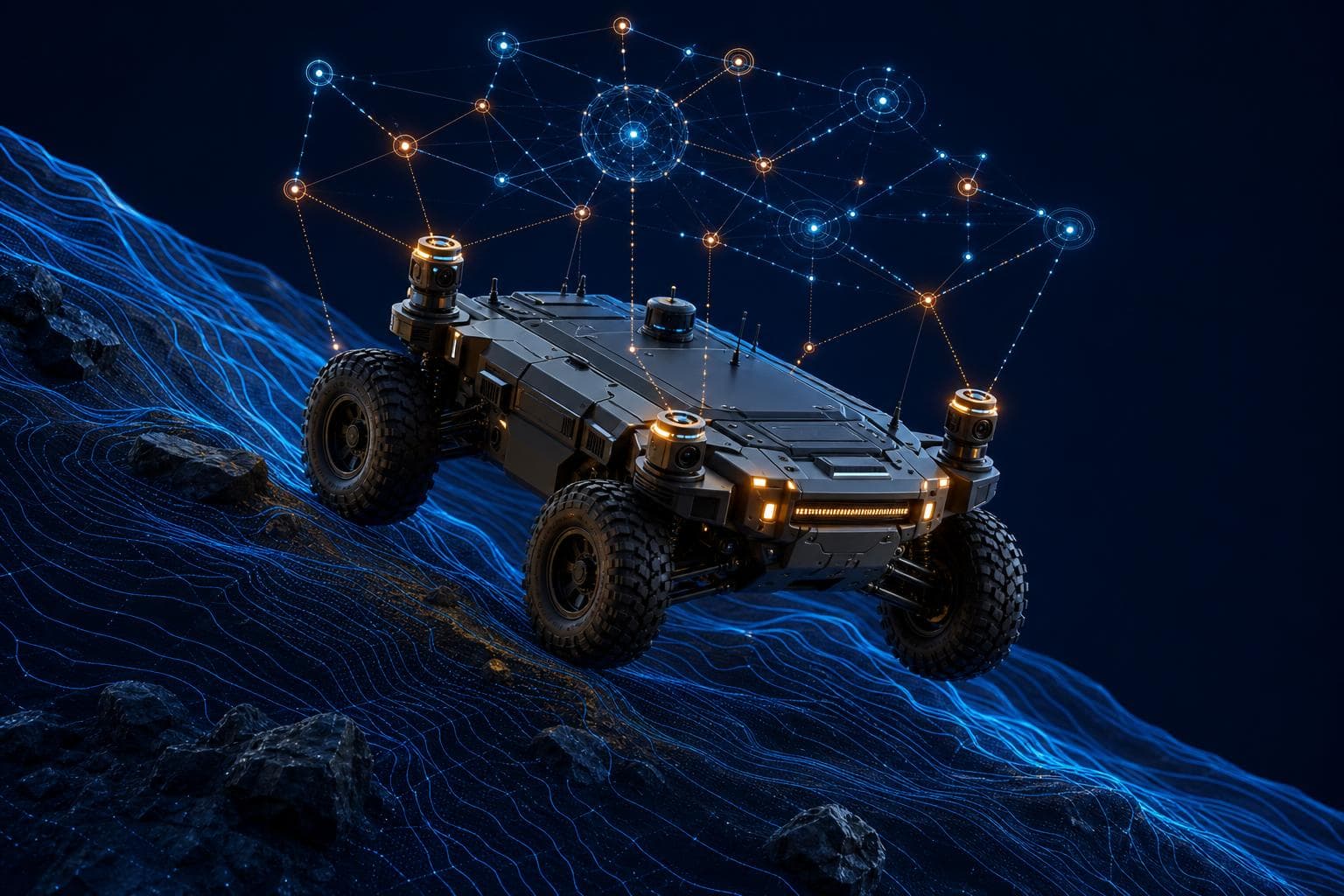
Scout's CTO frames training Fury like training a soldier: start with a capable base model, then specialize it for military judgment. That's a clean analogy, but the harder version of the same insight is operational: the model has to prove itself in dirt and terrain, not in benchmarks. That's why Scout is running autonomous ATVs through hillside simulations at an undisclosed military base rather than publishing white papers.
Watch for whether Scout's 1st Cav integration produces a formal contract expansion before the 2027 deployment window. If it does, it becomes the template — and every defense AI startup without a unit-level training relationship will feel the gap.